

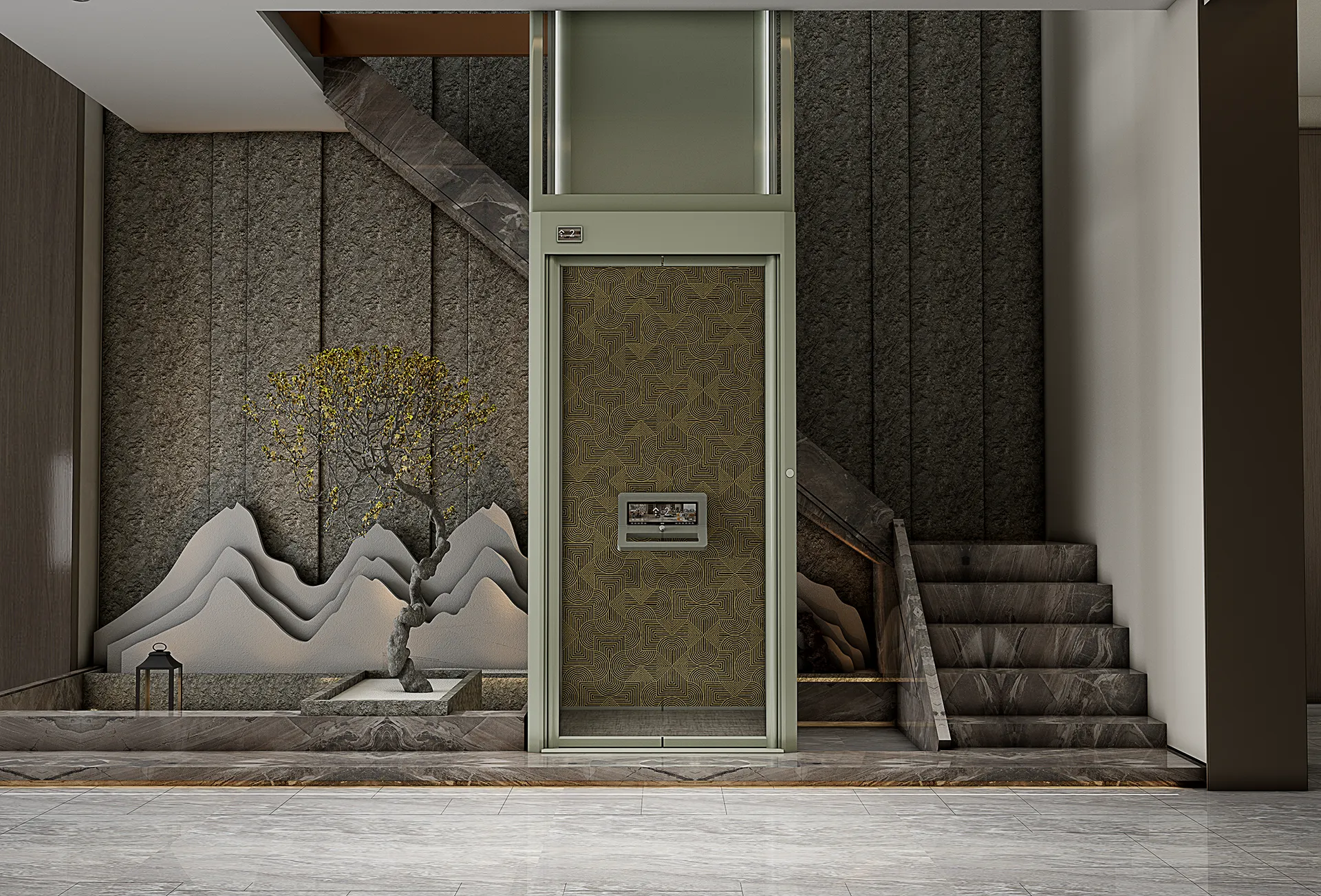
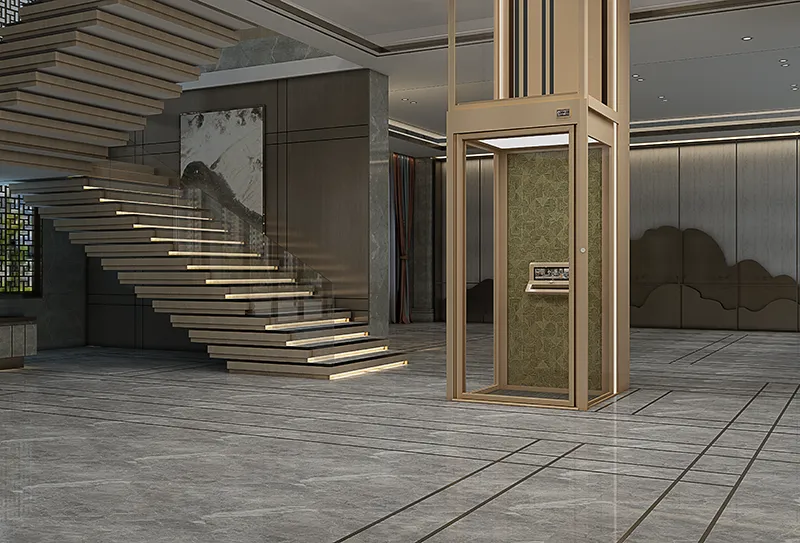
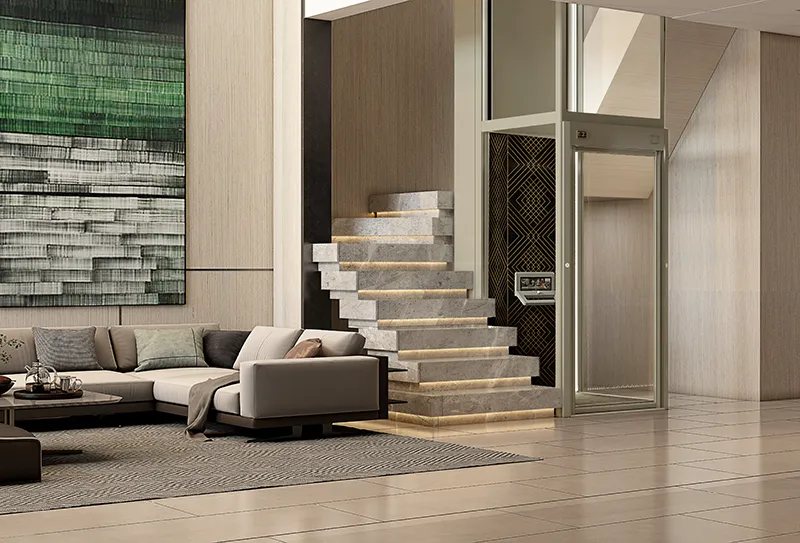
1.Planning the Elevator Hoistway First:
When designing your villa's interior, always start by consulting a professional elevator specialist. Share your expectations: the elevator's desired functions, passenger capacity, and any specific features. The expert will then provide a detailed planning scheme.
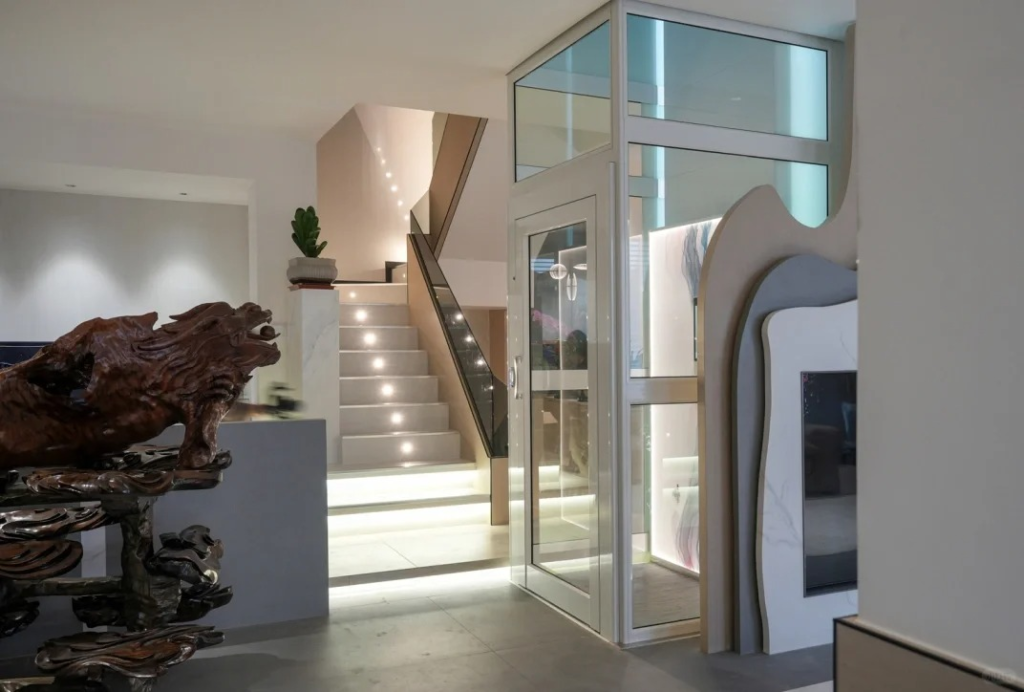
This scheme will include:
- The elevator's capabilities
- Hoistway space requirements (how much room it occupies)
- Top-floor height needs
- Pit depth requirements
Pass these exact specifications to your interior designer. They must fully incorporate these dimensions into the layout—no exceptions. This step is critical and cannot be overlooked.
Songyada Explains Drive Systems for Home Villa Elevators: Pros and Cons
2. Elevator Selection
China has numerous elevator manufacturers, ranging from large-scale to boutique operations, offering a wide variety of products. The main types suitable for home use are listed below for your reference.
a. Traction Villa Elevator A traction-driven elevator uses a counterweight system. A traction motor in the machine room pulls steel cables—one end attached to the car, the other to the counterweight—to raise or lower the elevator.
Advantages: Energy-efficient and high performance. Disadvantages: Requires a larger hoistway due to the counterweight.
b. Forced Traction Elevator Compared to standard traction elevators, this type has clear limitations: restricted lifting height, higher energy consumption, and slower speed.
Advantage: Compact hoistway footprint.
c. Screw-Driven Elevator This uses a nut-and-screw mechanism and is a machine-room-less design. It features no pit, no counterweight, and a self-supporting hoistway structure, maximizing space efficiency. Ideal for villas and duplex homes, it has been popular in Europe for nearly 40 years. (Note: European villas are typically spacious two-story homes with larger floor plates—different from typical Chinese villa layouts.)
Disadvantages:
- High cost — 2 to 3 times (or more) the price of a traction elevator.
- Noticeable noise — the motor travels with the platform.
- Slow speed — maximum 0.15 m/s (only 9 meters per minute); not recommended for homes with more than three floors.
- Long lead time — all components are imported; delivery typically takes around 6 months.
d. Hydraulic Elevator A hydraulic elevator uses a hydraulic power unit to pump oil into a cylinder, driving a plunger in linear motion—either directly moving the car or indirectly via steel cables.
Advantages:
- Minimal hoistway space required
- Quiet operation