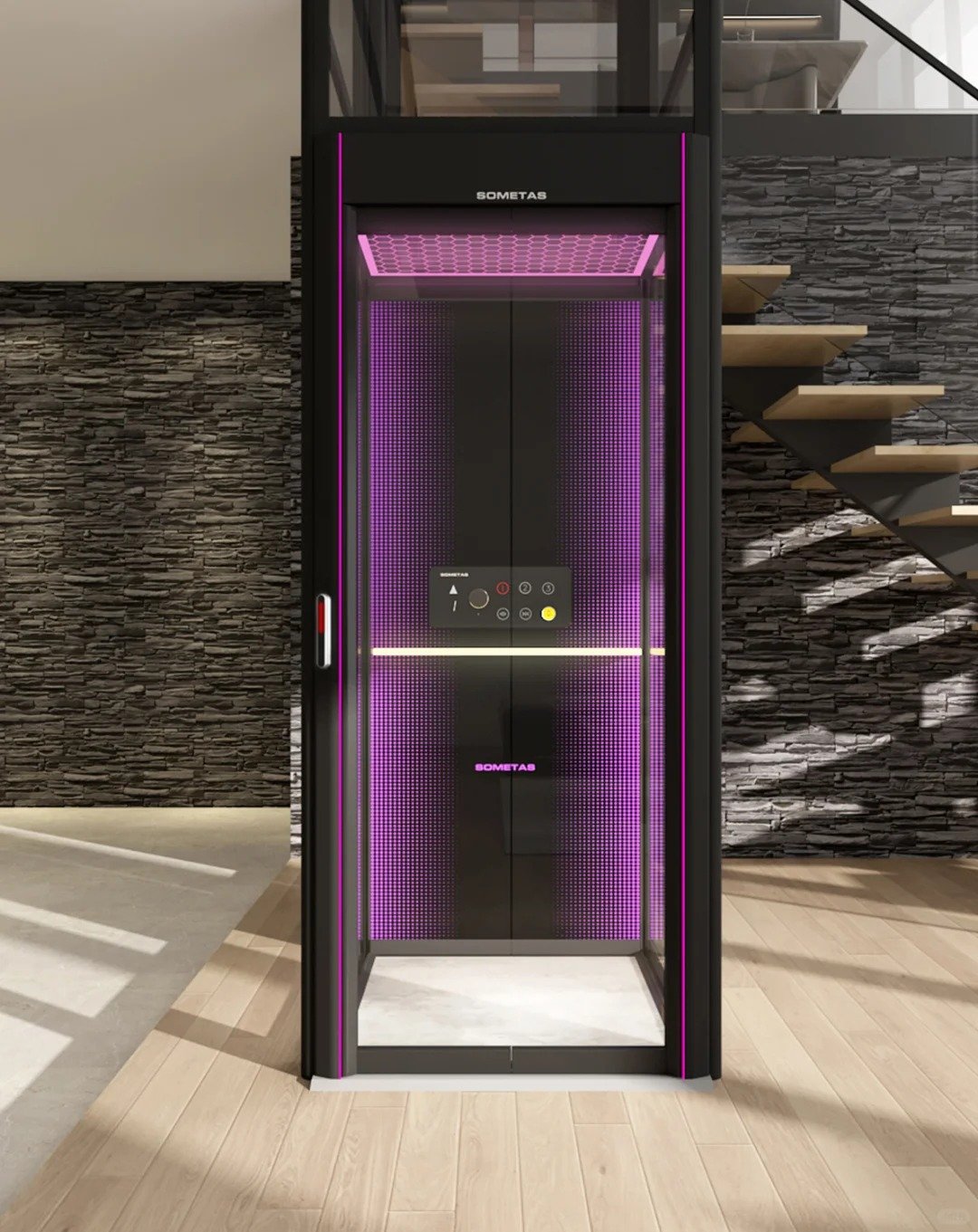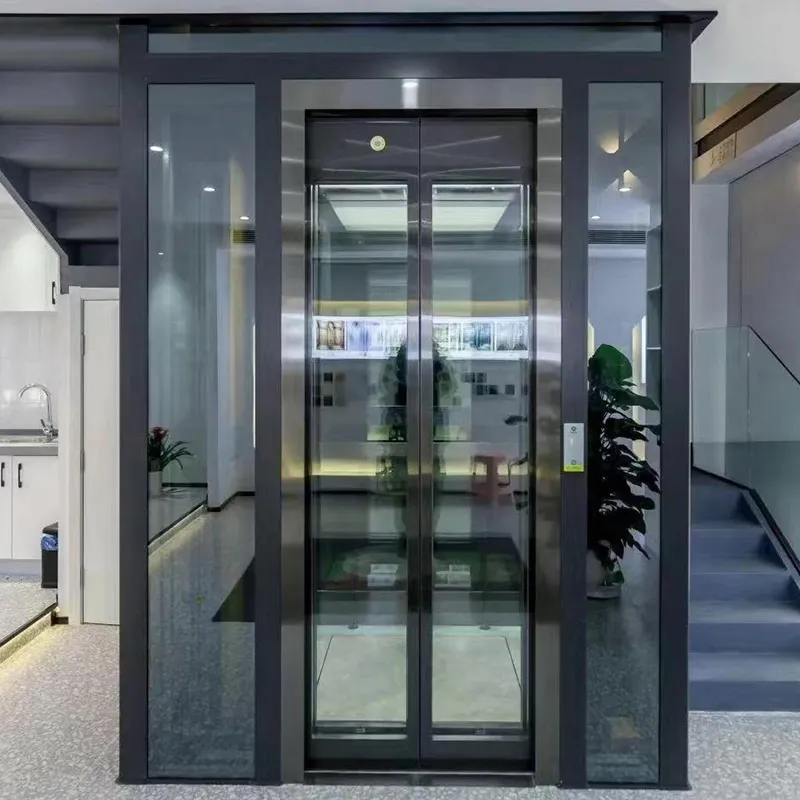


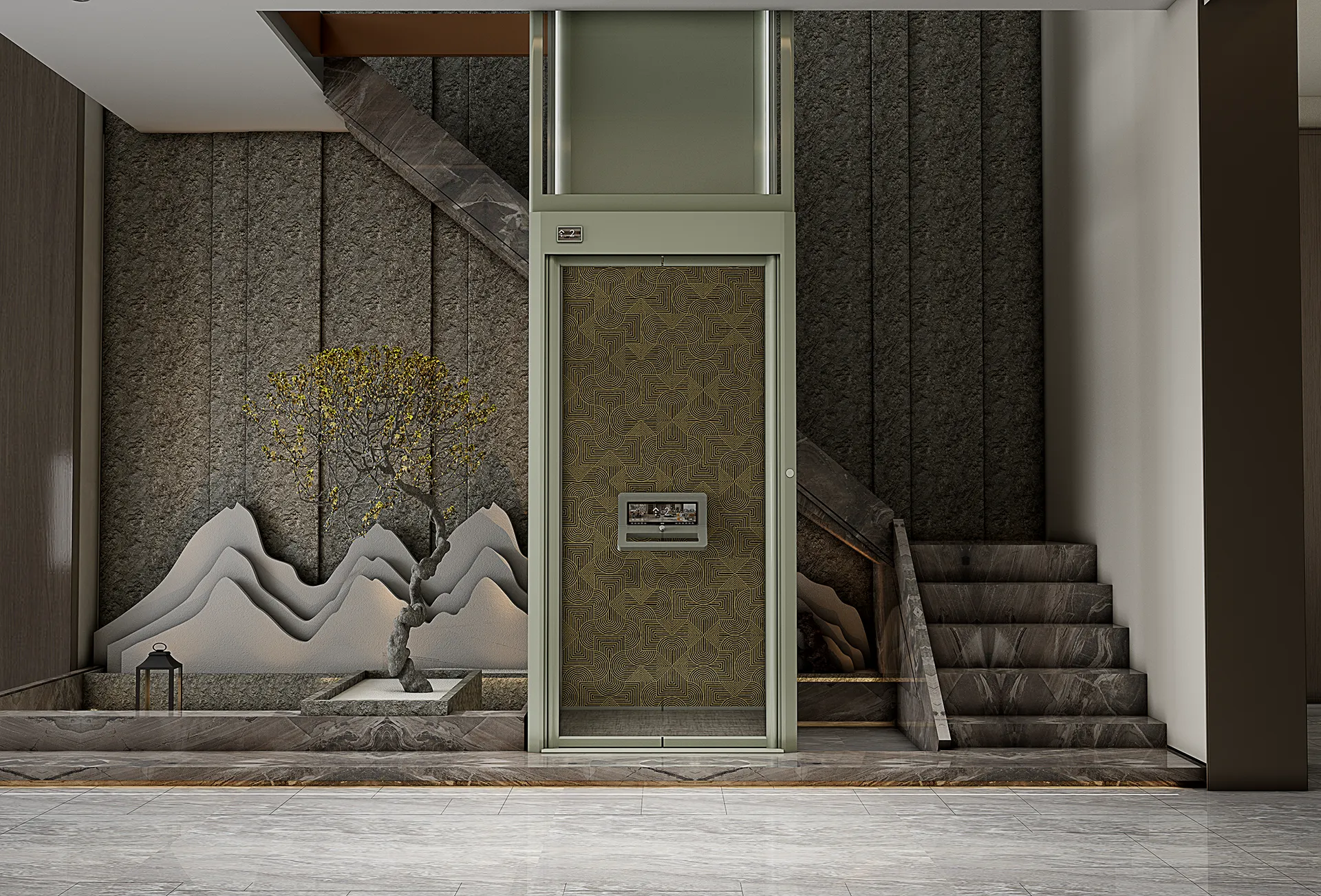
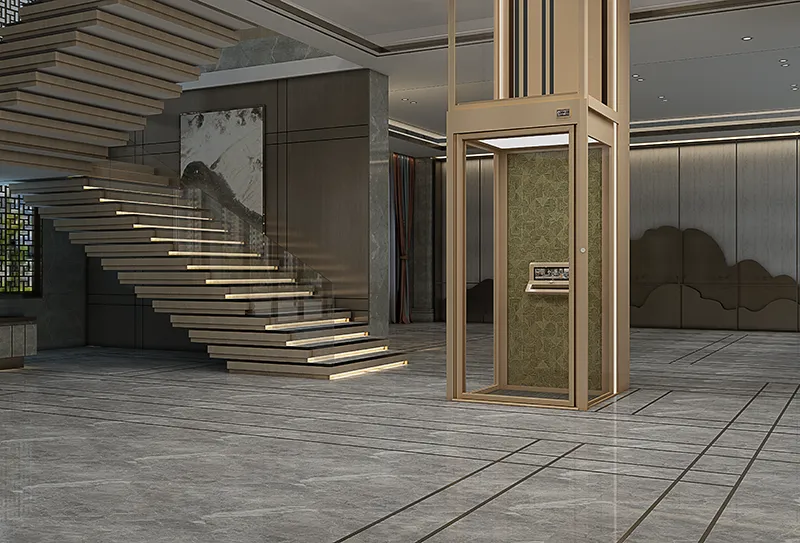
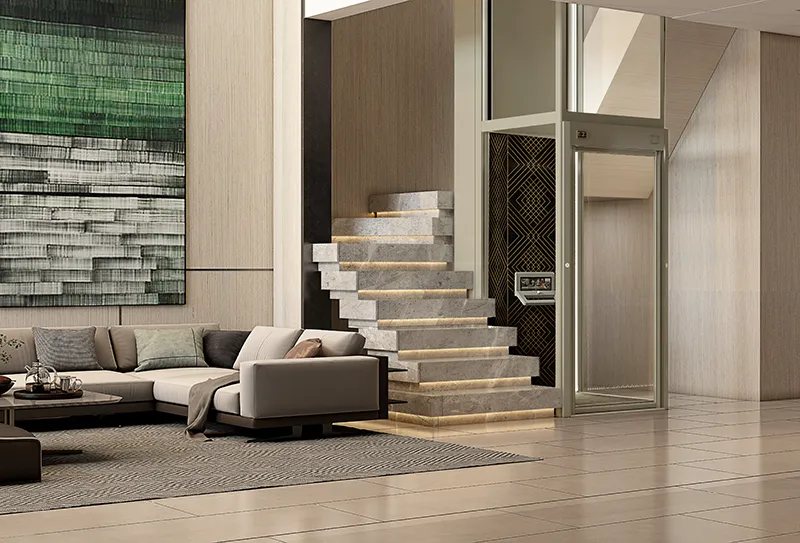
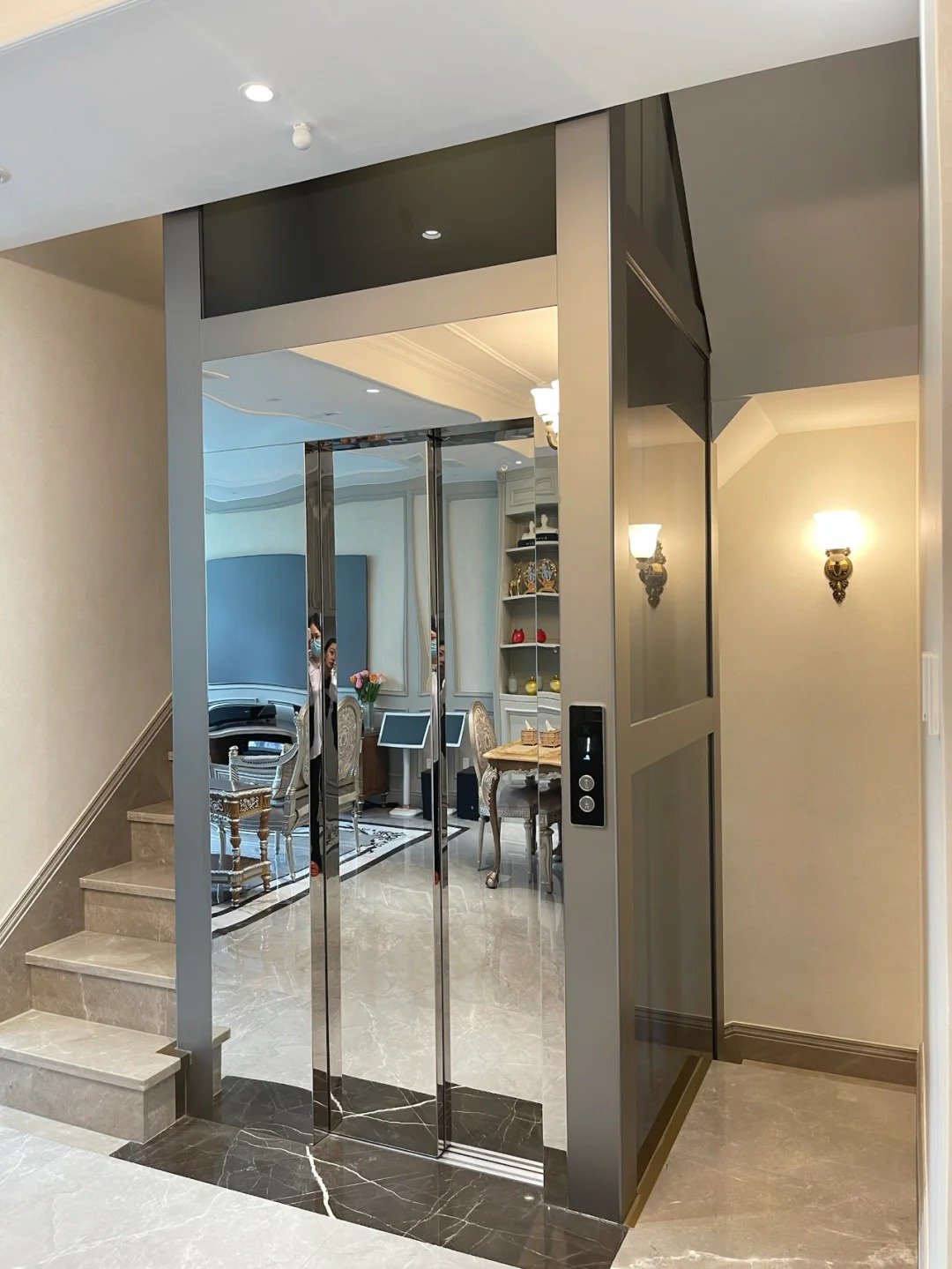
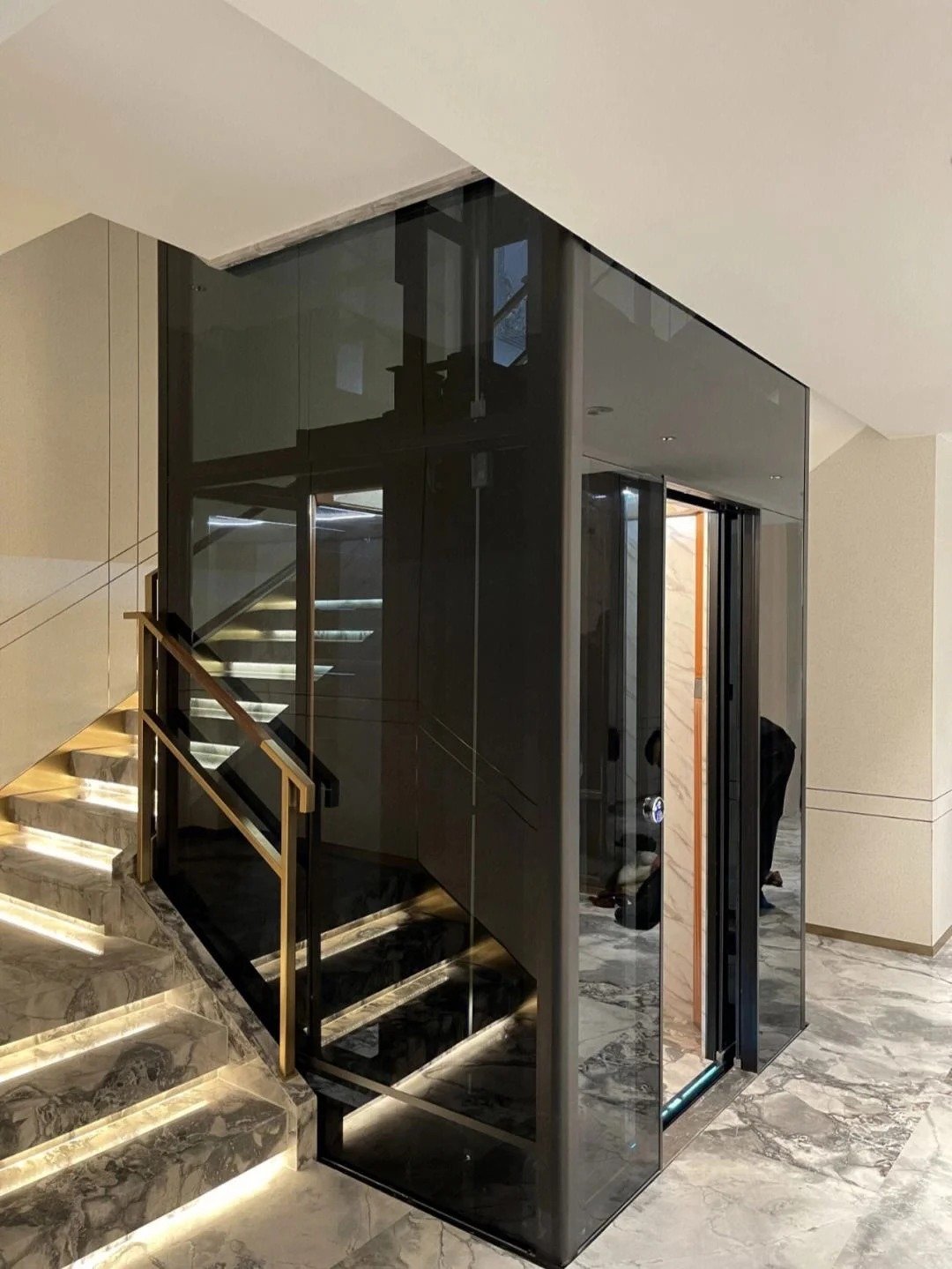
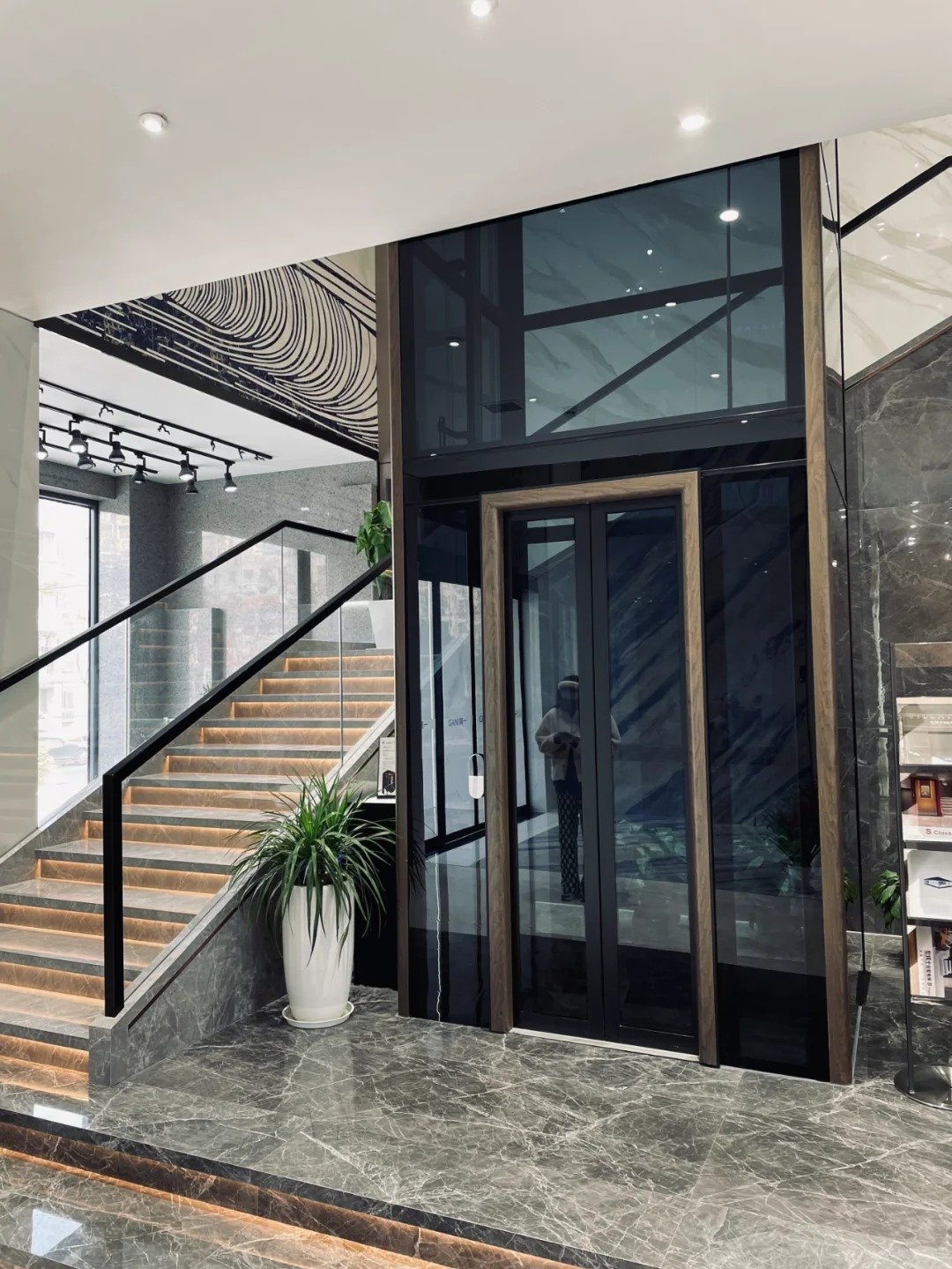
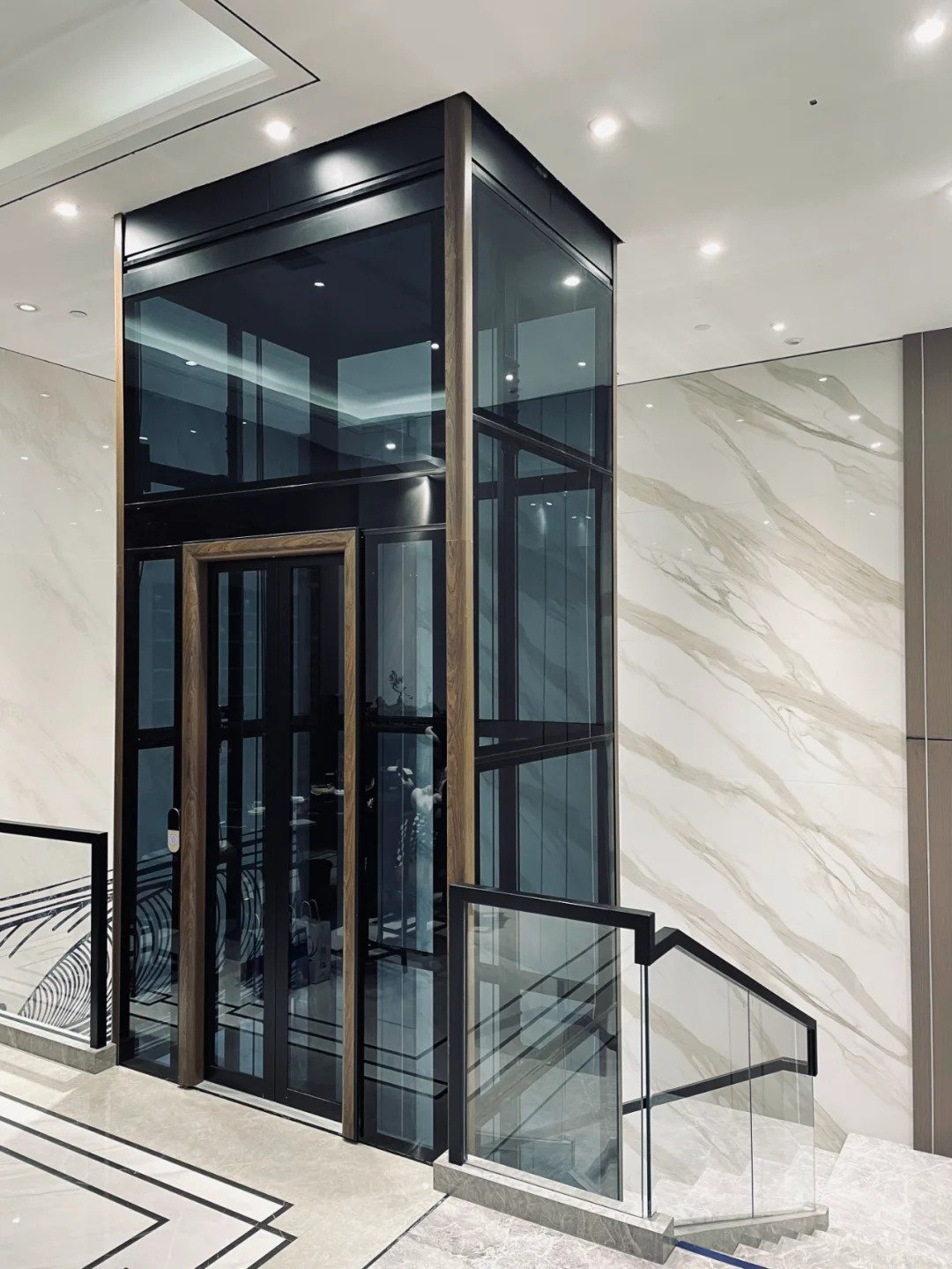
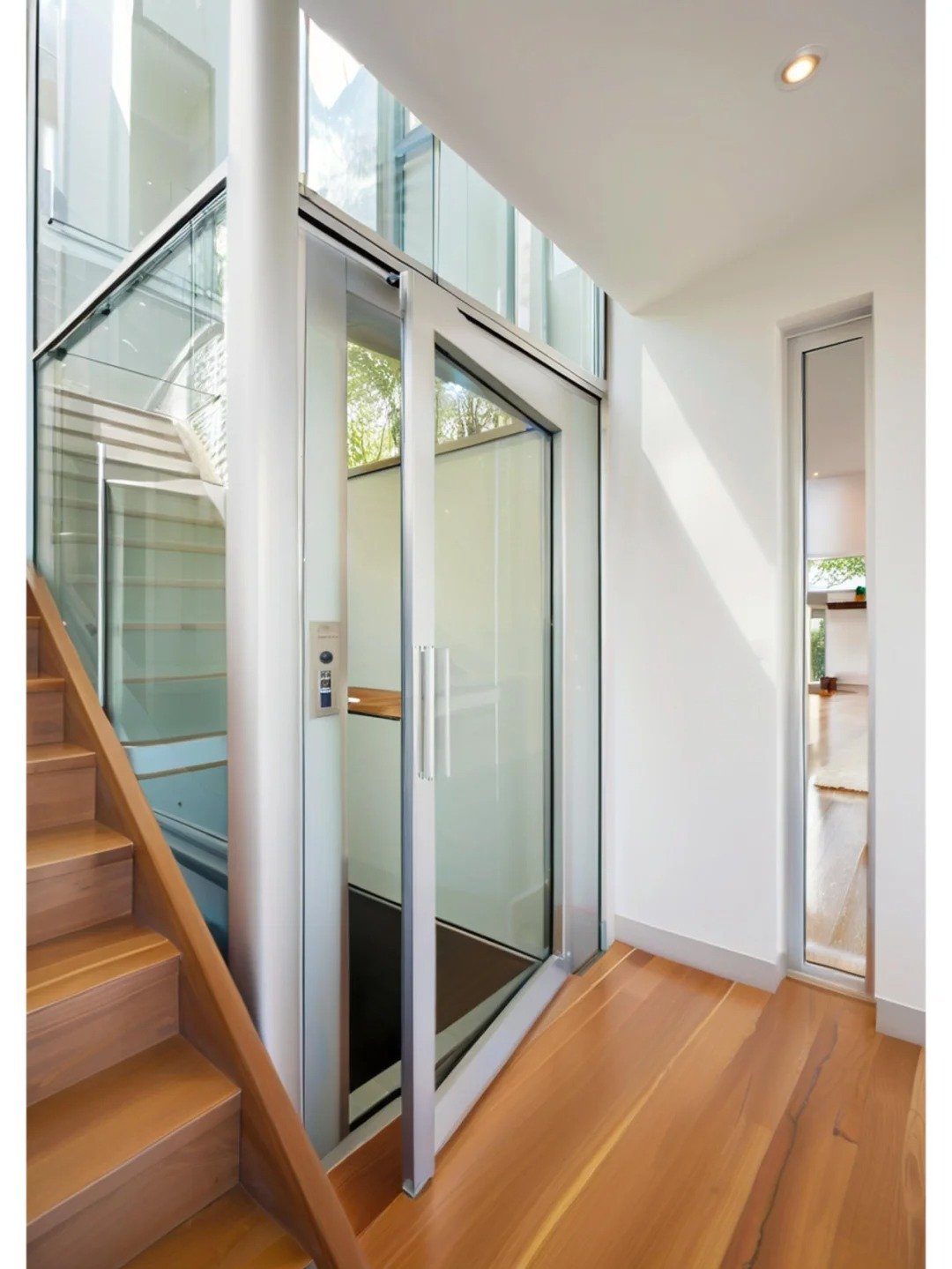
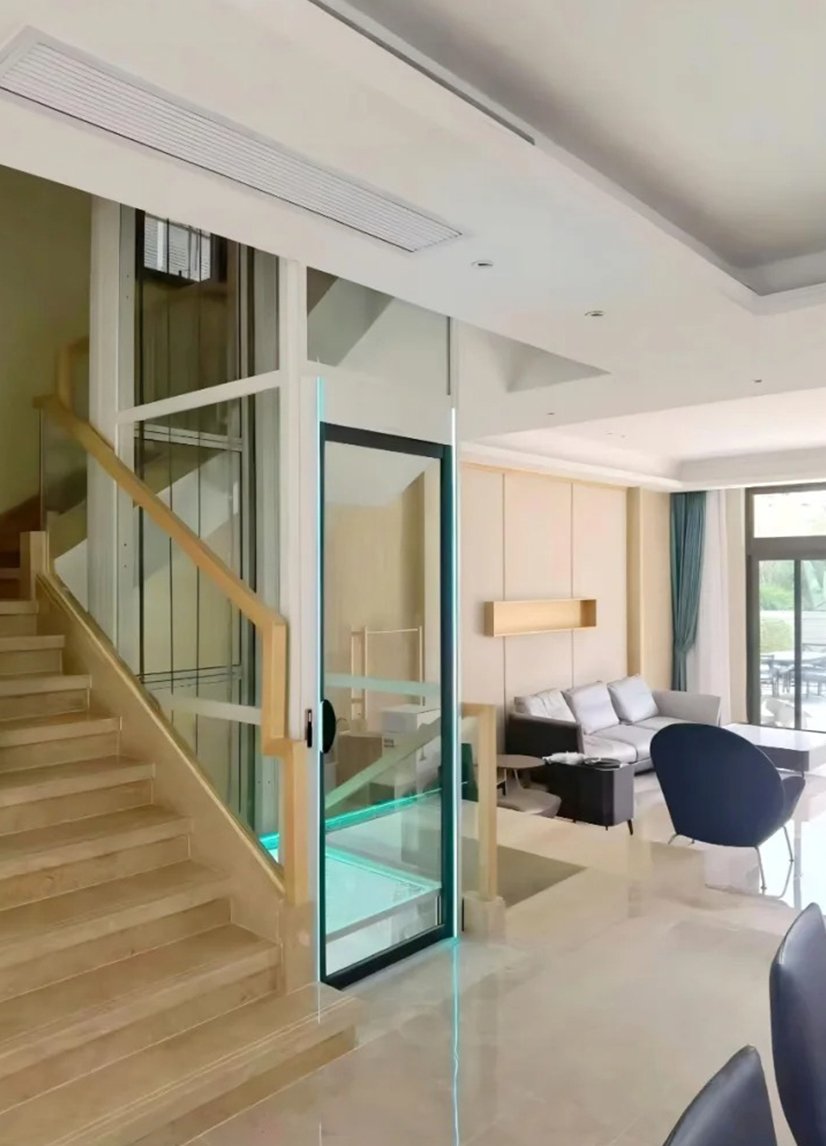
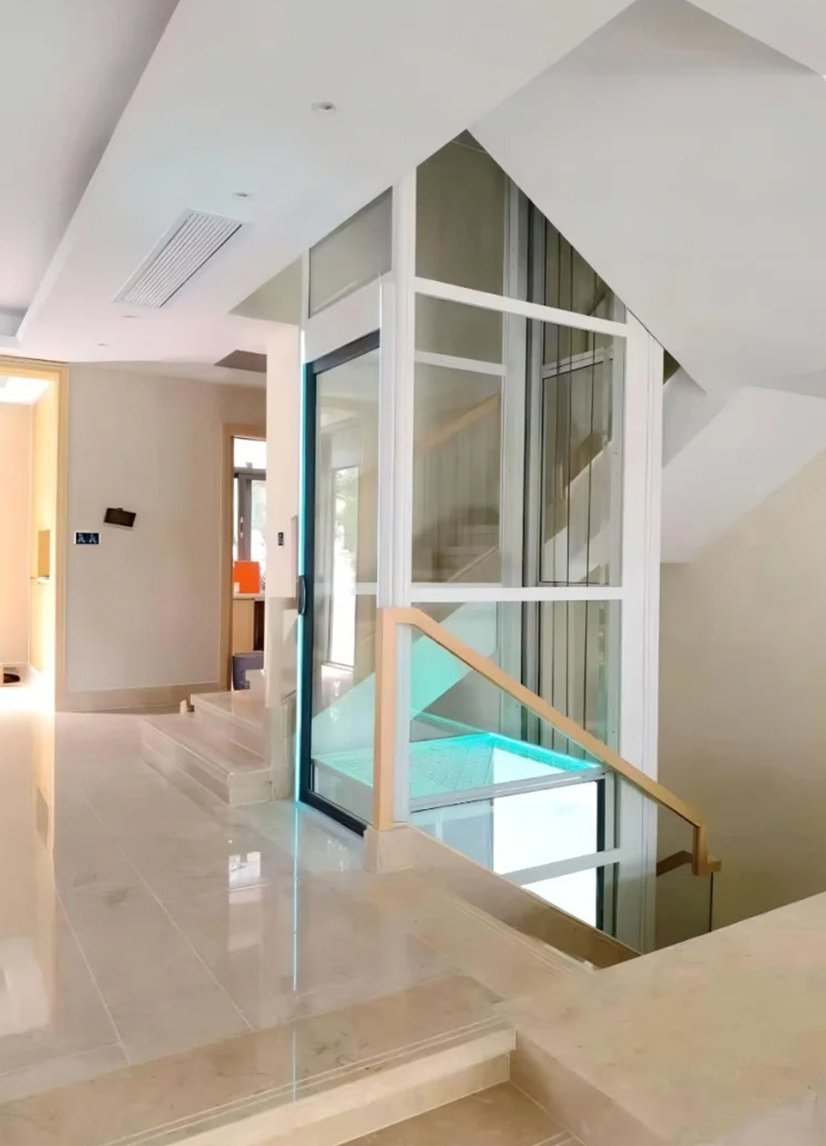

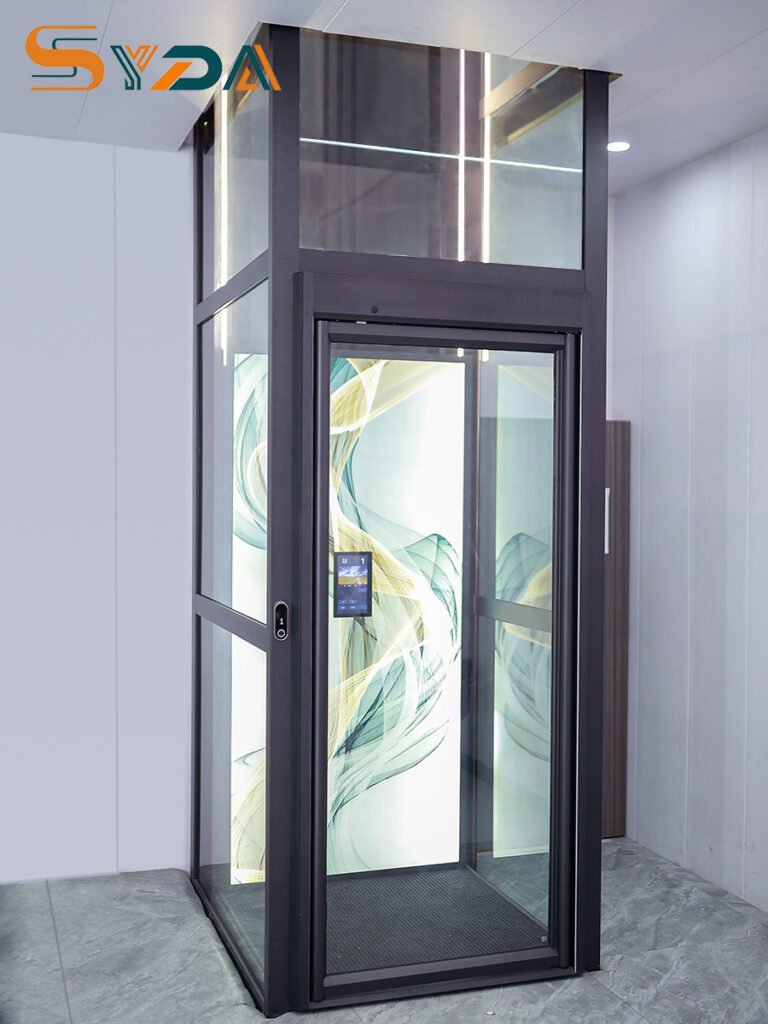
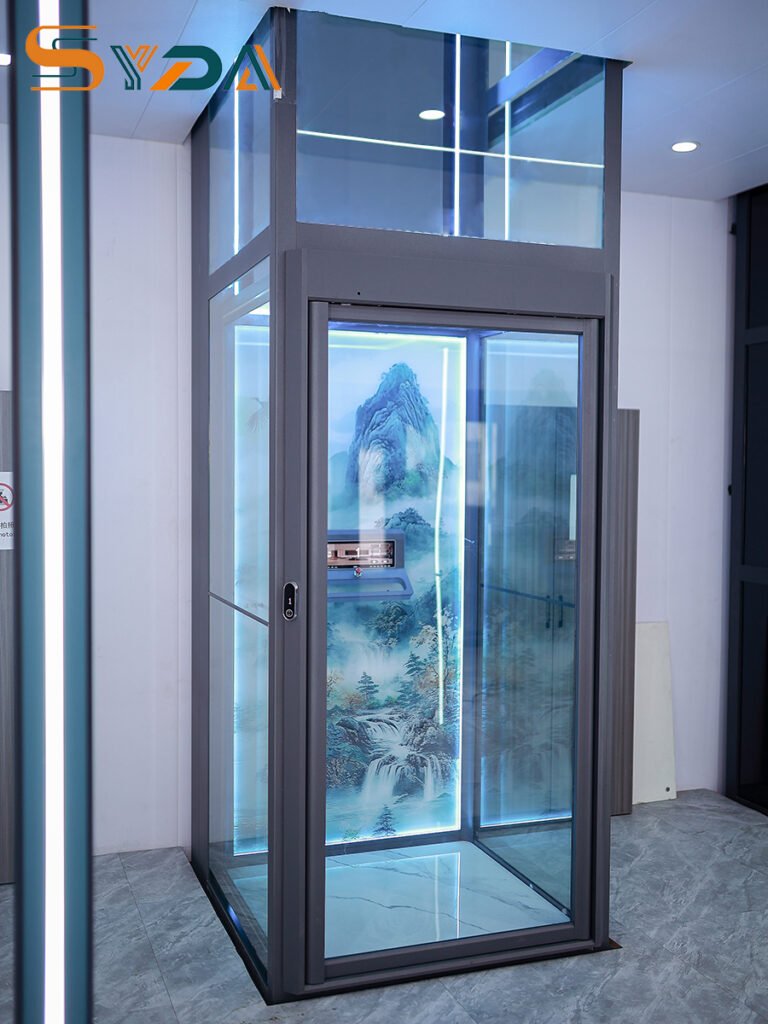
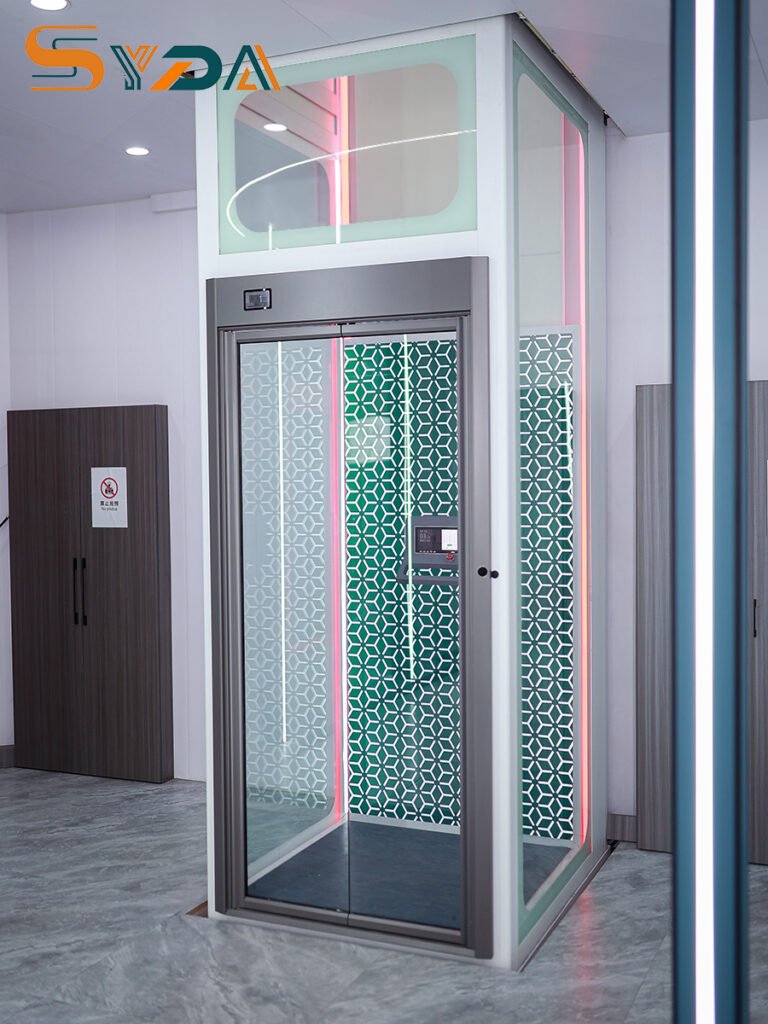
Suitable Project Types
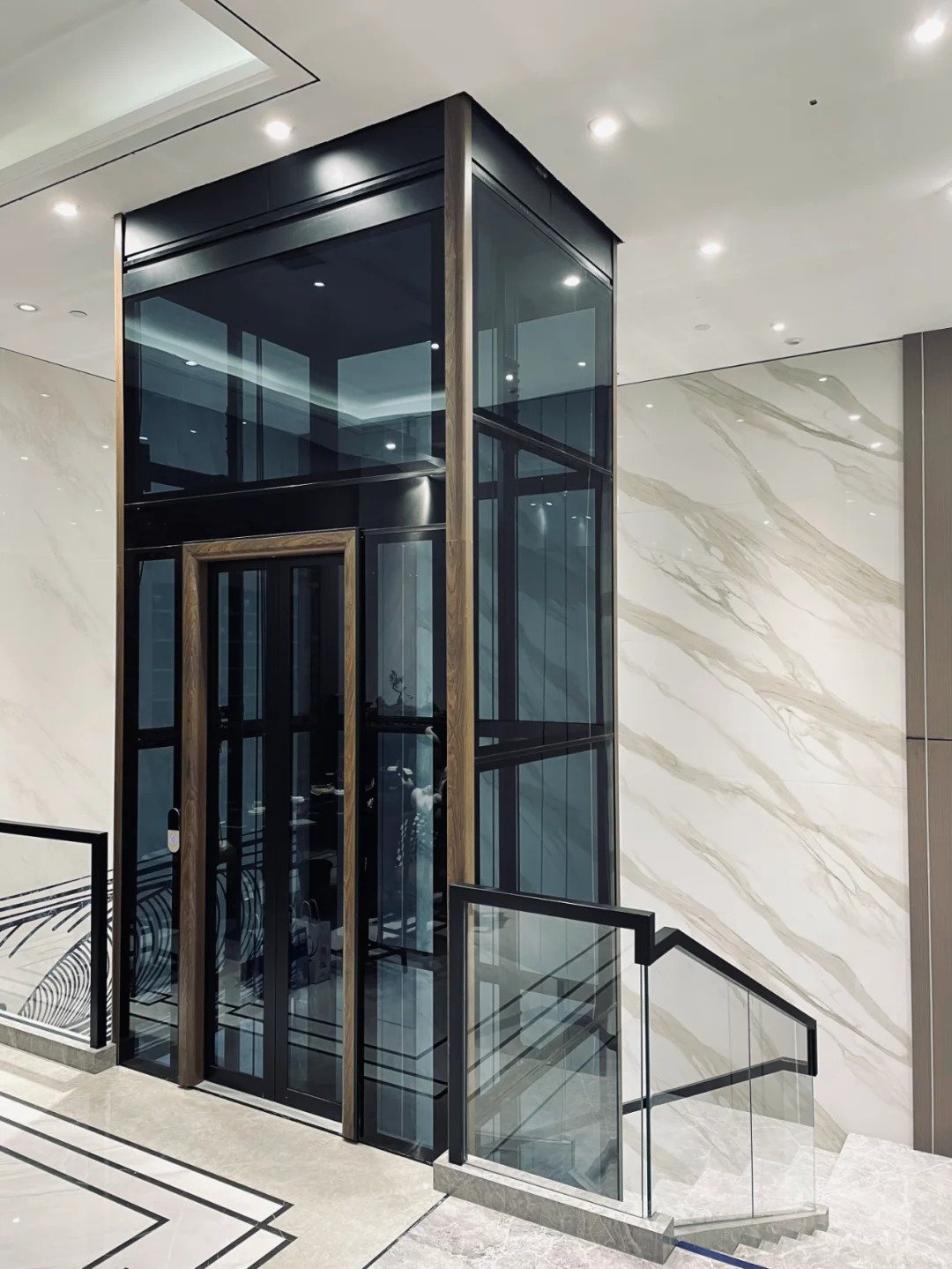
This traction backpack elevator is suitable for:
- Private villas
- Duplex houses
- Self-built homes
- Existing house retrofit projects
- Old residential remodeling
- Small commercial spaces
- Projects next to staircases or irregular shaft positions
- Projects using a self-constructed steel or aluminum shaft
For buyers comparing different home lift layouts, this type is often selected when a standard elevator arrangement would occupy more building space or require more civil work. You can also browse the broader home elevator range for comparison.
Recommended Drive Type
The recommended drive type for this model is traction drive with backpack structure.
- Efficient shaft utilization in narrow spaces
- Smooth and stable residential operation
- A compact installation layout
- A practical solution for villas and retrofit applications
- A balance between installation flexibility and riding comfort
If you are comparing different solutions for the same project, you can also review traction vs hydraulic home elevator options.
Installation Conditions
Load-Bearing Wall Installation
This model is suitable for projects where load-bearing wall conditions can support a compact residential elevator layout.
Self-Constructed Shaft Installation
It can also be used with a self-constructed shaft when the building does not have a reserved elevator shaft. For projects that require an independent enclosure, an aluminum alloy structure elevator shaft can be considered together with the lift solution.
Small-Space Installation
This elevator is suitable for projects where shaft width and installation position are limited, making it a practical option for compact residential layouts and retrofit conditions.
Low Overhead Conditions
It is also suitable for projects with limited top-floor height, helping improve installation flexibility in villas and existing homes.
Shaft, Overhead and Pit Requirements
Project evaluation usually includes the following installation data:
- Shaft width
- Shaft depth
- Top floor height
- Pit depth
- Number of stops
- Door opening direction
Shaft Requirement
The traction backpack elevator is suitable for narrow-shaft residential projects, with a compact layout that helps maximize usable cabin space within limited building conditions.
Top Floor / Overhead
The structure is suitable for projects with relatively low overhead requirements, making it easier to plan in villas, duplex houses and retrofit installations.
Pit Requirement
Pit depth should be planned according to the project layout, selected configuration and installation conditions. For retrofit projects, it is helpful to confirm pit depth early during quotation and drawing review.
Load, Speed and Floor Recommendation
- Speed: 0.3–0.4 m/s
- Load: 250–400 kg
- Minimum Shaft Size: 800 × 1200 mm
This configuration is generally suitable for:
- 2–5 stops in villa and residential projects
- 2–4 passenger home use depending on selected load
- Compact residential applications where space efficiency is important
- Retrofit conditions where civil-work limits affect elevator selection
Optional Materials, Door Types, Glass and Control System
Optional Materials
- Powder-coated steel finishes
- Stainless steel finishes
- Decorative interior panel options
- Floor finishes matched to residential interior style
Door Type Options
- Automatic side-opening doors
- Center-opening doors
- Door configurations adapted to shaft width and entrance position
- Single entrance or through-opening layouts where required
Glass Options
For projects that require a more open visual effect, buyers can also compare with a traction backpack sightseeing elevator or a glass panoramic elevator.
Control System Options
- Standard push-button control
- COP and landing call configuration
- Automatic leveling
- Smooth start and stop
- Emergency communication configuration
- Project-based control customization
Order and Delivery Process
- Project Information Submission: Send project country, building type, number of floors, floor heights, shaft size, top-floor height, pit depth, preferred door opening direction and available drawings or photos.
- Technical Review: The engineering team evaluates installation feasibility, shaft utilization, cabin size and door layout.
- Quotation Confirmation: A quotation is prepared according to load, stops, finishes, shaft condition and project requirements.
- Drawing Confirmation: Layout drawings and technical details are confirmed before production.
- Production and Inspection: Production is arranged according to the approved technical plan and confirmed specifications.
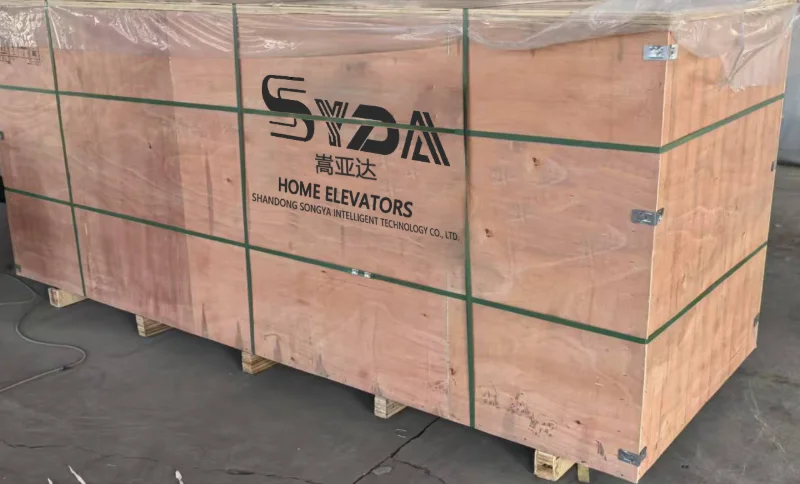
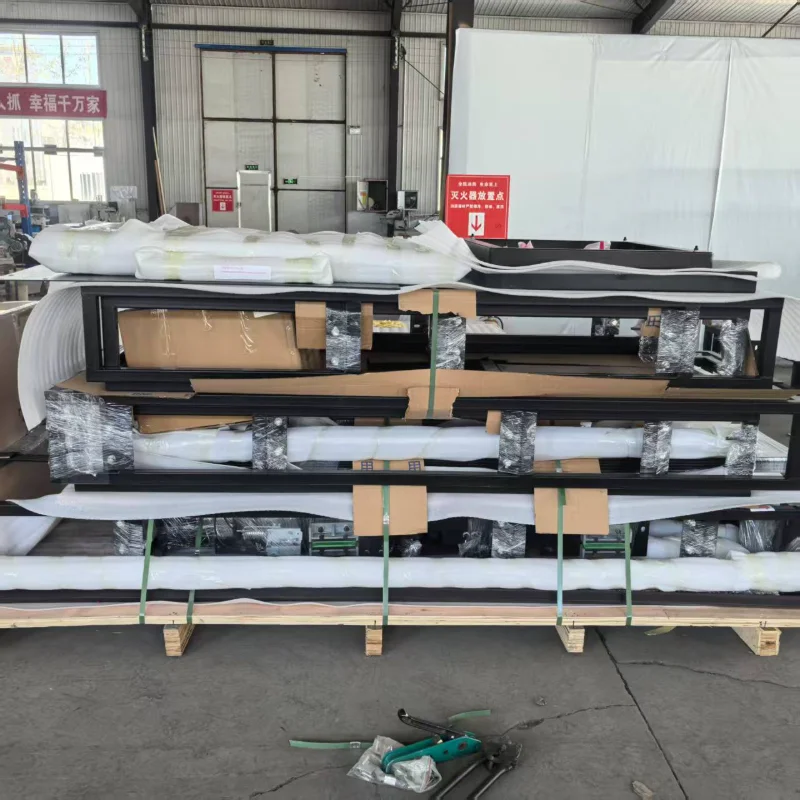
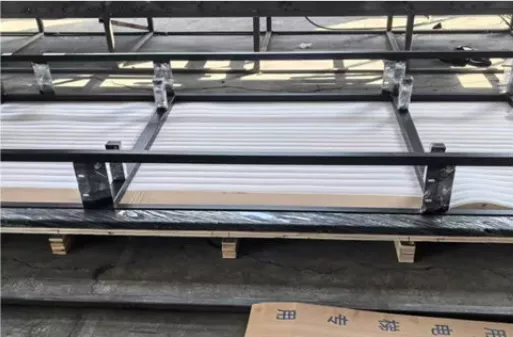
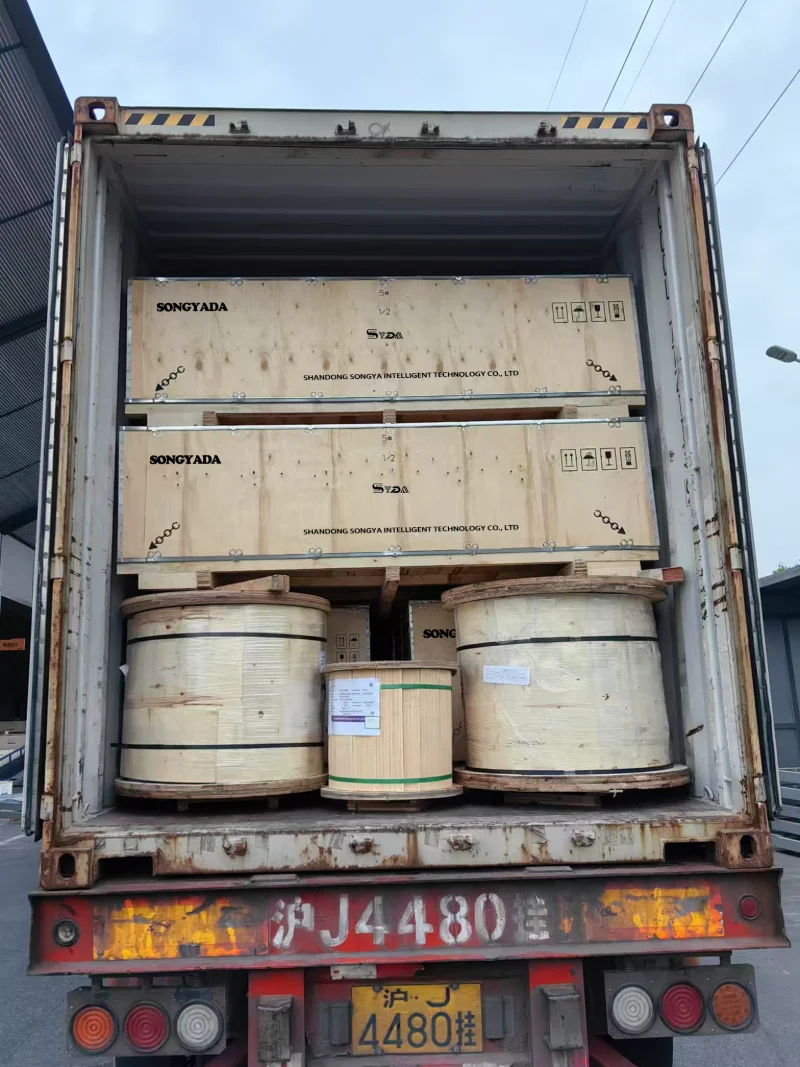
- Packing and Shipping: Export packing and shipping plans are arranged according to the elevator configuration and destination market.
- Installation Support: Installation instructions, videos and remote technical guidance can be provided for project support.
Certification and Warranty
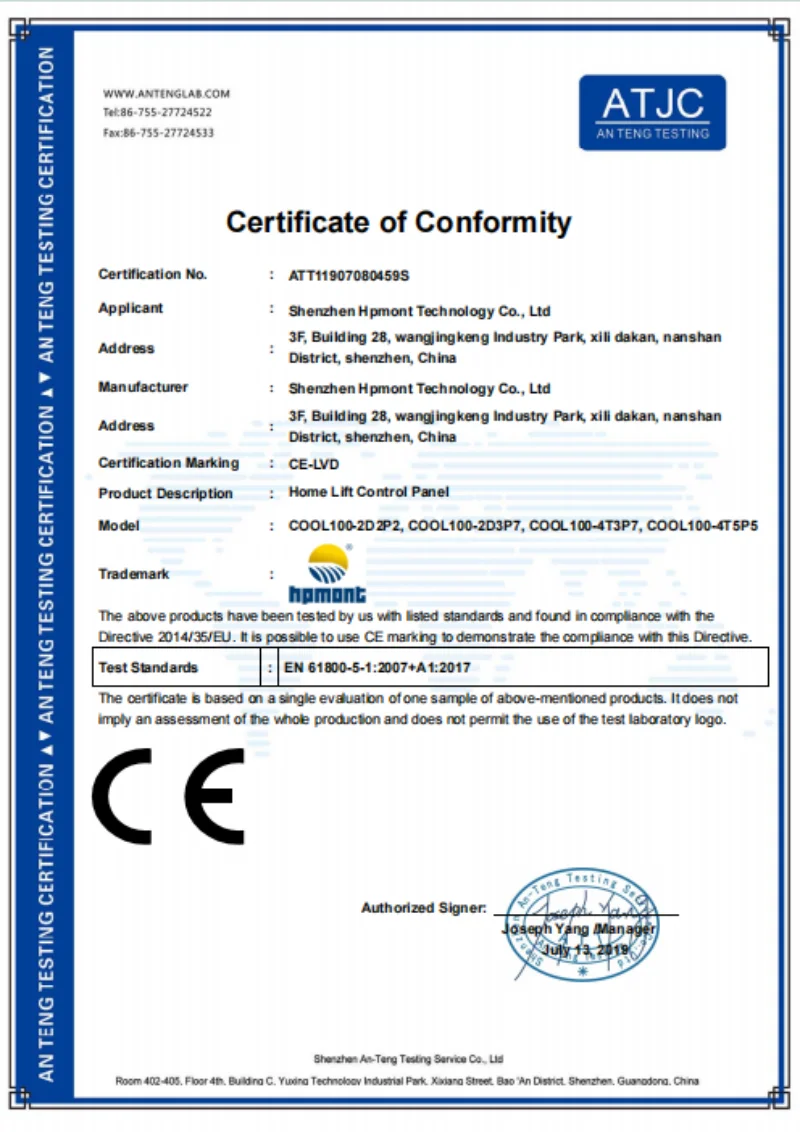
Certification
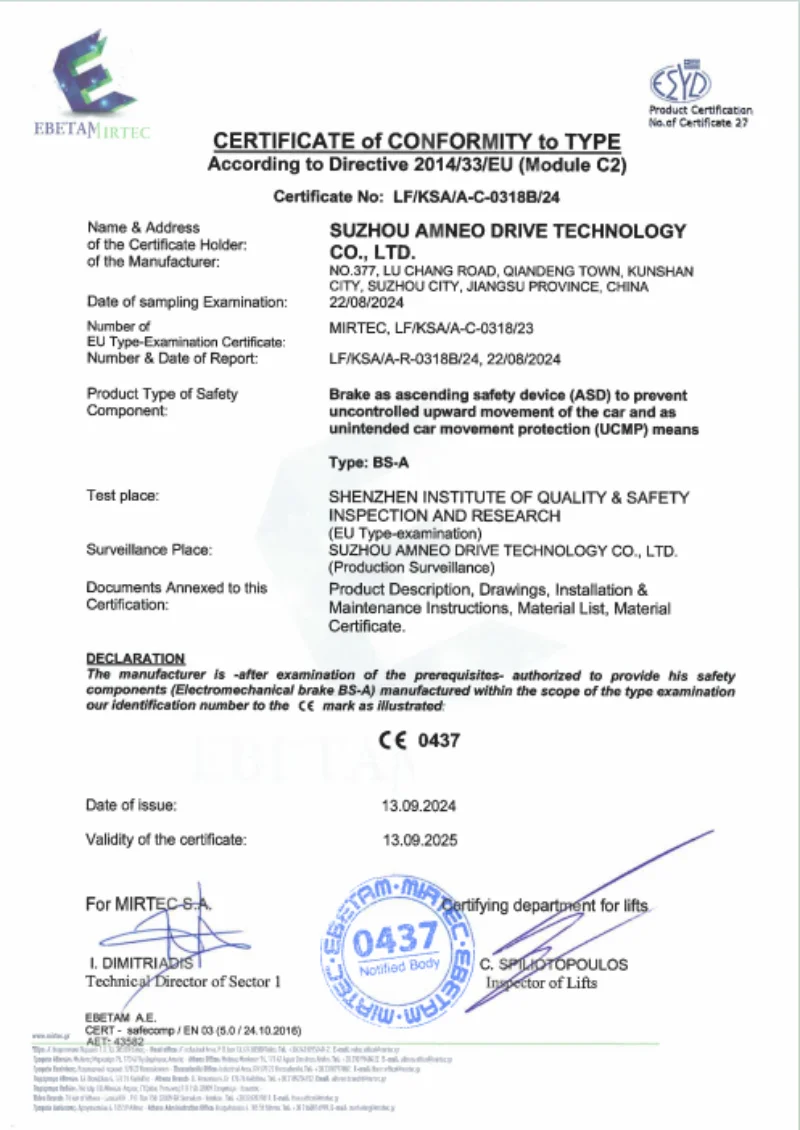
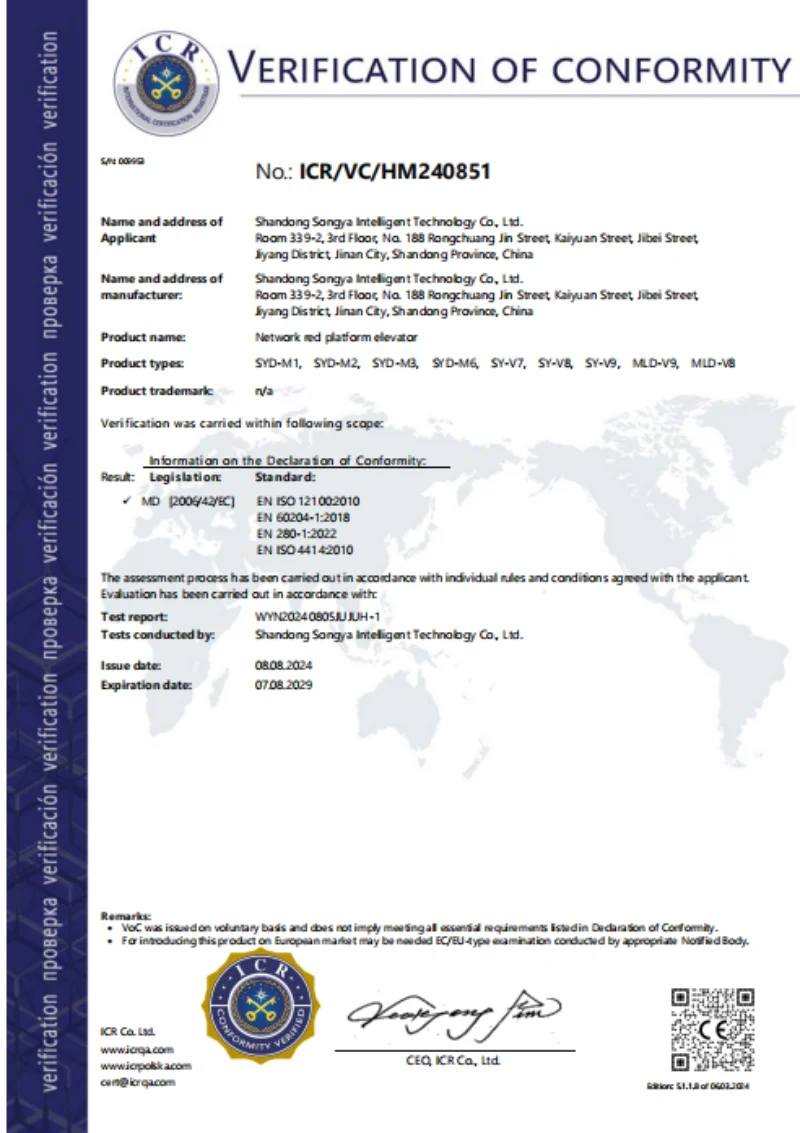
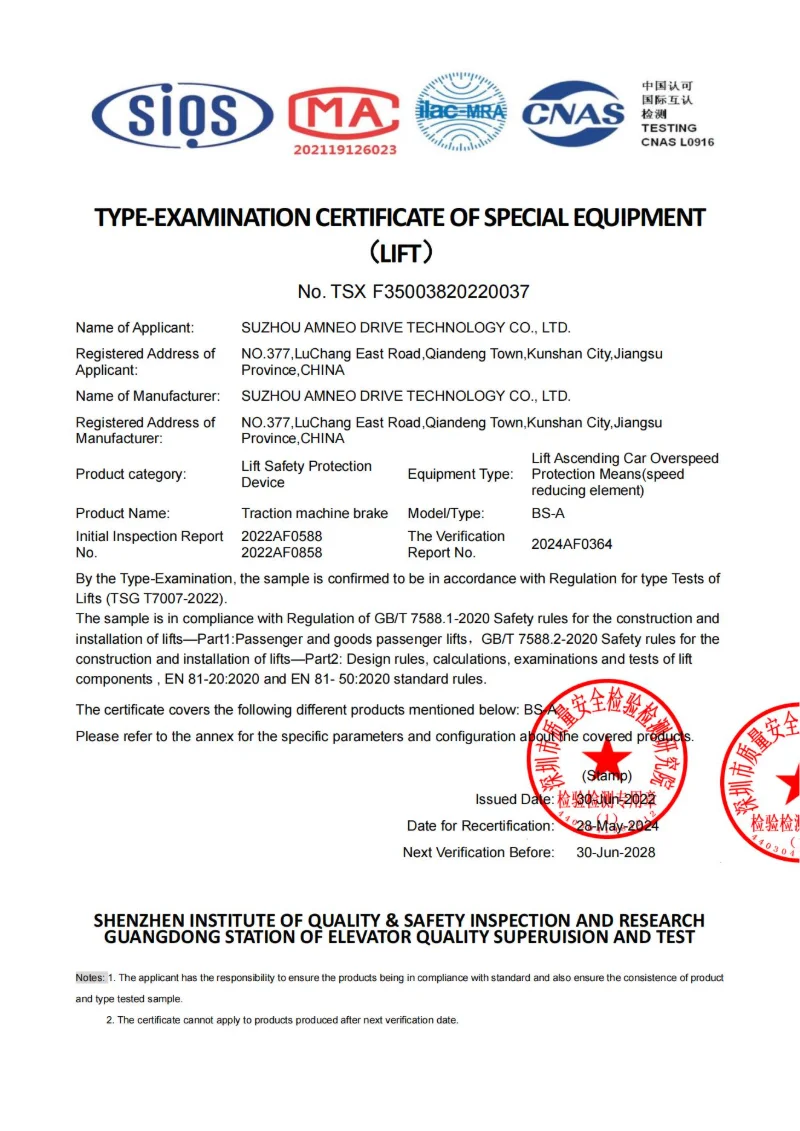
Documentation and certification can be prepared according to project requirements and destination-market needs.
Warranty
Warranty terms, covered components and after-sales support details can be confirmed in the quotation and contract according to the selected configuration.
FAQ
What kind of project is a traction backpack elevator suitable for?
A traction backpack elevator is suitable for villas, duplex houses, self-built homes, old residential remodeling and small commercial spaces where installation space is limited.
Can a traction backpack elevator be installed in an existing house?
Yes. It is suitable for existing house retrofit projects and can be used with load-bearing walls or self-constructed shafts.
What is the structural feature of a traction backpack elevator?
Its main structural feature is unilateral suspension design, with the traction machine and guide rail arranged on one side of the car.
What is the minimum shaft size for this traction backpack elevator?
The minimum shaft size is 800 × 1200 mm.
What are the speed and load options?
The available speed is 0.3–0.4 m/s, and the load range is 250–400 kg.
Is this home elevator suitable for low overhead projects?
Yes. It is suitable for projects with relatively limited top-floor height and compact installation conditions.
Request a Project-Specific Quote
To receive a quotation for your traction backpack elevator project, please provide the following information:
- Project country
- Building type
- Number of floors / stops
- Floor-to-floor height
- Shaft width and shaft depth
- Top floor height
- Pit depth
- Indoor or outdoor installation
- Preferred door opening direction
- Required load or passenger capacity
- Photos, plans or CAD drawings
Recommended CTA:
Send your floor plan, shaft dimensions or installation photos through the contact page to receive a traction backpack elevator recommendation and quotation for your project.