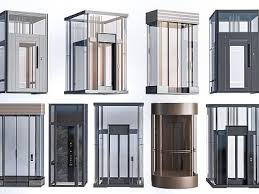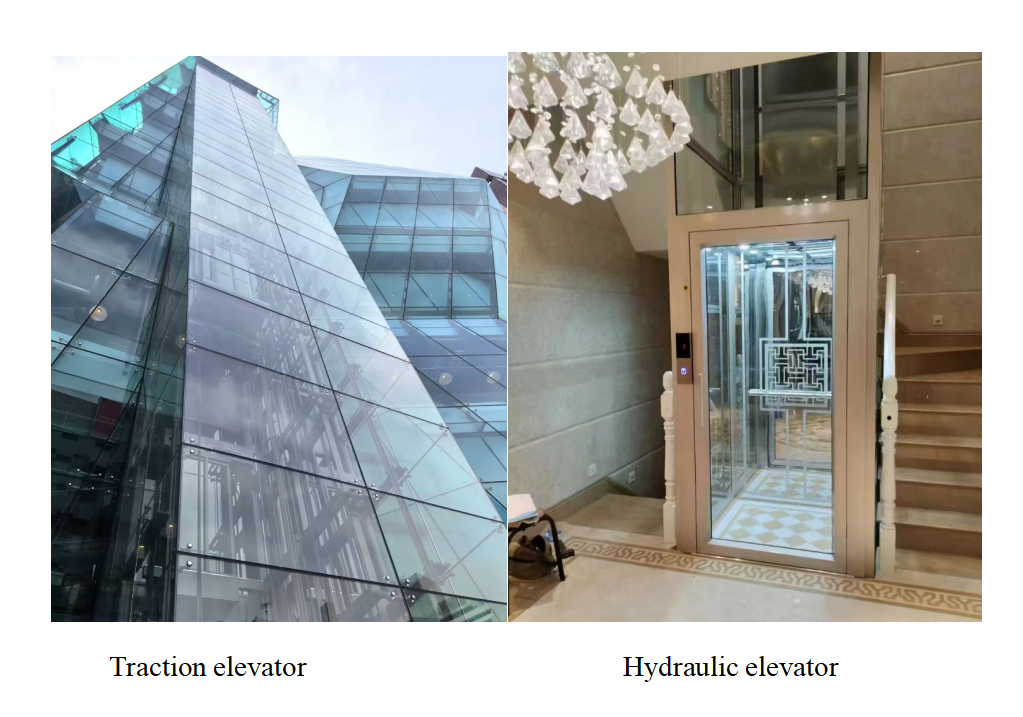


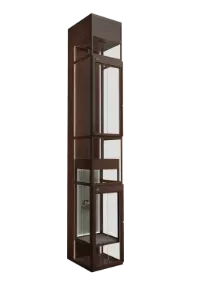
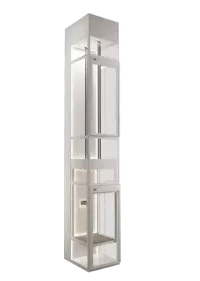
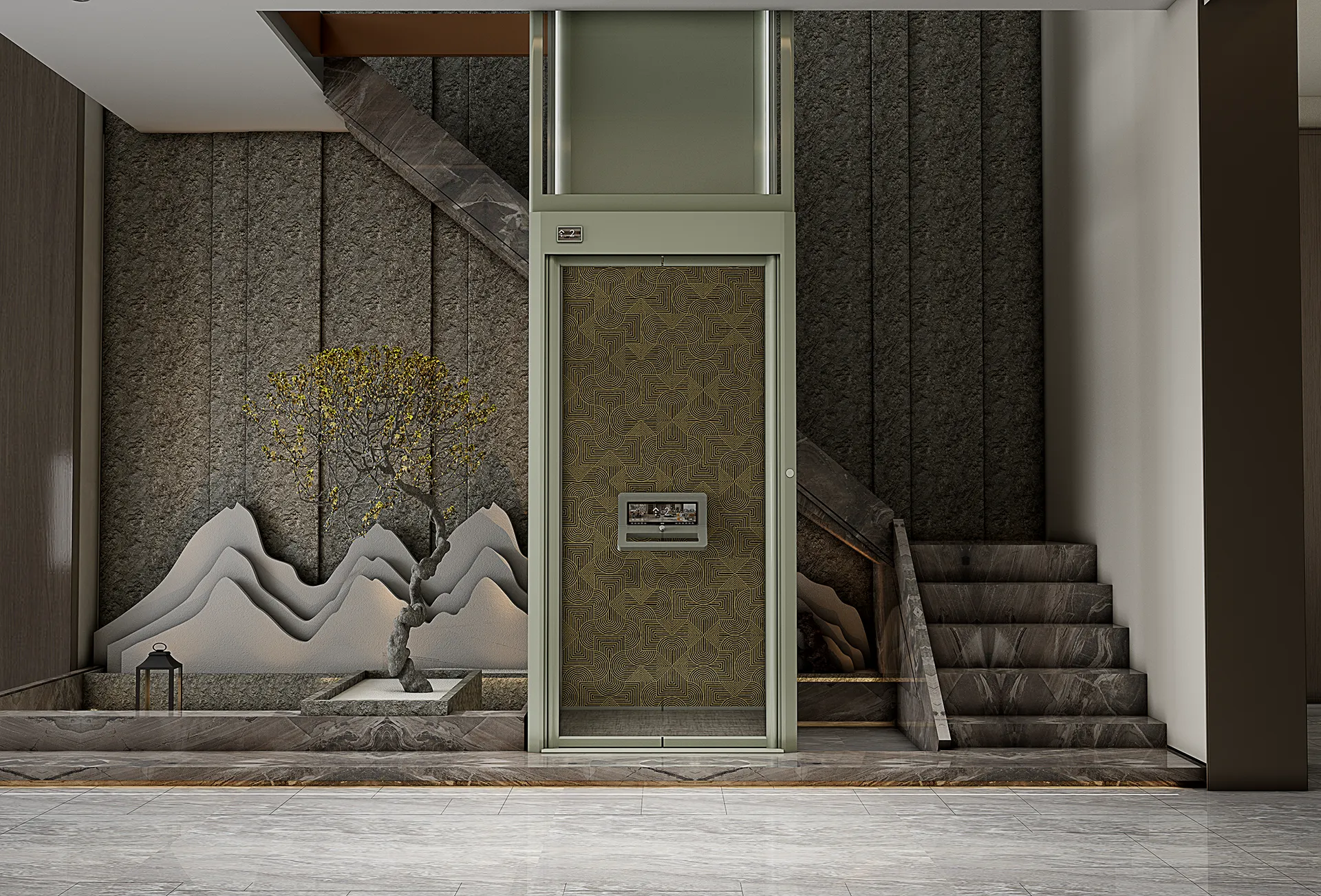
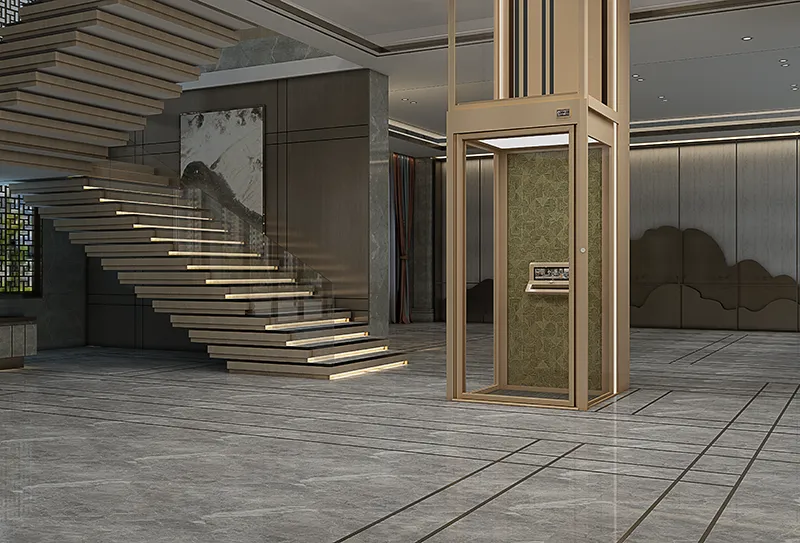
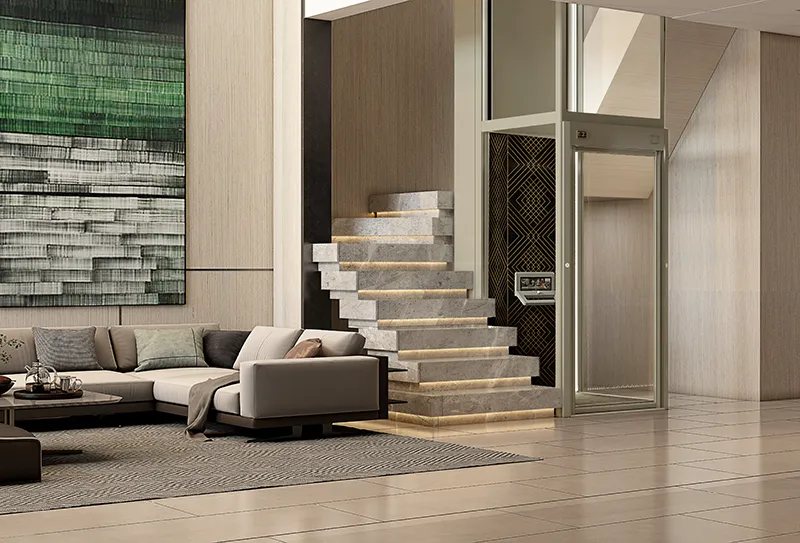
When a family decides to add a home elevator, the first problem is rarely the brand – it’s the building itself.
No reserved shaft, limited space, low headroom, shallow pit, load-bearing walls that cannot be changed easily… These constraints are common in existing villas, townhouses and small residential buildings. In many of these projects, a traditional elevator design is either too complicated or simply impossible to install.
This is exactly where a traction backpack elevator becomes a practical and profitable solution for both homeowners and installation contractors.
What Makes a Traction Backpack Elevator Different?
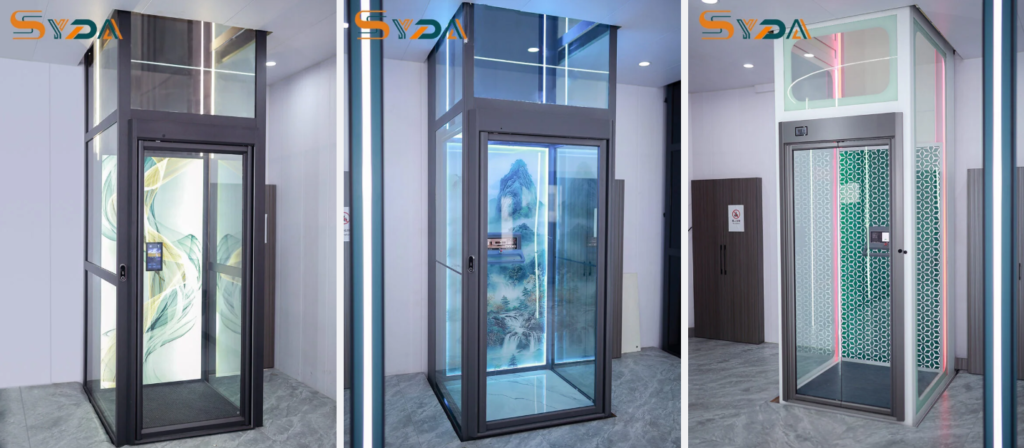
A traction backpack elevator is a compact home lift where the traction machine and counterweight are arranged behind the car, “on the back” of the shaft, instead of above it.
This structure brings several key advantages for real projects:
- Smaller shaft size – ideal for narrow stairwells and corner spaces
- Lower top-floor height and pit requirements – easier to use in existing buildings
- No large machine room needed – cleaner architecture and less structural change
- Stable, comfortable traction drive – smooth ride for daily family use
In short, it combines the comfort of traction technology with a layout optimized for limited space, making it especially suitable for home and low-rise applications.
Ideal Application Scenarios
Traction backpack elevators are not a theoretical concept – they are designed for very specific, real-world situations. Typical projects include:
1. Private Villas and Townhouses
For 2–4 storey villas and townhouses, owners often want a home elevator that:
- Takes minimal space
- Runs quietly and smoothly
- Matches the interior decoration
A backpack traction elevator can be installed in a compact shaft beside the stairs or in a corner, without sacrificing an entire room. For families with elderly people, children or heavy daily loads, this adds convenience and increases the long-term value of the property.
2. Duplex and Loft Apartments
In duplex or loft apartments, designers frequently face:
- Narrow, steep internal staircases
- Limited headroom at the top floor
- Very little room for a standard shaft
Because the machine and counterweight are placed behind the car, the backpack traction design makes better use of vertical space. It allows a smaller footprint while still providing a full-size, safe and comfortable car.
3. Old Buildings and Retrofit Projects
In older residential buildings or walk-up apartments, there is usually:
- No reserved elevator shaft
- Structural restrictions that make heavy construction difficult
- Residents who want installation with minimum disturbance
Here, the traction backpack elevator can be installed using existing load-bearing walls or a light steel shaft, with a relatively shallow pit and reduced top height. This significantly lowers the difficulty and cost of retrofitting a lift into an existing structure.
4. Small Offices, Clinics and B&Bs
For small commercial projects such as clinics, studios, B&Bs or boutique offices, owners may:
- Need an elevator for accessibility and image
- Have very tight floor plans
- Want a simple, reliable solution without a large machine room
A compact backpack traction elevator satisfies accessibility requirements, improves customer experience and enhances the property’s professional image – all with optimized use of space.
Key Benefits for Contractors and Dealers
For installers, dealers and engineering companies, choosing the right elevator type is not only about technical feasibility – it also affects project risk, installation time and long-term business.
A traction backpack elevator offers several business advantages:
1. Easier Civil Work, Lower Site Risk
Because the system can use a small shaft with reduced pit and headroom requirements, civil work is more straightforward:
- Less structural modification
- Shorter construction period
- Fewer conflicts with pipes, beams and existing finishes
This reduces uncertainty on site and helps you keep the project under control.
2. High Space Utilization
Every square meter is valuable, especially in high-value residential or commercial buildings. The compact layout of the backpack traction elevator:
- Maximizes car size within a small shaft
- Allows installation in narrow stairwells and corners
- Preserves more usable floor area for the owner
When you present solutions, a space-efficient lift makes it much easier to convince the client.
3. Comfortable Ride with Traction Technology
Compared with some alternative home lift technologies, a traction backpack elevator provides:
- Smooth acceleration and deceleration
- Low noise and vibration
- Reliable, energy-efficient operation
For daily family use, comfort is not just a luxury – it directly affects satisfaction, word-of-mouth and future referrals.
4. Standardized Components, Convenient Service
A well-designed backpack traction elevator uses standardized traction machines, control systems and safety components. For your service team, this means:
- Familiar structure and control logic
- Easy spare parts management
- Short learning curve for technicians
This is a solid foundation for long-term maintenance contracts and repeat business.
Typical Technical Configuration (For Reference)
Specific parameters will be customized according to each project, but a typical traction backpack home elevator may include:
- Rated load: 250–320 kg (2–4 persons)
- Speed: around 0.3–0.4 m/s, comfortable for home use
- Car size: compact car that fits in a narrow shaft (for example around 800 × 1200 mm, customizable)
- Stops: 2–5 floors for villas and low-rise buildings
- Door types: manual or automatic doors, single-side or through-type opening according to layout
Instead of giving fixed numbers, it is more effective to ask customers to provide shaft dimensions and floor heights, and then offer a tailored proposal.
Installation Process Overview
To give project owners confidence, it is helpful to briefly explain how a traction backpack elevator is implemented in a real job:
- On-Site Survey
- Measure floor heights and available shaft space
- Check load-bearing walls and overall structure
- Customized Design & Layout Drawing
- Propose car size, door opening direction, and machine arrangement
- Confirm pit depth and top headroom requirements
- Civil Works Preparation
- Build or reinforce the shaft according to drawings
- Reserve openings and embed necessary parts
- Elevator Installation
- Install guide rails, car frame, counterweight and traction machine
- Complete control cabinet, wiring, doors and finishes
- Testing, Commissioning & Handover
- Perform safety tests and ride comfort adjustments
- Train the owner or property manager on basic operation
This clear, step-by-step process helps reduce communication barriers between you and the client, especially when projects involve renovation and structural changes.
How to Evaluate Whether a Traction Backpack Elevator Fits Your Project
If you are a dealer, contractor or project owner, you can quickly evaluate whether this solution is suitable by checking a few key questions:
- Is there a limited shaft or stairwell space, but still a need for a full-function elevator?
- Is the top-floor height not enough for a traditional traction machine room?
- Is heavy civil work difficult or too expensive for the owner to accept?
- Is the project 2–5 floors, such as a villa, townhouse, duplex or low-rise building?
- Does the client value both ride comfort and space efficiency?
If most of the answers are “yes”, a traction backpack elevator is very likely a strong candidate for your design.
Work With a Professional Manufacturer for Your Next Project
Selecting the right product is only one part of a successful home elevator project. The other part is choosing a manufacturer who can provide:
- Stable, proven traction backpack elevator solutions
- Flexible customization for shaft size, finishes and doors
- Professional technical support from design to commissioning
- Reliable after-sales service and spare parts supply
- OEM/ODM cooperation for local dealers and partners
With the right partner, you can expand your product range, complete more retrofit projects, and offer your customers a solution that combines comfort, safety and efficient use of space.
Send Us Your Project Details for a Free Proposal
If you are planning a villa, townhouse or building retrofit project and are considering a traction backpack elevator, we invite you to share some basic information:
- Building type and number of floors
- Floor-to-floor heights and total travel
- Available shaft size (width × depth) or staircase drawings
- Desired capacity (number of persons) and door opening direction
Our engineering team will prepare a customized layout and quotation based on your data, and help you compare different configuration options for your market.
Ready to evaluate a traction backpack elevator for your next project?
Send us your drawings and requirements via email or the contact form on our website, and we will get back to you with a professional solution tailored to your building.