

When planning a villa or multi-storey house, many clients know they want a home elevator but are not sure whether to choose a traction or hydraulic system. Both can be safe and comfortable if designed correctly, but each has its own advantages in different situations.
As a professional Chinese home elevator manufacturer, Shandong Songya Intelligent Technology Co., Ltd. (SYDA) focuses on hydraulic and traction home elevators for villas, duplex buildings and self-built houses.
This article compares traction and hydraulic home elevators from a practical, project-based perspective to help you and your clients make the right decision.
Who should read this comparison?
- Villa owners and developers
- Local elevator installers and lift companies
- Contractors who design and build high-end houses
- Agents looking for a stable home elevator series to promote
If you often answer questions like “Which type is quieter?” or “Which one is better for low pit?”, these points will help.
Basic concepts: traction vs hydraulic
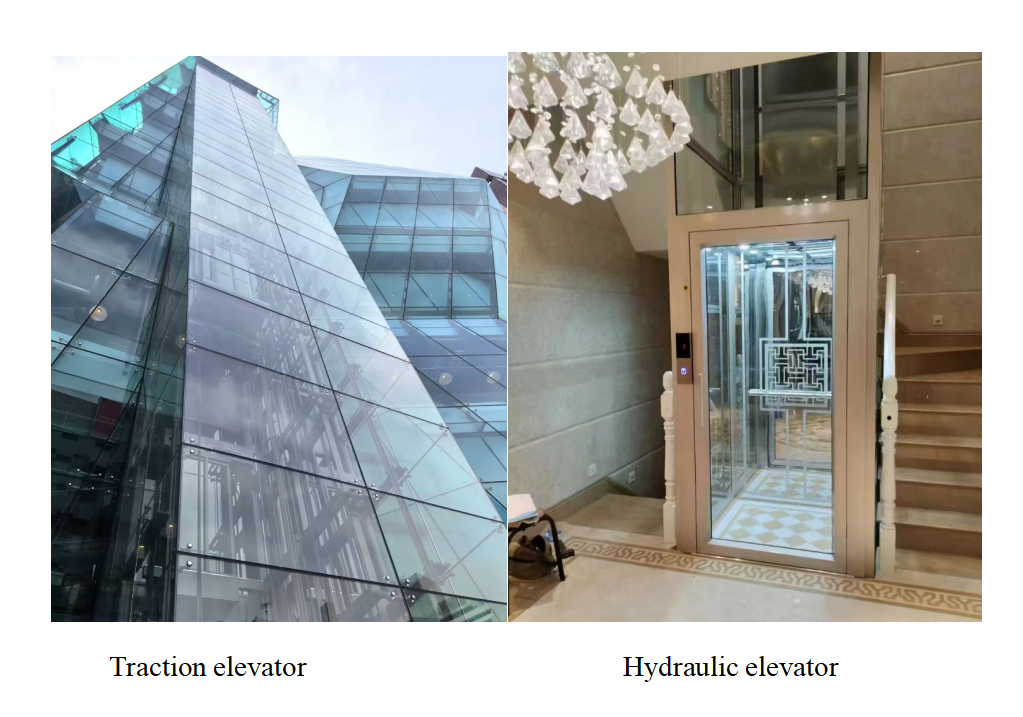
Traction home elevator (SYDA traction series)
- Uses traction machine, counterweight and steel ropes
- Cabin is balanced by counterweight, similar to a small passenger elevator
- Very common in modern residential projects
Hydraulic home elevator (SYDA hydraulic series)
- Uses a hydraulic cylinder and pump unit to lift the cabin
- Cabin is pushed from below or side without counterweight
- Often used in low-rise buildings and retrofits
Both systems can be designed to meet safety standards and offer a comfortable ride if manufactured and installed correctly.
Comparison 1: Building conditions (pit and headroom)
Traction elevator:
- Usually needs a certain pit depth and overhead
- Machine-room-less (MRL) designs can reduce space requirements
- Very suitable for new villas where civil work can be planned in advance
Hydraulic elevator:
- More flexible with pit and headroom
- Can be a good choice when pit depth is limited or top-floor height is low
- Often recommended for existing houses with strict structural limitations
If you are working on a new villa with flexible civil design, a SYDA traction home elevator may be the first option. For heavily constrained retrofits, a SYDA hydraulic home elevator can solve problems more easily.
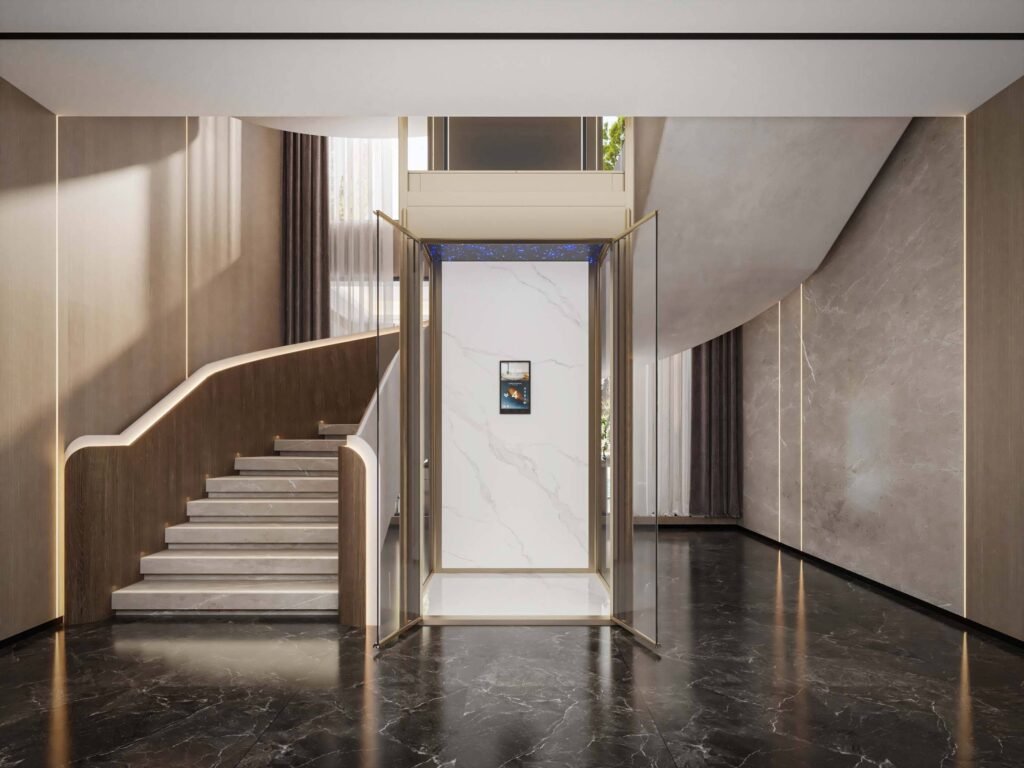
Comparison 2: Number of stops and travel height
Traction elevator:
- Performs very well in 3–6 stop applications
- Efficient and stable for higher travel
- Suitable when you want a “small passenger elevator” feeling
Hydraulic elevator:
- Typically recommended for 2–4 stop applications
- Travel height is usually lower than traction systems
- For very high travel and many stops, traction is generally preferred
If your project has more than 4 stops or high travel, traction will usually be more efficient and economical in the long run.
Comparison 3: Ride comfort and noise
Modern traction and hydraulic systems can both be quiet and smooth if:
- Guide rails and car frames are precisely aligned
- Vibration is properly controlled
- Pump or traction machines are selected and installed correctly
Common perceptions:
- Traction: often perceived as smoother for longer travel and higher speed
- Hydraulic: very comfortable at low speeds and short travel, but pump noise must be well controlled
In practice, SYDA designs both systems to meet a comfortable standard and adjusts the technical details according to your project needs.
Comparison 4: Energy consumption and maintenance
Traction elevator:
- More energy-efficient for frequent use and higher travel
- Uses counterweight to balance cabin, saving power
- Regular maintenance of traction machine, ropes, and control system is required
Hydraulic elevator:
- Consumes more energy during lifting, less when descending
- Oil quality and temperature must be controlled
- Periodic inspection of hydraulic cylinders, seals, and pump unit is important
For high-usage villas or small commercial buildings, traction may offer better long-term energy performance. For moderate use in private houses, both can be acceptable if properly designed.
Comparison 5: Installation and equipment layout
Traction home elevator:
- Can be supplied as MRL to avoid a separate machine room
- Equipment is placed near the shaft top or in a compact machine space
- Requires good coordination with civil works
Hydraulic home elevator:
- Pump unit can be placed in a small cabinet or room near the shaft
- Cylinder placement is flexible (under or beside the shaft)
- Often easier to integrate into existing buildings with limited space
For installers and contractors, installation time and coordination can be similar. The key is to have clear drawings and technical support from the manufacturer.
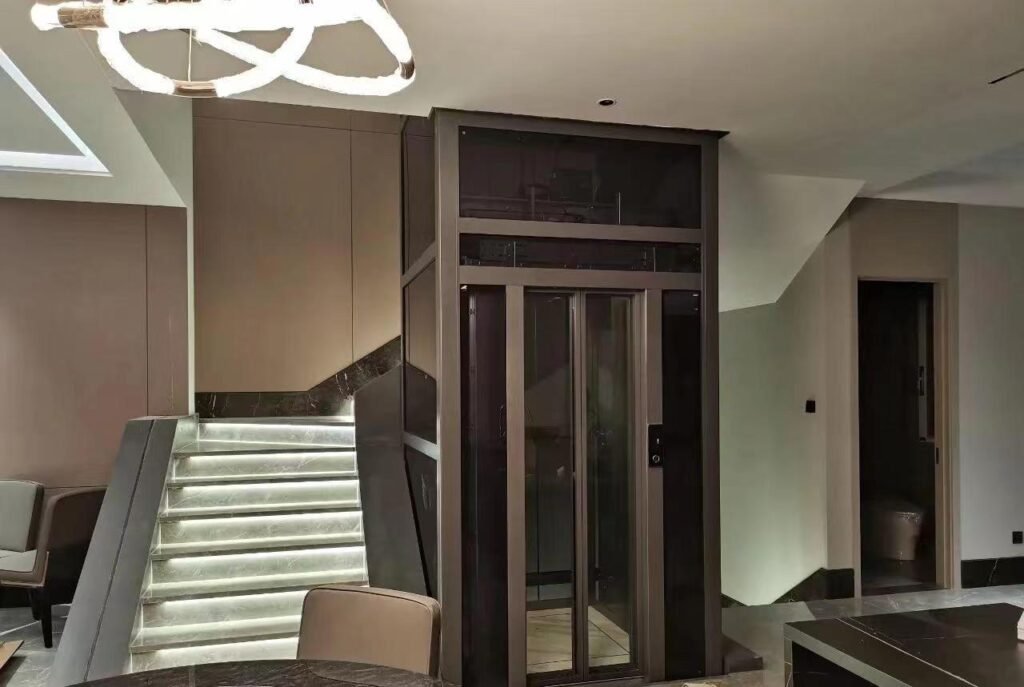
How SYDA helps you choose the right type
Instead of promoting one technology blindly, SYDA evaluates your project step by step:
- Number of stops and floor heights
- Shaft size, pit depth and top headroom
- Building type and usage frequency
- Local regulations and inspection requirements
- Client preference for cabin style and performance
Based on these factors, SYDA proposes one or two suitable configurations (traction and/or hydraulic) with clear technical parameters and price comparison. You and your client can then make a confident decision.
What information SYDA needs from you
To recommend the best solution for your villa project, please send:
- Country and project location
- Floor plan and section drawings, or a simple sketch with sizes
- Floor-to-floor heights and number of stops
- Shaft space you can provide, pit depth, and top-floor height
- Any special requirements (wheelchair use, glass shaft, special decoration, etc.)
SYDA’s engineering team will prepare layout drawings and quotations for both traction and hydraulic options if needed, so you can compare them side by side.
Turn your questions into a concrete proposal
If you are still unsure whether traction or hydraulic is better for your villa project, the easiest way is to let SYDA study your actual building.
Send your drawings and project details, and SYDA will come back with:
- A recommended system type
- Cabin size and door plan
- Shaft requirements and civil work notes
- A competitive factory quotation
This way, you get a practical answer based on your project, not just theory.
You can reach the SYDA team via the inquiry form on Songyada.com or email info@songyada.com.