

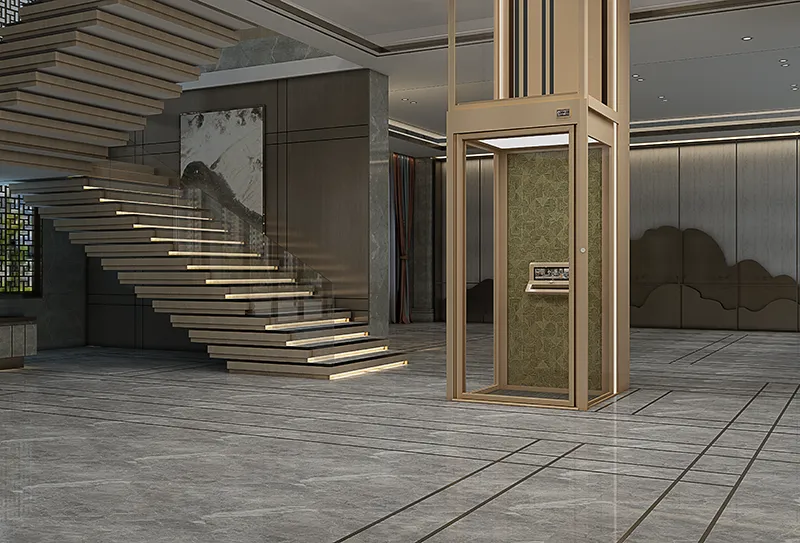
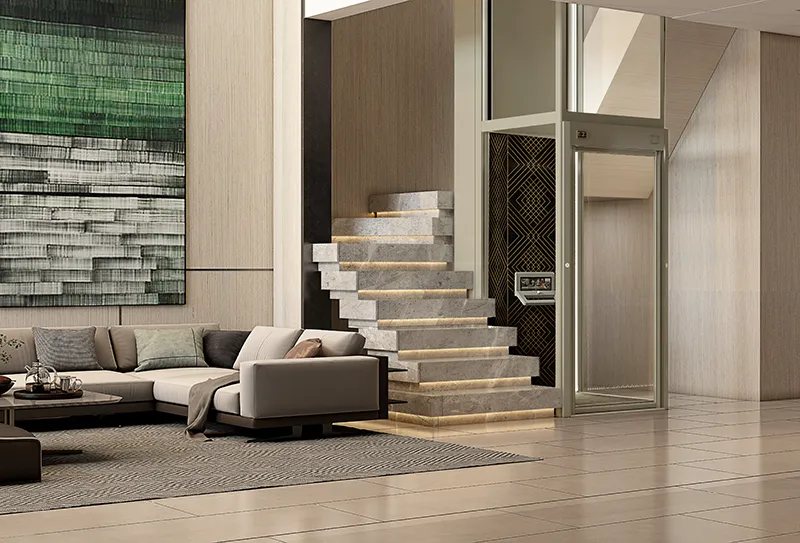
Unlocking Value in Luxury Developments: Navigating Hydraulic Home Elevator Costs for Developers in 2025
In the competitive landscape of high-end residential projects, integrating hydraulic home elevators has become a non-negotiable feature for developers aiming to attract affluent buyers and ensure long-term property appreciation. These elevators not only enhance accessibility and convenience but also position your villas and luxury homes as forward-thinking investments. As we enter 2025, understanding the nuances of hydraulic home elevator prices and costs is crucial for budgeting, ROI projections, and seamless project delivery. Drawing from industry benchmarks and expert insights, this guide equips B2B stakeholders—like real estate developers, architects, and property managers—with actionable data to optimize expenses while maximizing client satisfaction.
Why Hydraulic Home Elevators Are a Developer's Must-Have
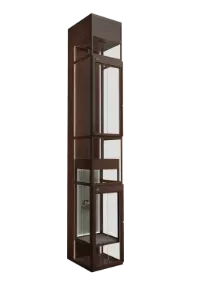
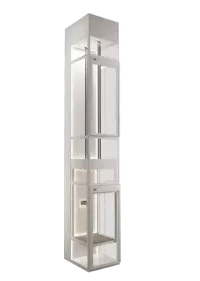
Hydraulic systems stand out for their reliability, smooth operation, and suitability for low- to mid-rise structures (up to 3-4 floors), making them ideal for villa communities and upscale renovations. Unlike traction or pneumatic alternatives, hydraulics use a piston-and-fluid mechanism for whisper-quiet lifts, supporting loads of 450-750 lbs with minimal vibration—perfect for aging-in-place designs that appeal to premium demographics.
For developers, the appeal lies in their versatility: no overhead machine room required, compact footprints (as small as 5x5 ft shafts), and compliance with global standards like ASME A17.1. In bulk installations, they can boost property values by 5-10%, per recent market analyses, while qualifying for green building incentives due to energy-efficient descent (gravity-assisted, using 30-50% less power than ascent).
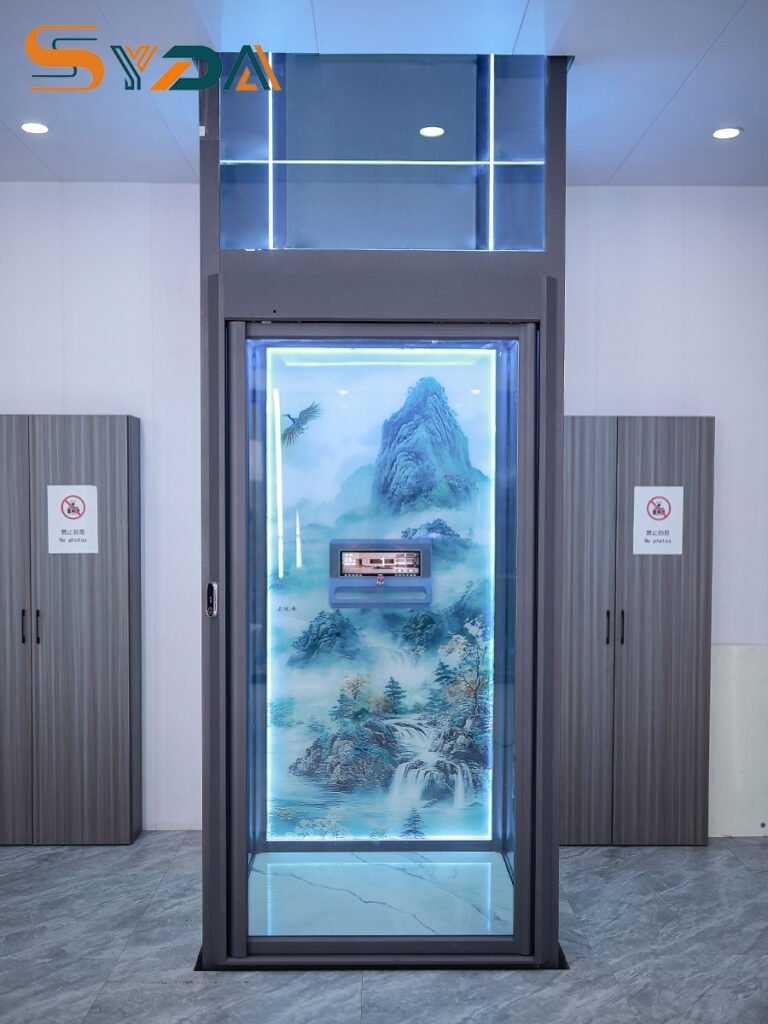
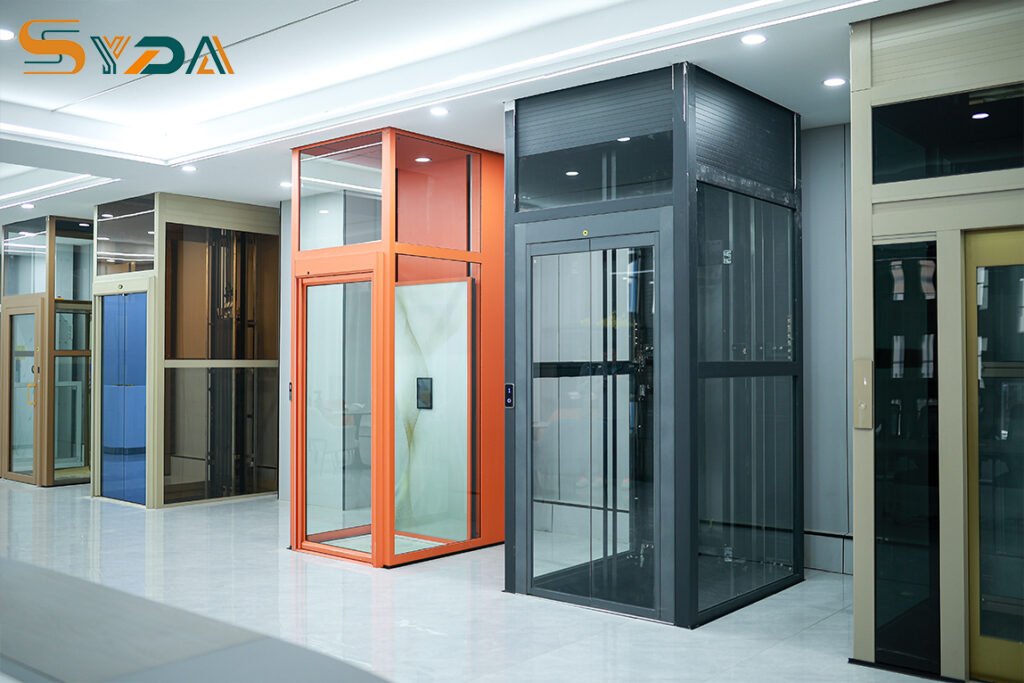
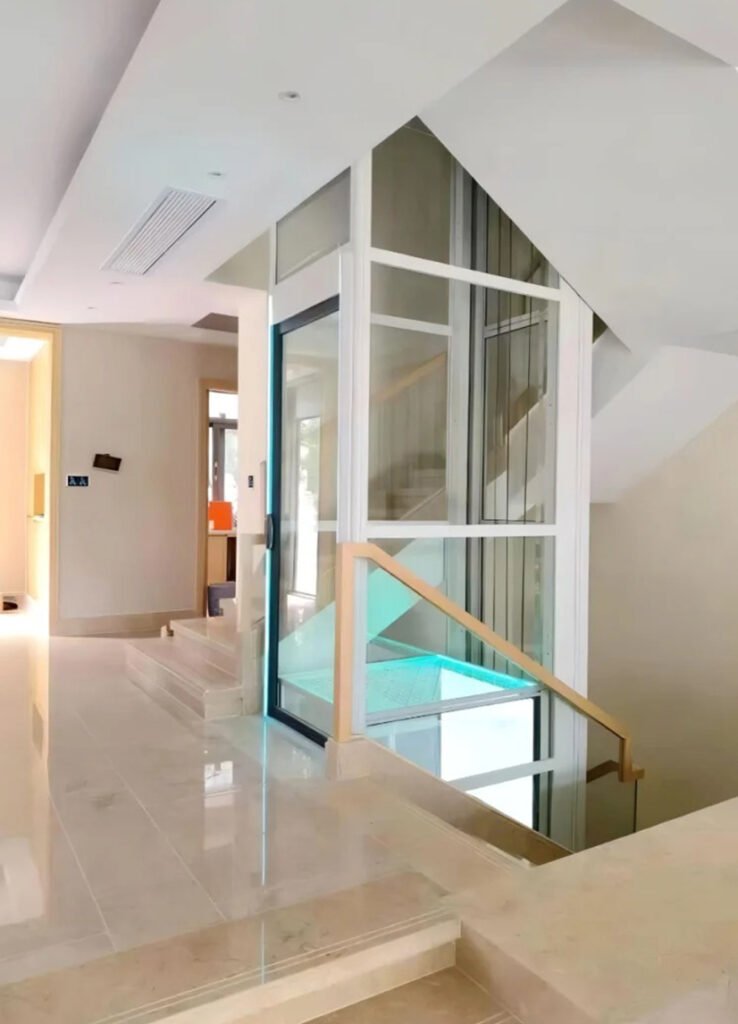
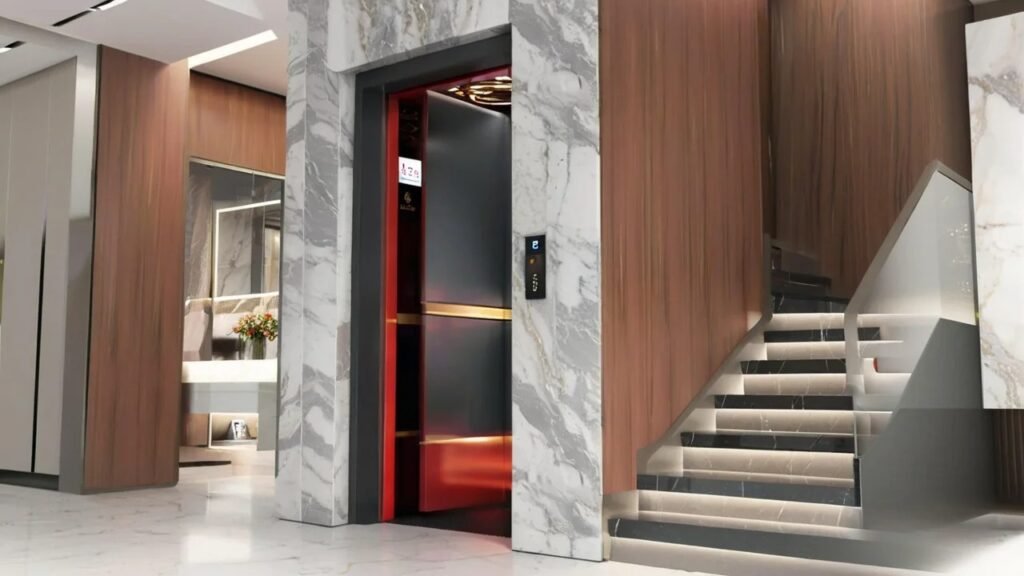
Breaking Down Hydraulic Home Elevator Prices in 2025
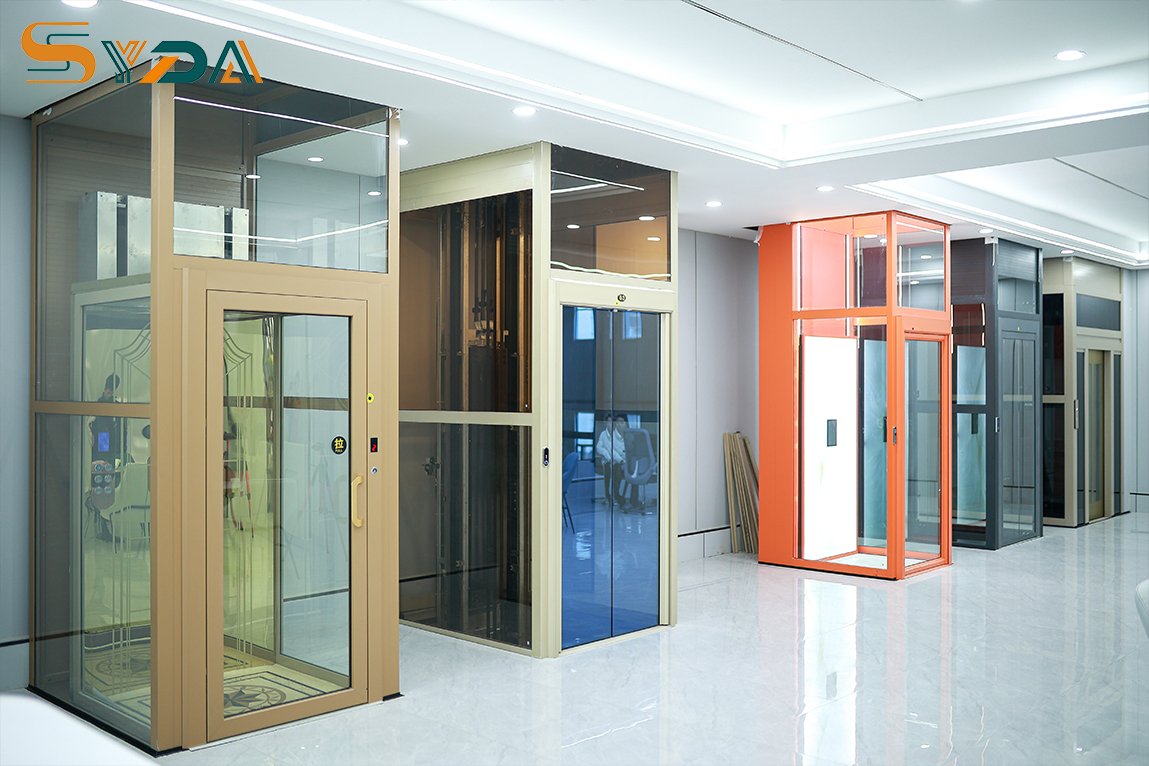
Market data from 2025 shows hydraulic home elevators averaging $25,000 to $50,000 per unit installed for a standard two-stop configuration (e.g., ground to second floor, 10-15 ft travel). This range reflects factory-direct pricing from manufacturers like SYDA (Shandong Songya Intelligent Technology Co., Ltd.), a trusted exporter to 80+ countries, where entry-level models start at the lower end for volume orders.
Here's a quick pricing snapshot based on current industry reports:
| Configuration | Base Price (USD) | Key Features | Ideal for Developers |
|---|---|---|---|
| Basic Two-Stop (450 lbs capacity) | $18,000 - $25,000 | Standard cab (36x48 in), manual doors, basic controls | Budget villa retrofits; minimal shaft mods |
| Mid-Range Three-Stop (630 lbs) | $30,000 - $40,000 | Auto doors, LED lighting, wheelchair-accessible | Luxury townhomes; 20-30 ft travel |
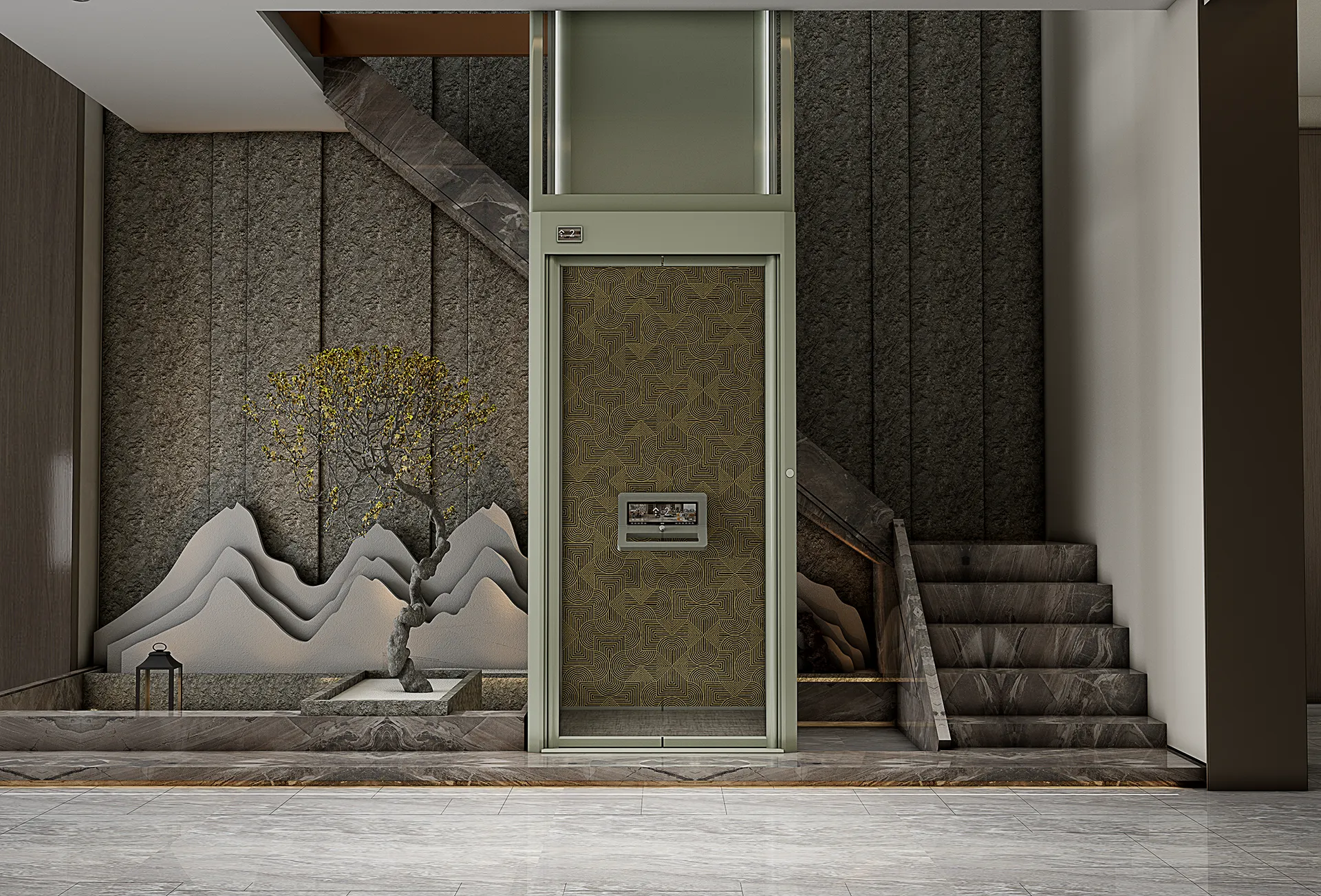
| Premium Custom (750+ lbs) | $40,000 - $60,000+ | Panoramic glass, smart integration (app controls), custom finishes | High-end estates; multi-vendor projects |
*Prices exclude site-specific installation (add 20-30% for labor/permits). Bulk procurement (5+ units) can yield 15-25% discounts, especially from global suppliers like SYDA, which offers CE/SGS-certified units with 10-year warranties.
Key Cost Factors: What Drives Hydraulic Home Elevator Expenses?
For developers, total ownership cost (TOC) extends beyond the sticker price—factoring in installation, maintenance, and scalability is key to avoiding overruns. Here's a breakdown of pivotal influencers:
- Number of Stops and Travel Distance: Each additional floor adds $5,000-$15,000 due to extended pistons and cab reinforcements. A three-story setup in a villa might push costs to $45,000+, but modular designs from manufacturers like SYDA minimize this by 10-20% through pre-engineered components.
- Installation Complexity and Site Prep: Retrofitting into existing structures (e.g., no pre-built shaft) inflates costs by 25-40% for structural reinforcements, electrical upgrades, and pit excavation (12-18 inches deep). New-build integrations are cheaper at $8,000-$15,000 per unit. Geographic variances play in too—urban hubs like New York add 15-20% for labor and regs, while suburban sites save via easier access.
- Customization and Capacity: Wheelchair-friendly cabs (wider doors, higher loads) or aesthetic upgrades (e.g., SYDA's "Romantic Sky Top" panoramic views) tack on $5,000-$10,000. Developers specifying intelligent systems for multi-unit syncing can leverage economies of scale, reducing per-unit premiums.
- Ongoing Maintenance and Lifecycle Costs: Annual servicing runs $500-$1,500, but hydraulics excel here—fluid changes every 5 years versus traction's frequent cable replacements. Long-term, they offer a 20-25 year lifespan, with ROI via reduced vacancy (elevators correlate to 7% faster sales in luxury segments).
- Regulatory and Incentive Factors: Permits/inspections add $1,000-$3,000, but U.S. tax credits (up to 30% via ADA compliance) and EU green rebates offset this. For international developers, exporters like SYDA provide DDP shipping, streamlining cross-border logistics.
Pro Tip: Use TOC calculators from suppliers to model scenarios—e.g., a 10-unit villa project at $35,000/unit totals $350,000 upfront but yields $500,000+ in added resale value.
Developer Strategies: Minimizing Costs While Maximizing Appeal
To turn hydraulic elevators into a profit center:
- Opt for Bulk Sourcing: Partner with high-volume manufacturers like SYDA for tiered pricing and one-stop services (design-to-maintenance). Their Xiangjie series, blending screw safety with electric quietude, installs in weeks, not months.
- Hybrid Project Planning: Combine with traction backups for taller builds to balance costs—hydraulics for low-rises save 20% on energy versus full traction setups.
- ROI-Focused Features: Prioritize no-pit designs for retrofits (saving $10,000/site) and integrate smart tech for premium branding—buyers pay 3-5% more for "future-proof" homes.
- Case Study Spotlight: In a recent Shanghai Palm Springs Garden development, SYDA hydraulics cut installation time by 30%, delivering 15 units under budget at $28,000 each, boosting phase-one sales by 12%.
Partner with SYDA: Your Gateway to Cost-Effective Excellence
As a developer, why settle for generic when you can specify SYDA's proven hydraulic solutions? With 10+ years of R&D, exports to the U.S., Canada, and beyond, and experience centers in Beijing, Shanghai, and Guangzhou, we deliver tailored quotes starting at competitive rates—often 10-15% below market for B2B volumes. Our one-stop model includes 3D schematics, video-guided installs, and flexible terms (50% deposit, FOB/CIF options).
Ready to integrate hydraulic elevators that elevate your projects—literally? Contact SYDA today for a free bulk pricing audit and project simulation. Visit songyada.com or submit our JS-enabled form for instant insights. Let's build value, floor by floor.