

Hydraulic vs Traction Home Elevator: Which Is Better for a Villa or Private House?
Choosing between a hydraulic and traction home elevator is one of the most important decisions in a villa or private house project. Both systems can be suitable for residential use, but they are not selected for the same reasons. The better option depends on the number of floors, travel height, shaft condition, installation space, noise expectations, maintenance access, long-term use, and the structure of the house.
For homeowners, villa developers, designers, distributors, and retrofit project buyers, the question should not be limited to “Which elevator is cheaper?” A residential elevator is part of the house for many years. It should match the building layout, daily family use, safety requirements, decoration style, and service conditions.
Songya manufactures home elevators and villa lifts for private houses, duplex buildings, self-built houses, and residential retrofit projects. This article explains the main differences between hydraulic and traction home elevators and what buyers should confirm before requesting a recommendation.
Hydraulic vs Traction Home Elevator: Quick Comparison
| Selection Point | Hydraulic Home Elevator | Traction Home Elevator |
|---|---|---|
| Typical use | Low-rise residential buildings, villas, private houses | Villas, duplex houses, modern residences, retrofit projects |
| Ride comfort | Stable and smooth movement | Smooth operation with good speed and control performance |
| Space requirement | Depends on hydraulic system layout and shaft condition | Often suitable for compact shaft planning |
| Energy use | Usually higher during lifting operation | Generally more energy-efficient for frequent residential use |
| Maintenance focus | Hydraulic components, oil system, seals, drive unit | Traction machine, ropes, control system, guide components |
| Best project fit | Stable low-rise residential applications | Compact, quiet, modern villa elevator applications |
Floor Number and Travel Height
The number of floors and total travel height should be reviewed before choosing the drive system. A two-floor private house does not have the same requirements as a five- or six-floor villa. As travel height increases, the elevator configuration, guide rail length, control system, shaft planning, and installation work all change.
Songya residential elevator solutions are commonly used for 2–6 floor private houses and villa projects. For this range, both hydraulic and traction systems may be considered, but the final decision should be based on the actual floor-to-floor height, available shaft space, load requirement, and expected use frequency.
For accurate selection, buyers should provide:
- Number of floors to be served
- Floor-to-floor height for each level
- Total travel height
- Whether the house is newly built or already completed
- Whether the shaft is reserved or needs to be constructed
Shaft Condition and Installation Space
Shaft condition is often more important than the drive system name. In a new villa, the shaft, pit, overhead space, power supply, and door openings can be planned before construction. In an existing house, the elevator solution must adapt to the available space.
Common installation positions include:
- Inside an existing hoistway
- Against an interior or exterior wall
- In the middle of the staircase
- Beside the staircase
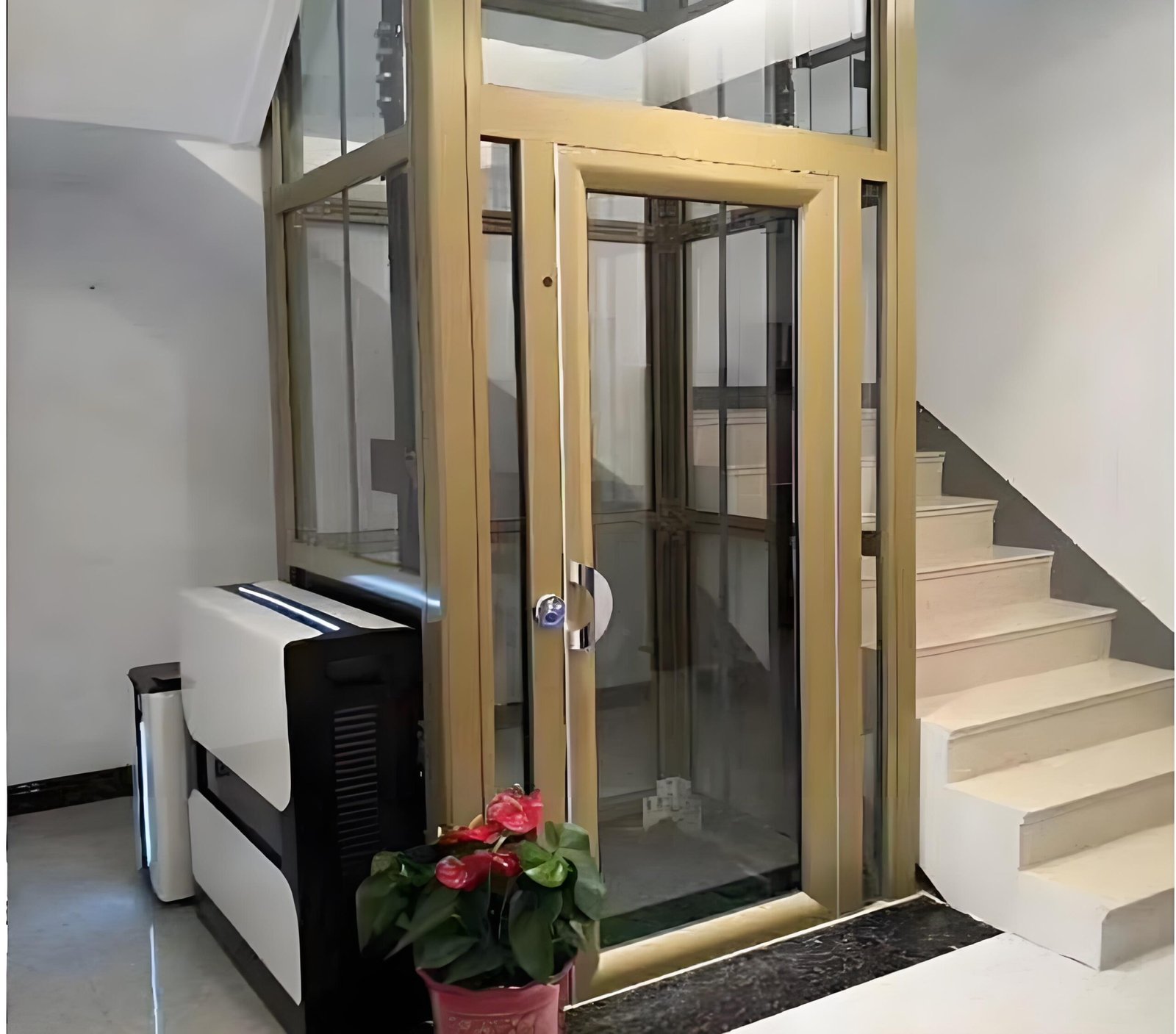
- With a self-contained shaft structure
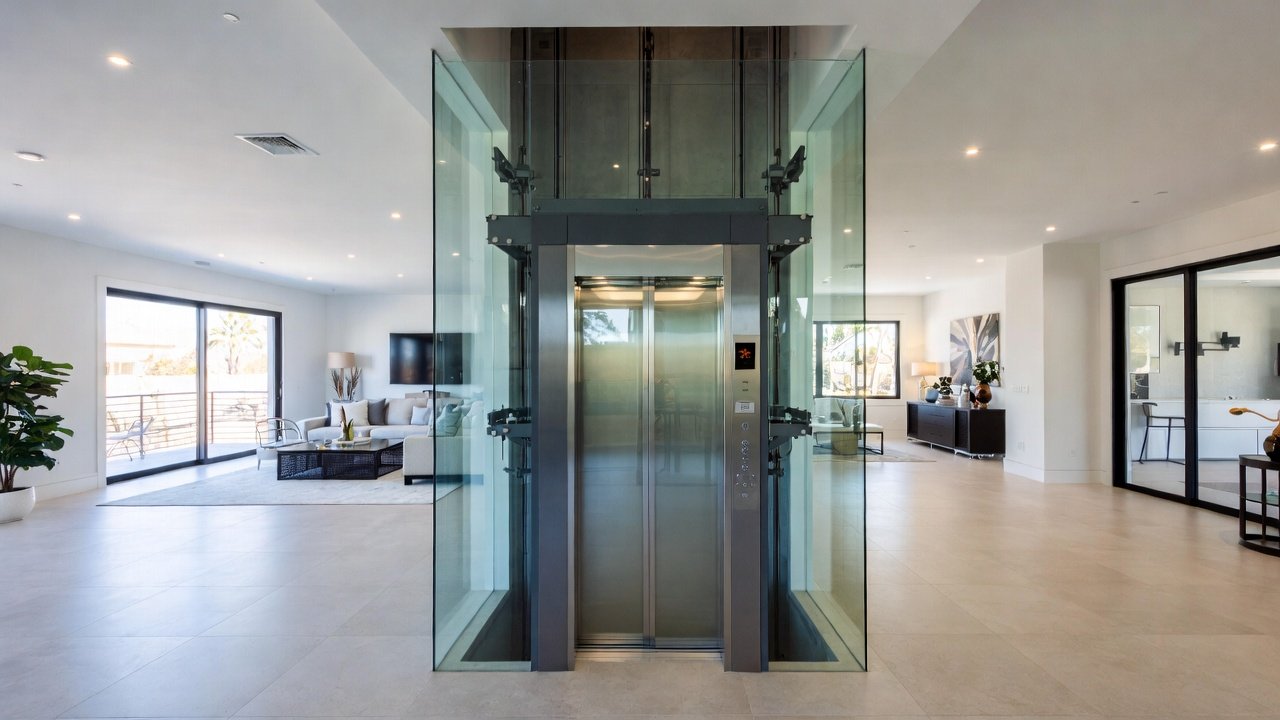
- With a glass shaft for villa or panoramic elevator design
If the house does not have a concrete shaft, an aluminum alloy elevator shaft structure may be considered. This can help create an independent installation space for a home elevator while reducing heavy civil construction in some retrofit projects.
Noise and Daily Riding Comfort
Noise control is important in private houses because the elevator may be installed near bedrooms, living rooms, stair halls, or open atriums. Unlike commercial buildings, residential elevators are used in quiet daily environments where motor noise, vibration, door movement, and cabin operation can be noticed more easily.
Hydraulic elevators are often selected for stable and smooth movement, while traction elevators are often selected for quiet and efficient residential operation. However, actual comfort also depends on manufacturing quality, guide rail installation, control system adjustment, shaft structure, and installation workmanship.
For villa projects, buyers should not evaluate comfort only by drive type. The supplier should also review:
- Installation position inside the house
- Distance from bedrooms or living areas
- Shaft structure and enclosure material
- Door type and opening direction
- Cabin size and load condition
- Expected frequency of daily use
Energy Use and Long-Term Operation
Energy consumption is another consideration, especially for families that use the elevator many times per day. In general, traction elevators are often preferred when energy efficiency is a major concern, while hydraulic elevators may be chosen for stable low-rise residential applications where use frequency is moderate.
For a private house, the difference in energy cost may not be the only deciding factor. Buyers should also consider maintenance access, service ability, installation complexity, comfort, safety configuration, and the total project budget.
A practical comparison should be based on the actual house, not only a general statement about hydraulic or traction technology.
Maintenance and Service Conditions
Both hydraulic and traction home elevators require proper maintenance. The maintenance focus is different, so buyers should confirm local service conditions before choosing the system.
For hydraulic elevators, maintenance may involve:
- Hydraulic drive unit
- Oil system condition
- Seals and hydraulic components
- Leveling performance
- Noise and vibration during operation
For traction elevators, maintenance may involve:
- Traction machine
- Ropes or traction components
- Control cabinet
- Guide rails and safety components
- Door system and leveling accuracy
For overseas projects, buyers should also confirm spare parts supply, technical documentation, installation guidance, and local installer capability. A drive system that looks suitable on paper may create difficulties if local maintenance support is not considered.
Cabin Size, Load Capacity and Family Use
Cabin size and load capacity influence both the elevator cost and the drive system selection. A compact home elevator may be enough for general family use, while a larger cabin may be required for elderly users, wheelchair access, caregivers, luggage, groceries, or household items.
Songya home elevators are designed for residential use, with typical load capacity up to 400kg depending on project configuration. Before choosing hydraulic or traction, buyers should confirm how the elevator will be used in daily life.
Key questions include:
- Will the elevator be used by elderly family members?
- Is wheelchair or walker access required?
- Will a caregiver need to enter the cabin together with the user?
- Will groceries, laundry, luggage, or small household items be carried frequently?
- How much shaft area is available for the cabin size?
The best residential elevator is not always the largest model. It is the model that fits the house layout and daily family use without creating unnecessary structural or installation difficulty.
New Villa vs Existing House Retrofit
New villa projects and existing house retrofit projects should be evaluated differently. In a new villa, the elevator can be planned together with the architectural design. This allows better control of shaft size, door direction, pit depth, overhead space, power supply, and interior style.
In an existing house, the available space is already limited. The elevator may need to be installed in the middle of the stairs, beside a wall, or with a self-contained shaft. In this case, the drive system should be selected after reviewing site photos, measurements, and floor plans.
For retrofit projects, buyers should pay particular attention to:
- Whether floor openings are required
- Whether a shaft structure must be added
- Whether the elevator affects the existing staircase
- Whether outdoor installation is needed
- Whether the structure allows the desired cabin size
- Whether local civil work is included in the project scope
Interior Design and Villa Appearance
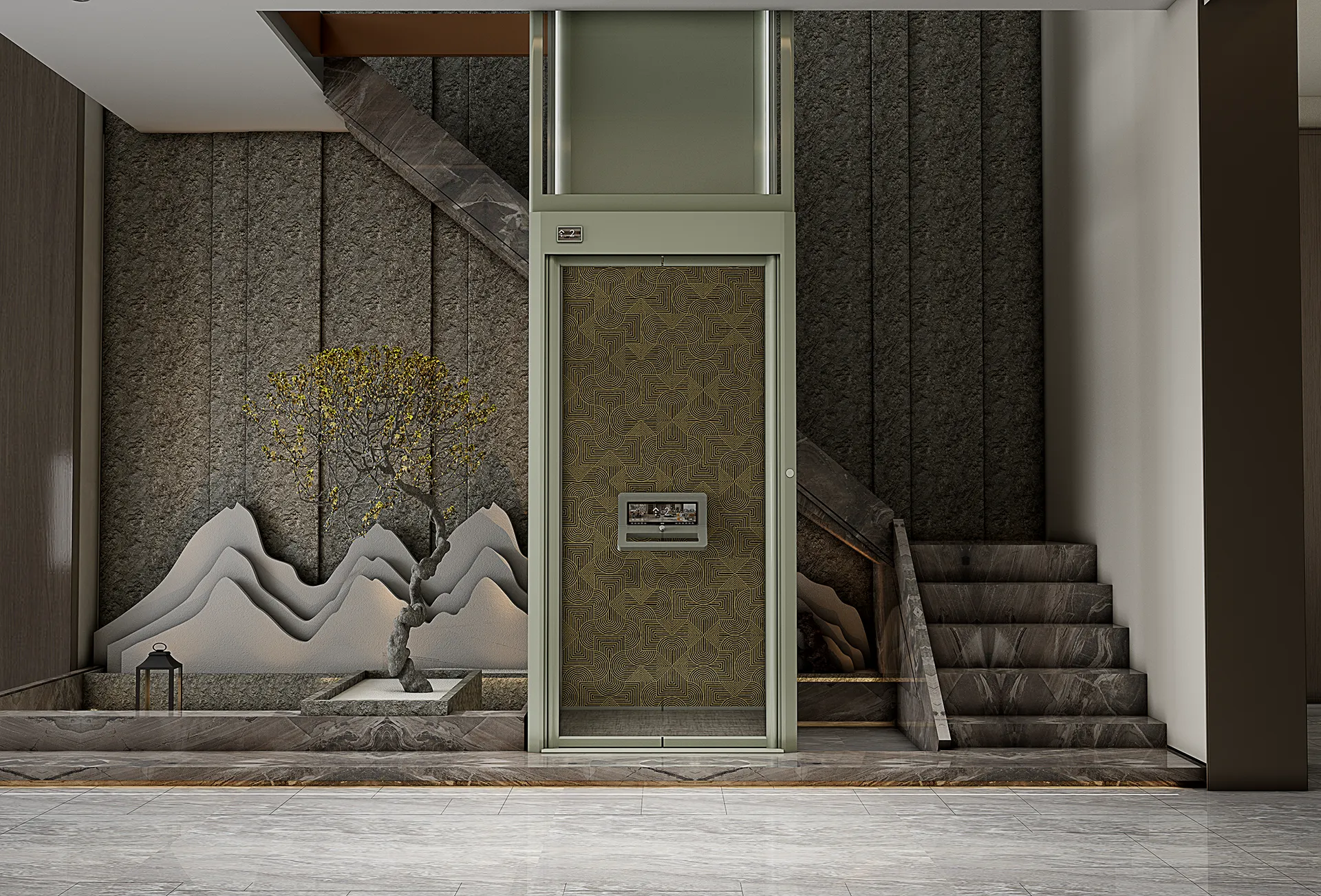
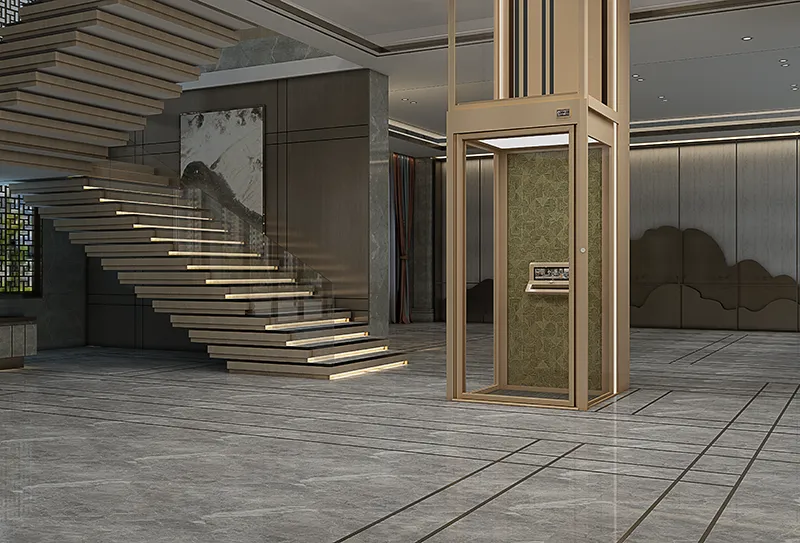
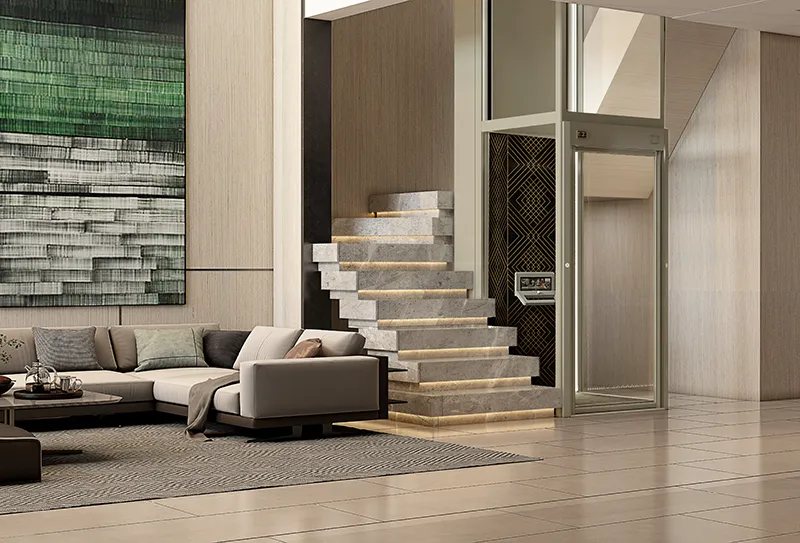
For villas and private houses, the elevator is also part of the interior environment. Buyers often consider glass shafts, panoramic designs, customized cabin finishes, door styles, lighting, control panels, ceilings, and flooring.
A traction home elevator may be preferred in some modern villa projects because of its compact and clean arrangement. A hydraulic elevator may be selected when the project focuses on stable low-rise operation and the shaft conditions are suitable. For high-end villa projects, the visual design of the shaft and cabin may influence the final system choice.
Songya provides residential elevator solutions such as compact home elevators, glass-shaft villa elevators, staircase-type home lifts, elevator cars, doors, control cabinets, HMI panels, cabin ceilings, cabin floors, and shaft structures. These components allow the elevator to be planned according to both technical and design requirements.
Which System Is Better?
There is no single answer that applies to every house. A hydraulic home elevator may be more suitable for a low-rise villa where stable movement, simple structure, and comfortable operation are the main concerns. A traction home elevator may be more suitable when the project requires compact structure, quiet operation, better energy efficiency, and modern residential elevator planning.
The correct decision should be based on project conditions rather than general preference. Buyers should compare:
- Number of floors and travel height
- Existing shaft or new shaft condition
- Available installation space
- Cabin size and load requirement
- Noise and comfort expectations
- Energy use and daily operation frequency
- Maintenance access and local service ability
- Interior design and shaft appearance
- Budget and delivery scope
FAQ
Is a hydraulic home elevator better than a traction home elevator?
Not always. A hydraulic elevator may be suitable for low-rise residential projects that require stable and smooth movement. A traction elevator may be more suitable for compact, quiet, energy-efficient villa elevator projects. The better choice depends on the house layout and use requirements.
Which home elevator is better for a villa?
Both hydraulic and traction elevators can be used in villas. The selection should consider floor number, travel height, shaft condition, cabin size, noise expectation, interior design, maintenance access, and local installation conditions.
Is a traction home elevator more energy-efficient?
In many residential applications, traction elevators are generally considered more energy-efficient than hydraulic systems, especially when the elevator is used frequently. However, energy use should be considered together with installation space, comfort, maintenance, and project budget.
Is a hydraulic elevator suitable for an existing house?
A hydraulic elevator may be suitable for an existing house if the shaft condition, pit space, load requirement, and installation layout match the system design. Site photos and measurements are needed before confirming suitability.
Can a home elevator be installed without a concrete shaft?
Yes. Some residential elevator projects can use a self-contained shaft structure, such as an aluminum alloy elevator shaft, depending on the house layout and installation position.