

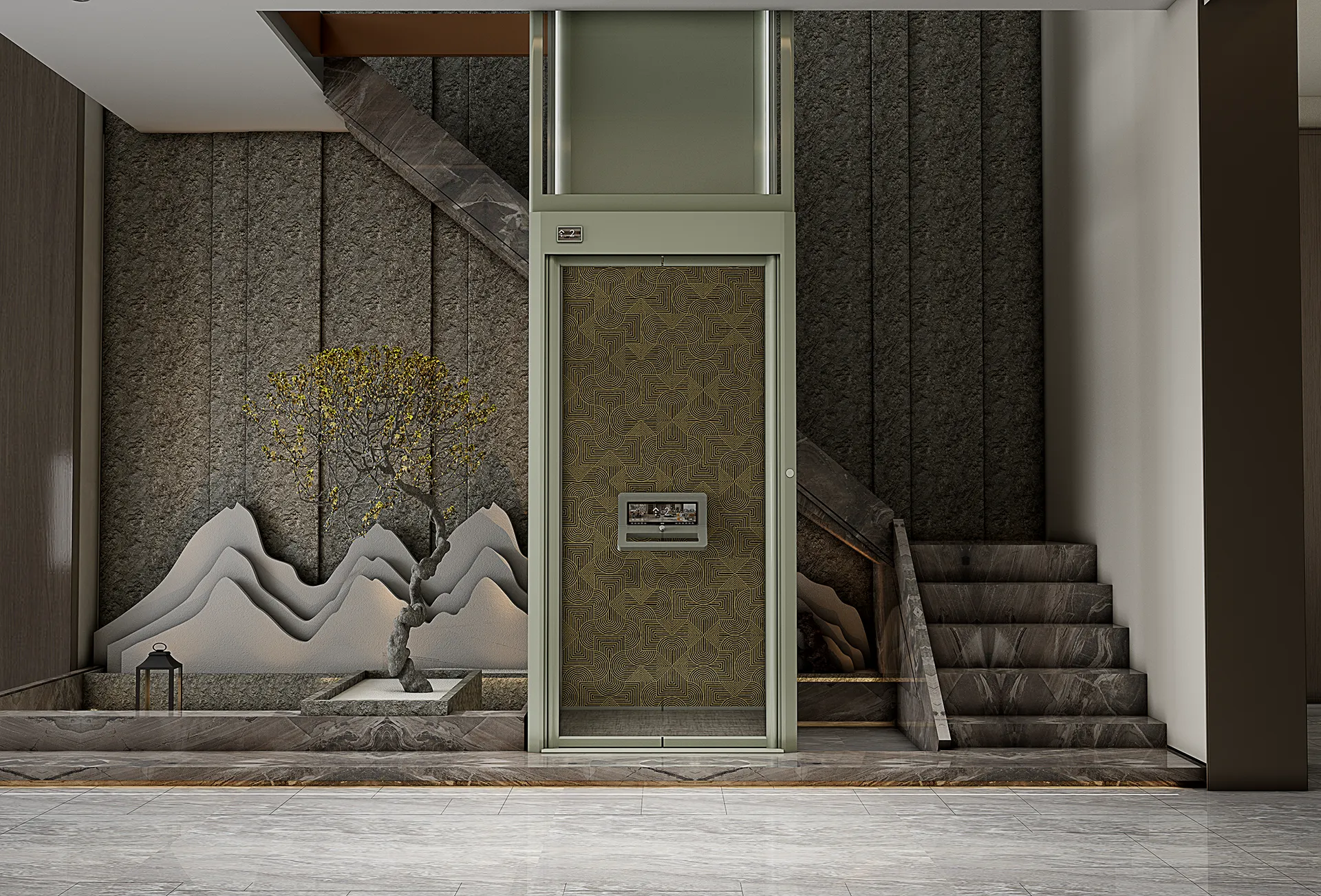
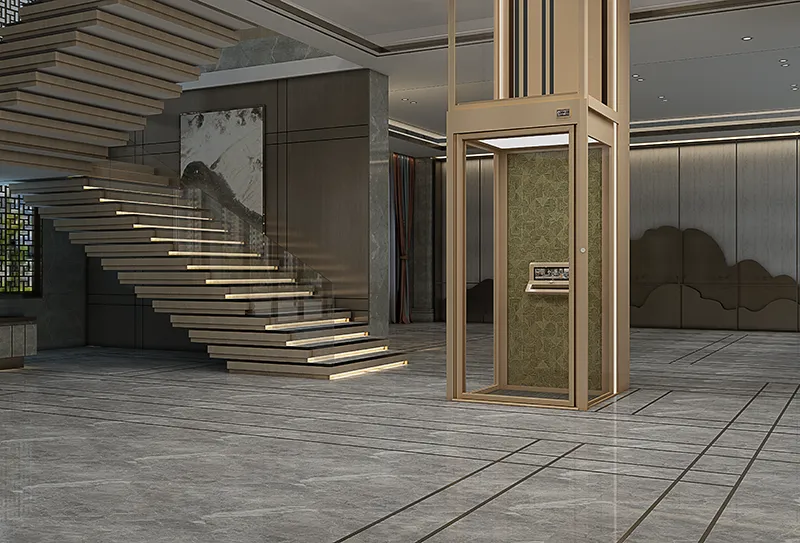
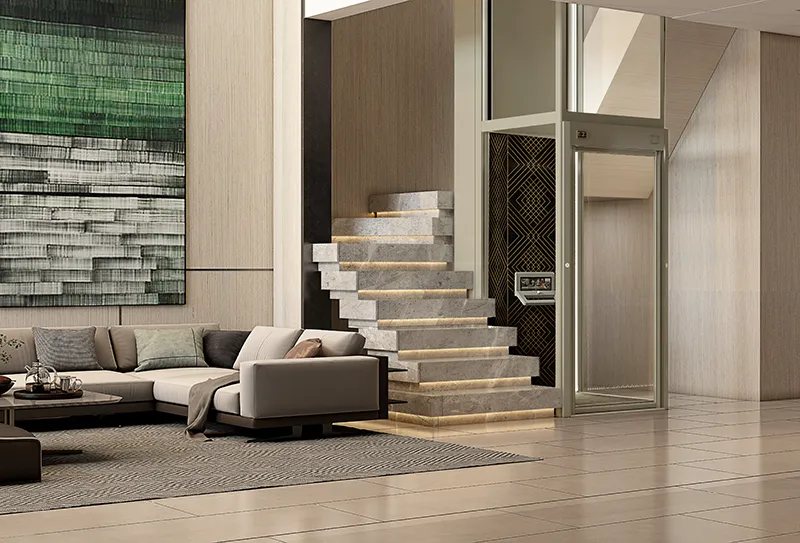
In a multi-floor house, the staircase often becomes the first area to limit daily living. Elderly parents may feel unsafe going upstairs. A family member may need temporary or long-term mobility support. Carrying groceries, laundry, luggage, or household items between floors may also become inconvenient over time.
When this happens, homeowners usually compare two solutions: a stair lift or a home elevator. Both can improve access between floors, but they are not designed for the same level of use. A stair lift is mainly a mobility aid along an existing staircase. A home elevator is a more complete residential vertical transportation solution for villas, duplex houses, townhouses, and self-built homes.
As a manufacturer of home elevators and villa lifts, Songya often receives this question from homeowners, distributors, designers, and residential retrofit buyers. The right choice depends on the user’s mobility condition, house structure, available space, long-term living plan, and installation requirements.
Stair Lift and Home Elevator: Basic Difference
A stair lift is a motorized chair installed on a rail along the staircase. It moves one seated user up and down the stairs. It is usually considered when the user can still sit, stand, and transfer safely.
A home elevator, also called a residential elevator or villa elevator, moves people vertically between floors through a cabin or lift platform. It can serve elderly family members, wheelchair users, caregivers, children, visitors, and daily household movement.
The difference is not only cost or installation size. The main difference is function. A stair lift solves a staircase mobility problem for one person. A home elevator improves vertical access for the whole house.
Stair Lift vs Home Elevator: Quick Comparison
| Decision Point | Stair Lift | Home Elevator |
|---|---|---|
| Main use | One seated user moving along stairs | Multi-user movement between floors |
| Wheelchair access | Usually not suitable | Can be planned according to cabin size |
| Daily household items | Limited | Suitable for groceries, luggage, laundry, and small items |
| Space requirement | Uses staircase width | Requires shaft, hoistway, or self-contained structure |
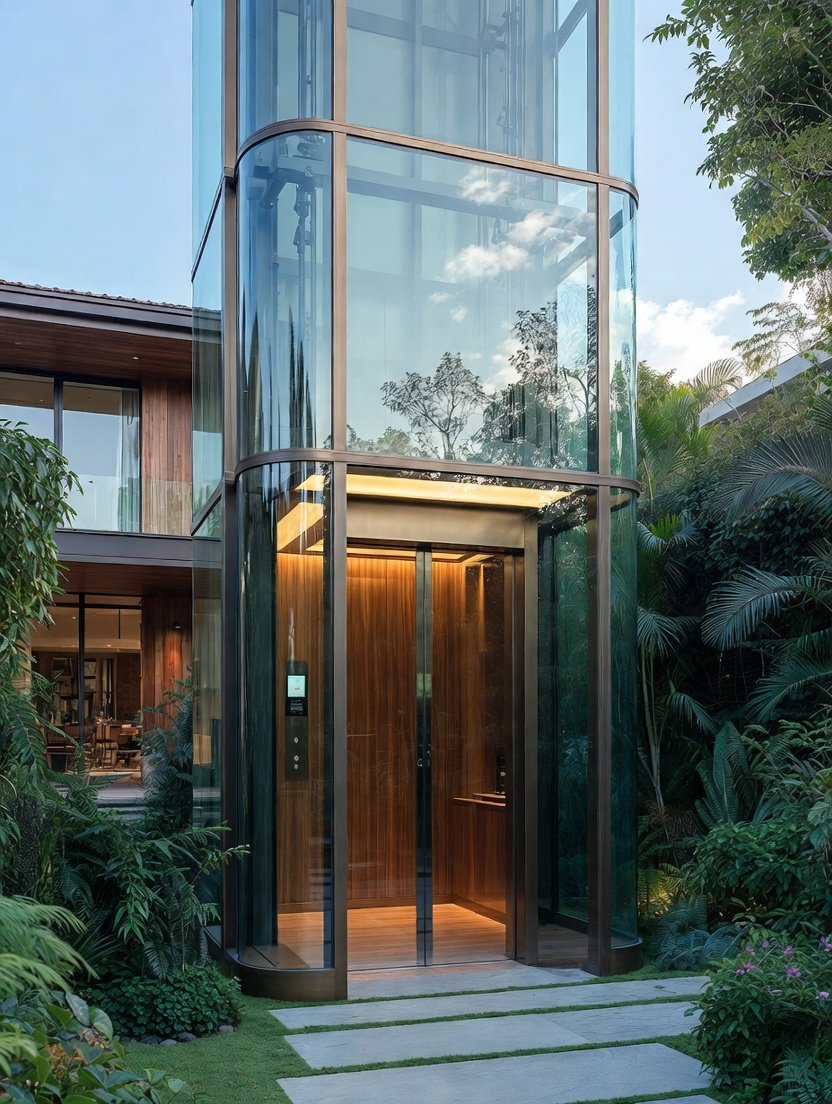
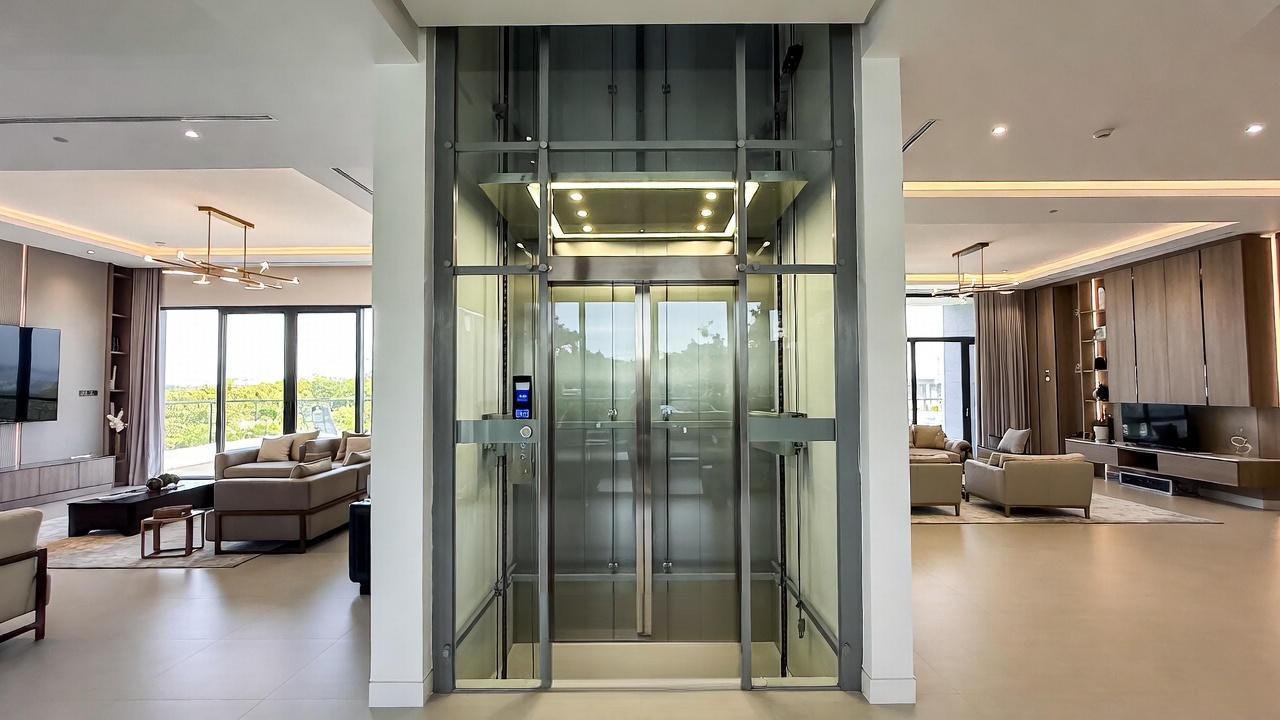
| Appearance | Visible rail and chair on the staircase | Can match villa interior, glass shaft, or custom cabin design |
| Long-term aging-in-place use | Suitable for limited mobility support | More suitable for long-term whole-family access |
| Best fit | One user, simple staircase support | Villa, duplex, retrofit house, wheelchair access, long-term planning |
When a Stair Lift May Be Enough
A stair lift may be suitable when one user has difficulty climbing stairs but can still transfer safely between standing and sitting. It can be a practical option for a straight or suitable staircase where the family needs a simple mobility aid rather than a full residential elevator system.
It may also be considered when the house does not have enough space for a shaft, or when the family needs a limited solution without major renovation. In this case, the stair lift serves a specific staircase access problem.
However, its limitations should be reviewed carefully. A stair lift normally cannot move a wheelchair, walker, luggage, laundry basket, or more than one person at a time. It also occupies part of the staircase width and may become less suitable if the user’s mobility declines further.
When a Home Elevator Is the Better Choice
A home elevator is usually more suitable when the house requires a long-term, multi-user solution. It is especially useful for families planning aging-in-place living, wheelchair access, villa upgrades, or convenient daily movement between floors.
A residential elevator is worth evaluating when:
- The house has 2–6 floors and will be used long term
- Elderly parents want to continue living in the same home
- Wheelchair, walker, or caregiver access may be needed
- The staircase is narrow, steep, curved, or inconvenient for rail installation
- The family regularly moves groceries, laundry, luggage, or household items between floors
- The project is a villa, duplex house, townhouse, or self-built house
- The owner wants the lift to match the home design rather than look like a temporary aid
Songya residential elevators are designed for private houses and villa projects, typically serving 2–6 floors with low-speed residential operation and compact installation requirements. Depending on the house layout, the elevator can be planned inside an existing hoistway, against a wall, in the middle of stairs, or with a self-contained shaft structure.
Selection Guide: Which Option Fits Your House?
| House or User Condition | Better Direction | Reason |
|---|---|---|
| One elderly user can still sit and stand safely | Stair lift may be enough | It supports basic stair movement for one person |
| Wheelchair or walker access is required | Home elevator | A stair lift usually cannot move a wheelchair between floors |
| The family wants long-term aging-in-place planning | Home elevator | It supports changing mobility needs over time |
| The staircase is very narrow or curved | Project review required | A stair lift may reduce usable stair width or become costly |
| The house has a reserved hoistway | Home elevator | Installation planning is usually easier |
| No concrete shaft is available | Home elevator with shaft structure | An aluminum alloy shaft structure may be considered |
| The owner wants a villa-style interior upgrade | Home elevator | Glass shaft and custom cabin designs can match the house style |
Installation Space Is the Main Question in Existing Houses
For retrofit projects, the first technical question is not the elevator model. It is the installation position. Some houses have a reserved hoistway. Some can use the middle of the staircase. Others may require a wall-side shaft, outdoor shaft, or self-contained structure.
Common home elevator installation positions include:
- Inside an existing hoistway
- Against an interior or exterior wall
- In the middle of the staircase
- Beside the staircase
- With a self-contained aluminum alloy shaft structure
- With a glass shaft for villa or panoramic designs
Songya provides different residential elevator solutions for different layouts. The SYDA WenJie series is positioned as a compact home elevator with a self-contained shaft design. The SYDA XiangJie series is suitable for glass-shaft villa elevator projects. The SYDA ShangJie series is designed as a staircase-type home lift that uses stair space while keeping the staircase open and functional.
Hydraulic or Traction Home Elevator?
After confirming that a home elevator is more suitable than a stair lift, the drive system should be reviewed according to the house structure and use requirements.
A hydraulic home elevator is often considered for low-rise residential buildings where stable movement, simple structure, and smooth operation are important. It can be suitable for villas and private houses when the building conditions match the hydraulic system design.
A traction home elevator is commonly selected when the project requires compact structure, quiet operation, energy efficiency, and a more modern residential elevator configuration. It is often considered for new villas, duplex houses, and projects where shaft planning can be arranged early.
The final choice should be based on number of floors, travel height, shaft condition, load requirement, space limitation, noise expectation, maintenance access, and local installation conditions.
Why an Aluminum Alloy Shaft Structure May Be Needed
Many existing houses were not built with a concrete elevator shaft. In this situation, an aluminum alloy elevator shaft structure can create a cleaner and more practical installation space for a residential elevator.
This type of structure may be useful when:
- The house has no reserved elevator shaft
- The elevator will be installed near a staircase, wall, or open area
- The owner wants to reduce heavy civil construction where possible
- A glass-shaft or panoramic villa elevator design is preferred
- The retrofit solution needs a more integrated appearance
For retrofit projects, the shaft structure should be discussed together with cabin size, door direction, floor opening, load capacity, and site photos. Without these details, it is difficult to judge whether a stair lift or home elevator is more practical.
Safety and Daily Use Should Be Reviewed Early
Initial cost is important, but daily use determines whether the solution remains practical. The equipment may be used by elderly parents, children, caregivers, guests, or residents carrying household items. A suitable residential lift should be safe, stable, quiet, and easy to operate.
When reviewing a home elevator project, buyers should check:
- Emergency stop and safety protection
- Door lock and access safety
- Power failure response
- Cabin lighting and control panel position
- Noise level during operation
- Anti-slip flooring
- Handrail or support design
- Ease of use for elderly family members
The goal is not only to move between floors, but to keep the house safe and convenient for long-term family use.
Why Costs Vary Between Stair Lifts and Home Elevators
There is no fixed cost answer because house conditions vary. A straight staircase stair lift is different from a curved staircase system. A new villa with a planned shaft is different from an existing house that needs floor openings and shaft construction. A standard enclosed cabin is different from a glass panoramic villa elevator.
For a home elevator project, cost is usually affected by:
- Number of floors and travel height
- Drive system: hydraulic or traction
- Shaft condition: existing hoistway, staircase middle, wall-side, outdoor, or self-contained shaft
- Cabin size and load capacity
- Door type and opening direction
- Glass shaft or enclosed shaft design
- Interior decoration and cabin finish
- Local installation and civil work conditions
- Export packaging, delivery, and after-sales support requirements
A reliable quotation should be based on drawings, site photos, floor height, installation position, and expected use. A low equipment price may not represent the final project cost if shaft construction, installation, or site modification is not included.
Final Recommendation
A stair lift may be suitable when one person needs support along an existing staircase and can still transfer safely. It is a practical mobility aid for a specific staircase problem.
A home elevator is usually more suitable when the house needs a long-term, multi-user vertical movement solution. It is especially appropriate for villas, duplex houses, self-built homes, aging-in-place planning, wheelchair access, and residential projects where convenience and interior design both matter.
For many families, the decision is not only about today’s staircase difficulty. It is also about whether the house will remain usable over the next 10 to 20 years. If elderly parents, wheelchair access, household transport, or property upgrade value are part of the plan, a residential elevator should be evaluated carefully.
Why Work with Songya
Shandong Songya Intelligent Technology Co., Ltd. provides residential and commercial elevator solutions, including home elevators, villa elevators, hydraulic elevators, traction elevators, mobile wheelchair lifts, stair lifts, and elevator accessories. For private houses and villa projects, Songya supports product selection, shaft structure planning, cabin configuration, component supply, installation coordination, and after-sales service for domestic and export projects.
If you are comparing a stair lift and a home elevator for a multi-floor house, send your building type, floor number, floor height, staircase photos, available installation position, and expected user needs. Songya can help review the project conditions and recommend a suitable residential lift solution.
FAQ
Is a stair lift cheaper than a home elevator?
In many cases, a stair lift has a lower initial equipment and installation cost, especially for a straight staircase. However, it offers limited function compared with a home elevator and usually cannot move wheelchairs, luggage, groceries, or multiple users between floors.
When is a home elevator better than a stair lift?
A home elevator is usually better when the house requires wheelchair access, long-term aging-in-place planning, multi-user convenience, or an integrated solution for a villa, duplex, or self-built house.
Can a home elevator be installed in an existing house?
Yes. Many existing houses can be evaluated for home elevator installation. Possible locations include an existing hoistway, staircase middle, wall-side position, outdoor shaft, or self-contained aluminum alloy shaft structure. Site photos and drawings are needed for proper review.
Does a home elevator need a concrete shaft?
Not always. Some projects use an existing hoistway, while others may use a self-contained shaft structure such as an aluminum alloy elevator shaft. The suitable solution depends on the house layout and installation position.
Which is better for a villa, hydraulic or traction home elevator?
Both can be suitable. A hydraulic elevator may be selected for stable low-rise residential use, while a traction elevator may be preferred for compact structure, quiet operation, and energy efficiency. The final choice depends on floor number, shaft condition, travel height, load requirement, and maintenance access.