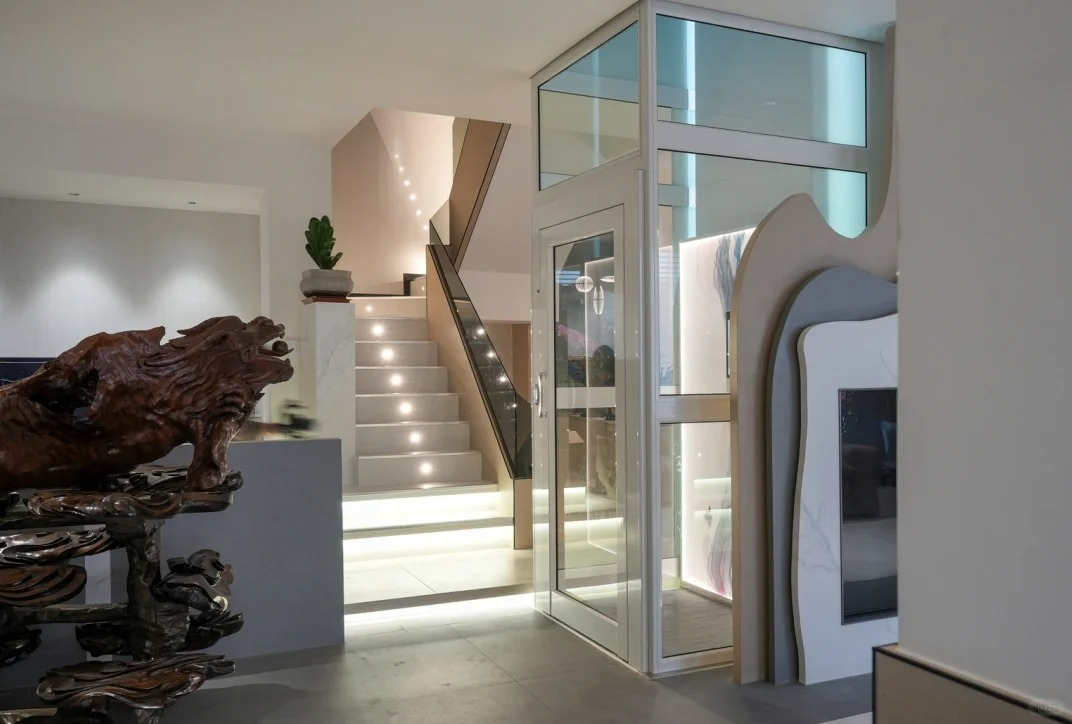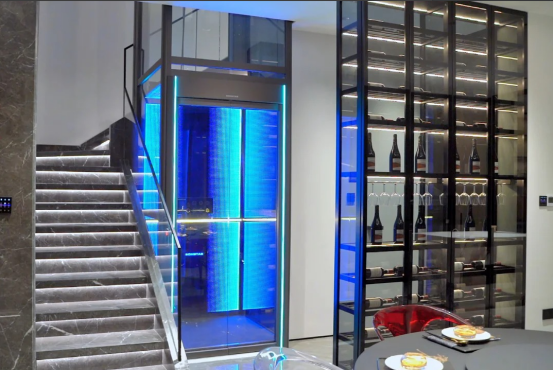


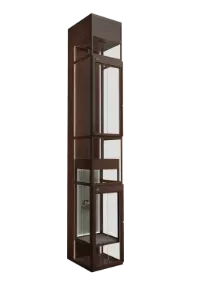
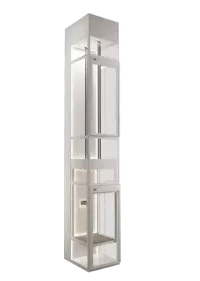
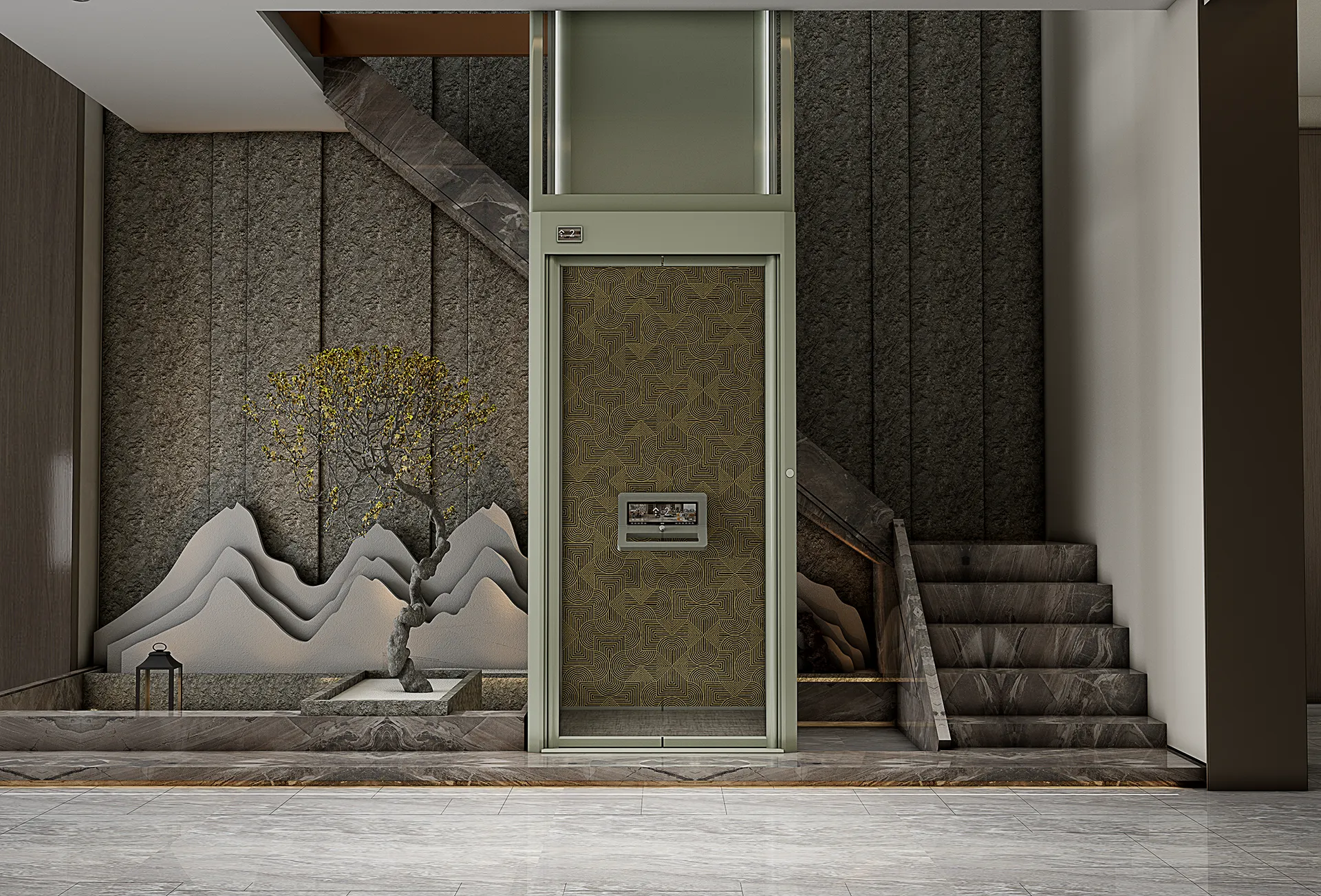
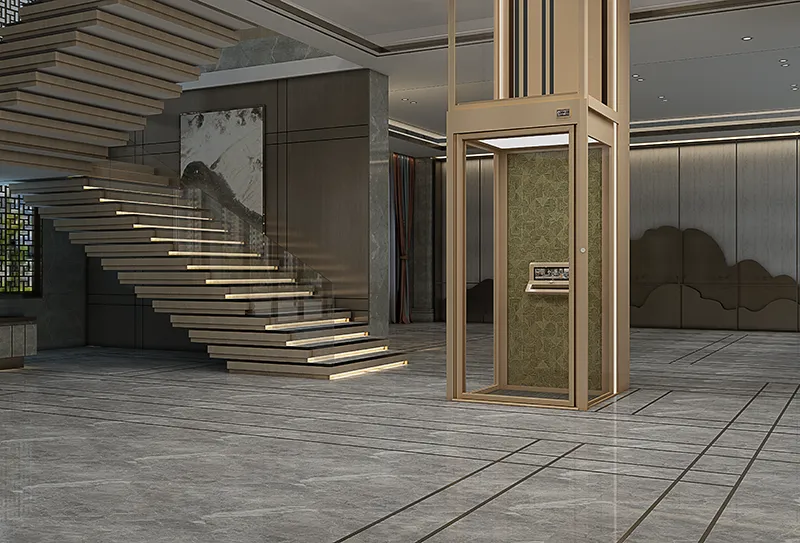
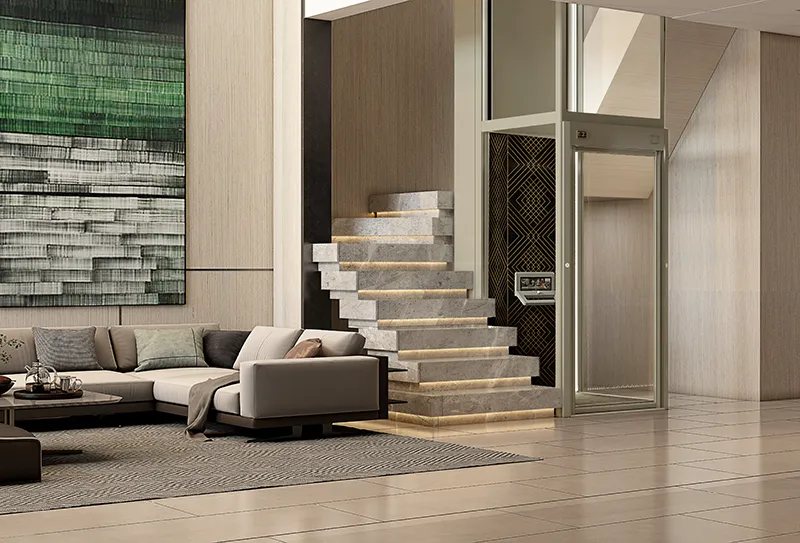
Before choosing a home elevator model or asking for a price, the first question should be clear: how much space do you need for a home elevator? For villas, duplex houses, self-built homes and retrofit projects, the available space often decides whether the project is suitable for a compact home elevator, hydraulic home elevator, traction home elevator or panoramic glass elevator.
A home elevator does not only need cabin space. It also needs a suitable shaft or supporting structure, enough pit depth, proper overhead height, door opening space, wall support, installation clearance and safe maintenance access. If these dimensions are checked early, buyers can avoid choosing a model that looks suitable online but cannot fit the actual building.
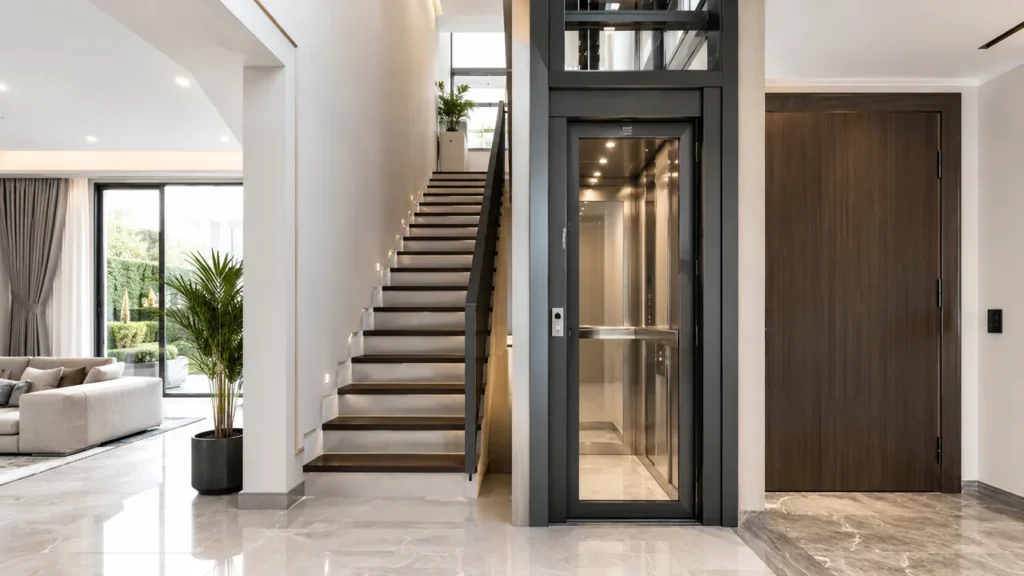
Quick Answer: What Space Should You Check First?
For early planning, the most important measurements are not only cabin width and cabin depth. A supplier also needs shaft size, pit depth, top-floor clearance and door direction before recommending a suitable residential elevator structure.
| Measurement | What It Means | Why It Matters |
|---|---|---|
| Shaft width | Clear left-to-right space inside the planned elevator shaft | Affects cabin width, guide rail position and door arrangement. |
| Shaft depth | Clear front-to-back space inside the shaft | Affects cabin depth, passenger comfort and door system selection. |
| Pit depth | Recessed space below the lowest landing | Important for bottom clearance, buffer space and safe installation. |
| Overhead height | Clear height above the top landing | Affects top clearance, elevator structure and model feasibility. |
| Floor-to-floor height | Vertical distance between finished floors | Needed to calculate travel height, rail length and number of stops. |
| Door direction | Where passengers enter and exit on each floor | Different openings may change cabin layout and shaft design. |
If these measurements are available, Songyada can quickly judge whether the project is suitable for a standard residential elevator layout or whether a customized villa lift structure is needed.
Typical Space Planning Range for Home Elevator Projects
The 1.0–2.3㎡ shaft floor area commonly discussed in Songyada home elevator projects should be understood as a project reference range, not a fixed standard for every building. The final layout still depends on shaft width, shaft depth, cabin size, door opening direction, elevator structure and whether the project uses hydraulic, traction or panoramic glass design.
| Elevator Layout | Typical Use | Space Planning Focus | Best Fit |
|---|---|---|---|
| Compact home elevator | Small villa, duplex house, private residence | Limited shaft width, compact cabin, shallow-pit evaluation | Buyers with restricted indoor space. |
| Stair-side home lift | Existing house or self-built home without reserved shaft | Stair width, landing space, floor opening and wall position | Retrofit projects where the staircase area is the main available space. |
| Standard residential elevator | New villa or self-built house with planned shaft | Balanced shaft size, normal pit depth, proper overhead height | Projects where elevator space can be reserved during construction. |
| Glass home elevator | Modern villa, indoor atrium, luxury residential interior | Glass shaft frame, structural support, visual alignment and installation clearance | Projects where appearance is part of the interior design. |
| Panoramic villa elevator | High-end villas and open interior spaces | Glass cabin, panoramic shaft, frame structure and floor opening | Buyers who want the elevator to become an architectural feature. |
For buyers, this table is more useful than asking for one universal home elevator dimension. A compact lift beside a staircase and a panoramic glass elevator in a villa atrium should not be planned with the same space expectation.
1. Cabin Size Is Not the Same as Shaft Size
Many buyers measure the area where they want to stand and assume that is the elevator size. In practice, home elevator dimensions include much more than the cabin. The shaft must also allow space for guide rails, doors, frame structure, safety components and installation clearance.
For example, if a buyer wants a cabin that can carry family members, luggage or elderly users comfortably, the shaft must be larger than the usable cabin space. If the available shaft is too small, the supplier may need to reduce cabin size, change door type or recommend another structure.
Cabin planning questions:
- How many people will use the elevator at one time?
- Will elderly users or wheelchair users need daily access?
- Does the elevator need to carry luggage, groceries or household items?
- Is a compact home lift enough, or is a larger villa elevator cabin required?
- Should the cabin be enclosed, stainless steel, glass or panoramic?
For most residential projects, the cabin should be selected based on real daily use. Reducing the cabin too much may save space, but it can also reduce comfort and long-term usability.
2. Shaft Width and Shaft Depth
The shaft is the main vertical space where the home elevator runs. In a new villa, this space can often be reserved during architectural design. In an existing house, the shaft may need to be built beside a staircase, against a wall, inside an atrium or through a new floor opening.
When checking shaft space, measure the clear internal dimensions instead of only measuring the outside wall-to-wall area. Finished wall thickness, glass shaft posts, steel frame structure and door frame space can reduce the real available elevator space.
| Project Condition | What to Check | Selection Advice |
|---|---|---|
| Reserved concrete shaft | Clear shaft width, shaft depth, wall verticality and door openings | Usually easier for standard home elevator selection. |
| Stair-side installation | Stair width, landing space, wall strength and walking route | May require compact structure or customized door direction. |
| Indoor glass shaft | Frame position, glass panel size, floor opening and visual design | Suitable for modern villas but needs more structural planning. |
| Retrofit project | Existing wall, ceiling height, floor opening, pit feasibility and access route | Site photos and videos are important before quotation. |
| Self-built house | Available shaft location, floor slab opening and future maintenance access | Planning early can reduce modification cost. |
If shaft space is limited, a compact residential elevator or a special structure may be more suitable than a conventional layout. For example, a traction backpack elevator can be considered when the project requires efficient shaft use, side-mounted structure and compact residential installation.
3. Pit Depth: Why the Bottom Space Matters
The pit is the recessed space below the lowest landing. It is easy to ignore during early planning, but it can strongly affect elevator feasibility. A proper pit helps provide space for bottom clearance, buffer position and safe elevator operation.
In new construction, pit depth can usually be planned before foundation work. In retrofit projects, creating a pit may be difficult because of existing floor slabs, basement structures, underground pipes or waterproofing concerns. If pit depth is limited, the supplier should check whether a shallow-pit or special residential lift configuration is suitable.
Before confirming pit design, check:
- Whether the lowest floor can be recessed
- Whether there is a basement or underground pipeline below
- Whether waterproofing is required
- Whether the elevator landing must be flush with the finished floor
- Whether local installer or code requirements affect pit design
For villa and home lift projects, pit depth should be confirmed with both the elevator supplier and local installer before construction. Guessing the pit size too early may create expensive changes later.
4. Overhead Height and Top-Floor Clearance
Overhead height means the clear vertical space above the top landing. It is especially important because the elevator car, frame, door mechanism and safety clearance all need enough space at the top level.
If the top-floor height is limited, some elevator structures may not fit. This is common in attic-level villas, existing houses, stairwell retrofits and buildings where the roof structure has already been completed. In such cases, the supplier needs to evaluate the actual top-floor clearance before recommending a model.
| Overhead Condition | Possible Issue | What Buyers Should Do |
|---|---|---|
| Normal top-floor height | Most residential elevator structures are easier to evaluate | Provide finished floor height and ceiling height. |
| Low attic ceiling | Top clearance may not be enough for some layouts | Send section drawings and roof photos. |
| Existing roof structure | Modification may be difficult or expensive | Confirm whether roof changes are allowed. |
| Glass shaft through atrium | Top frame and visual design must be coordinated | Confirm both structural and appearance requirements. |
Overhead height is one reason why a supplier cannot quote accurately from floor number alone. A 3-floor house with generous top clearance and a 3-floor house with a low attic landing may require different home elevator solutions.
5. Door Opening Direction and Landing Space
Home elevator planning should consider how people enter and exit on every floor. Door direction affects shaft layout, cabin design, landing space and daily use.
Some homes use the same front opening on every floor. Some villas require front and rear openings, side openings or different door directions on different floors. These layouts may be possible, but they must be confirmed early.
Door planning questions:
- Does each floor use the same entrance direction?
- Is front-and-rear access required?
- Is a 90-degree side opening required?
- Is the landing space wide enough for the door?
- Will wheelchair access be required?
- Does the door open into a hallway, living room, stair landing or bedroom area?
A door layout that looks convenient on one floor may create a problem on another floor. Buyers should provide floor plans or simple sketches showing the door direction on each level.
6. Which Elevator Structure Uses Space Better?
Different drive systems and structures use space differently. Buyers often compare hydraulic home elevators, traction home elevators, traction backpack elevators and panoramic glass villa elevators when planning a residential project.
| Elevator Type | Typical Project Fit | Space Planning Focus |
|---|---|---|
| Hydraulic home elevator | Low-rise villas, duplex houses and private homes | Check pit condition, hydraulic power unit arrangement, shaft space and travel height. |
| Traction home elevator | Residential shaft projects and compact villa layouts | Check overhead height, guide rail position, traction machine layout and shaft utilization. |
| Traction backpack elevator | Villas, self-built homes and retrofit projects with limited shaft space | Useful when the structure needs to improve shaft efficiency and save layout space. |
| Panoramic glass elevator | Luxury villas, atriums and modern residential interiors | Check glass shaft frame, appearance, floor opening, structural support and installation access. |
If the project is still in the design stage, the buyer has more freedom to reserve proper elevator space. If the building already exists, the available shaft, pit and overhead conditions should decide the elevator type first.

7. New Villa Design vs. Existing House Retrofit
For new villa projects, the best time to plan a home elevator is before the house structure is finalized. Architects and builders can reserve shaft space, pit depth, power supply, door openings and maintenance access in advance. This usually reduces modification cost and makes model selection easier.
For an existing house, the first task is to find a realistic installation location. Common options include beside the staircase, in the middle of a stairwell, against an exterior wall, inside an atrium or through a floor opening. Each option has different space requirements and construction risks.
| Project Type | Space Advantage | Main Risk | Recommendation |
|---|---|---|---|
| New villa construction | Shaft and pit can be planned early | Late design changes may affect structure and cost | Confirm elevator type before final architectural drawings. |
| Existing duplex house | May have stair-side space available | Limited pit or overhead height | Send site photos and measurements before choosing a model. |
| Self-built home | Layout may be more flexible | Shaft verticality and structural support must be checked | Coordinate with builder and elevator supplier early. |
| Luxury villa retrofit | Can use glass shaft for interior effect | Higher structural and installation complexity | Prepare drawings, photos and interior design requirements. |
8. How to Measure Your Home Elevator Space
Buyers do not need professional elevator drawings at the first inquiry stage, but they should provide clear basic measurements. A simple measurement sheet or marked photos can help the supplier evaluate the project faster.
Step 1: Measure the planned shaft area
Measure the available width and depth of the space where the elevator may be installed. If it is beside a staircase, measure the distance between the wall, stair edge, landing and any fixed obstacles.
Step 2: Measure floor-to-floor height
Measure the vertical height from one finished floor level to the next finished floor level. If there are multiple floors, provide each floor-to-floor height separately.
Step 3: Check pit possibility
Confirm whether the ground floor can be recessed. If not, tell the supplier that the project may require shallow-pit evaluation or another installation structure.
Step 4: Check top-floor height
Measure the finished floor to ceiling height at the top landing. If the roof is sloped or has beams, take photos and mark the lowest point.
Step 5: Mark door direction
Use a simple arrow on each floor plan or photo to show where passengers should enter and exit the elevator.
9. What Photos Should You Send for Space Evaluation?
For retrofit projects, photos can be more useful than a simple message. If drawings are not available, clear photos help the supplier understand the staircase, wall, ceiling, floor opening and possible shaft location.
- Full view of the staircase or planned elevator position
- Ground-floor position where the elevator will start
- Top-floor landing and ceiling height
- Side wall or shaft wall condition
- Floor opening area, if already reserved
- Any beams, windows, doors or obstacles near the planned shaft
- Photos from different angles, not only close-up shots
- A simple sketch showing door direction on each floor
When taking photos, stand farther back if possible so the supplier can see the whole space. Close-up photos of one corner are usually not enough for layout evaluation.
10. Practical Space Planning Examples
The following examples show how different house conditions affect elevator selection.
| Project Scenario | Common Space Issue | Possible Solution |
|---|---|---|
| 2-floor duplex with reserved shaft | Need to match cabin size with the existing shaft | Compact hydraulic or traction home elevator can be evaluated. |
| 3-floor villa with narrow stairwell | Limited shaft width and landing space | Compact traction structure or customized cabin layout may be required. |
| Self-built house without elevator shaft | Shaft must be newly planned | Steel shaft or glass shaft can be considered based on interior design. |
| Luxury villa atrium | Appearance and structure both matter | Panoramic elevator or glass shaft villa elevator may be suitable. |
| Existing house with shallow floor structure | Pit excavation may be limited | Supplier should evaluate shallow-pit feasibility before quotation. |
11. Information to Send Before Requesting a Layout Suggestion
To receive a useful recommendation, prepare the following information before contacting a home elevator manufacturer:
- Building type: villa, duplex house, self-built home or retrofit project
- Number of floors and stops
- Floor-to-floor height for each level
- Available shaft width and shaft depth
- Pit depth or whether a pit can be made
- Top-floor overhead height
- Door opening direction on each floor
- Expected cabin size or passenger requirement
- Preferred elevator type: hydraulic, traction, compact or panoramic
- Site photos, floor plans or simple sketches
- Destination country and project schedule for export orders
With these details, Songyada can evaluate whether the project is suitable for a standard residential elevator model or whether a customized home lift layout is needed.
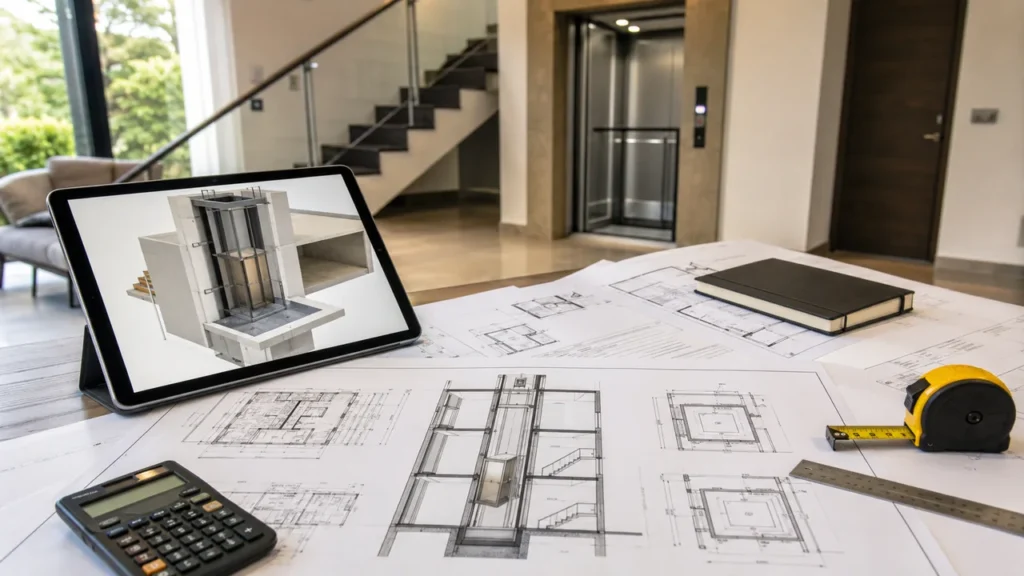
Common Mistakes When Planning Home Elevator Space
- Only measuring the cabin area: the shaft must also include rails, doors, frame and clearance.
- Ignoring pit depth: limited pit space may restrict elevator type.
- Forgetting overhead height: the top floor needs enough clearance for safe layout.
- Changing door direction too late: different entrance directions can change the whole layout.
- Choosing appearance before structure: a glass design must still fit the building conditions.
- Sending only close-up photos: the supplier needs full-space photos to understand the layout.
- Requesting price without dimensions: without shaft data, any quotation can only be rough.
FAQ About Home Elevator Space
How much space do you need for a home elevator?
The required space depends on cabin size, elevator type, shaft structure, door arrangement, pit depth and overhead height. A compact home elevator may need much less space than a large panoramic villa elevator, but the exact layout should be confirmed by drawings or site measurements.
What is the difference between cabin size and shaft size?
Cabin size is the usable passenger space inside the elevator. Shaft size is the larger structural space that also includes guide rails, doors, frame, safety parts and installation clearance. Buyers should provide shaft dimensions, not only the desired cabin size.
Does every home elevator need a pit?
Many residential elevators require some pit space, but the depth varies by elevator type and structure. If the project has limited pit depth, the supplier should evaluate shallow-pit or special installation options before quoting.
Can a home elevator be installed beside a staircase?
Yes, many villa and retrofit projects consider stair-side installation. However, the supplier needs to check stair width, landing space, wall support, floor opening, pit condition and overhead height before confirming the model.
Is a glass home elevator suitable for small spaces?
A glass home elevator can be suitable for some compact residential spaces, but the glass shaft frame and installation clearance must be considered. In small spaces, structure and safety should be confirmed before appearance.
What should I send to get a home elevator layout suggestion?
Send the number of floors, floor-to-floor height, shaft width, shaft depth, pit depth, overhead height, door direction and site photos. If drawings are available, they will help the supplier provide a more accurate recommendation.
Final Recommendation
When planning a home elevator, do not start with appearance or cabin style alone. Start with the building space. Shaft width, shaft depth, pit depth, overhead height and door direction are the key factors that decide which elevator structure can fit the project.
Songyada provides compact home elevators, hydraulic home elevators, traction home elevators and panoramic glass elevator solutions for villas, duplex houses and private residential projects. If you are not sure whether your house has enough space for a home elevator, send your measurements, drawings or site photos through the contact page for a project-based layout suggestion.