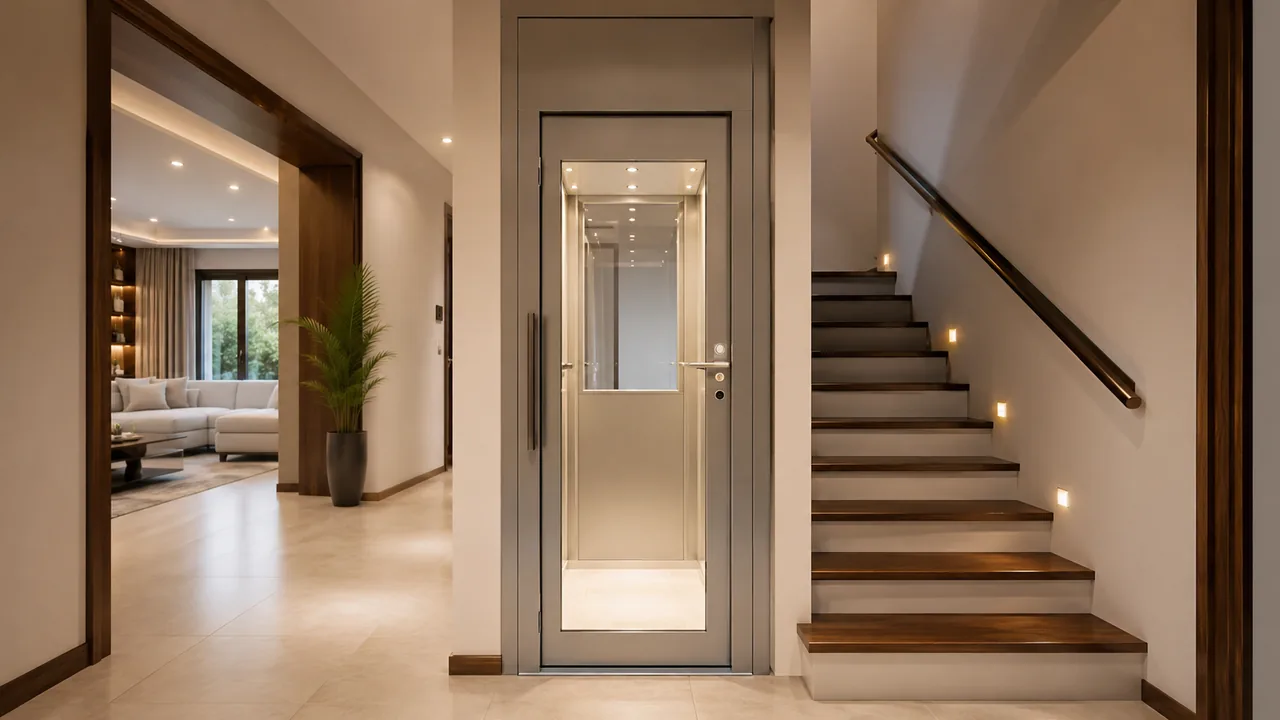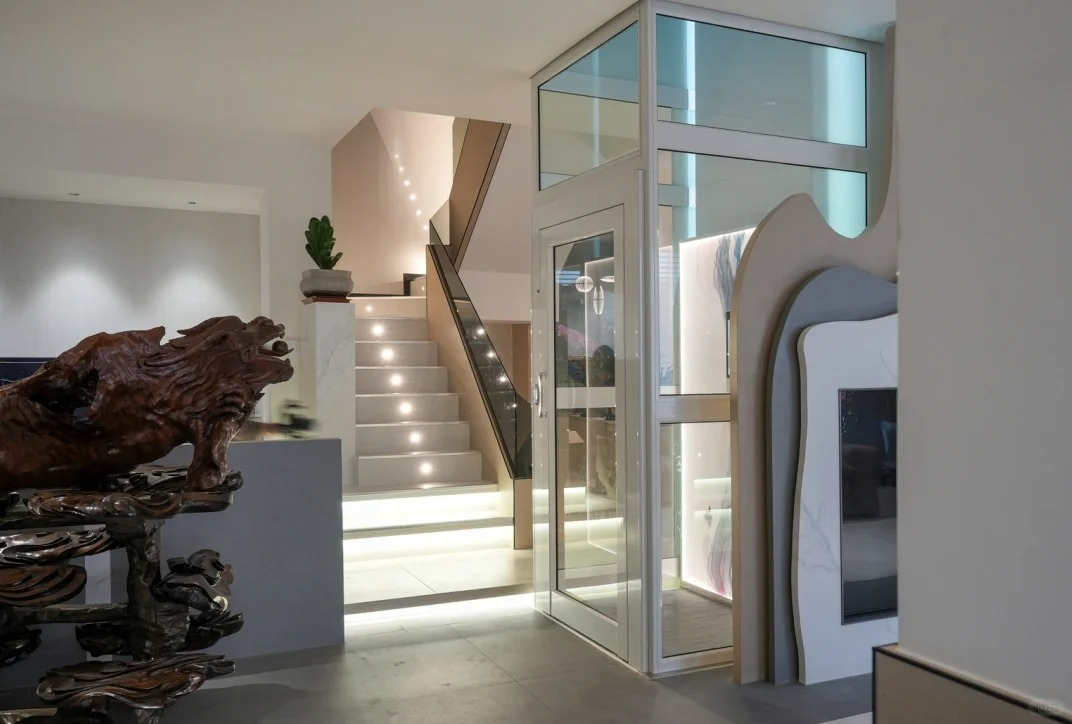


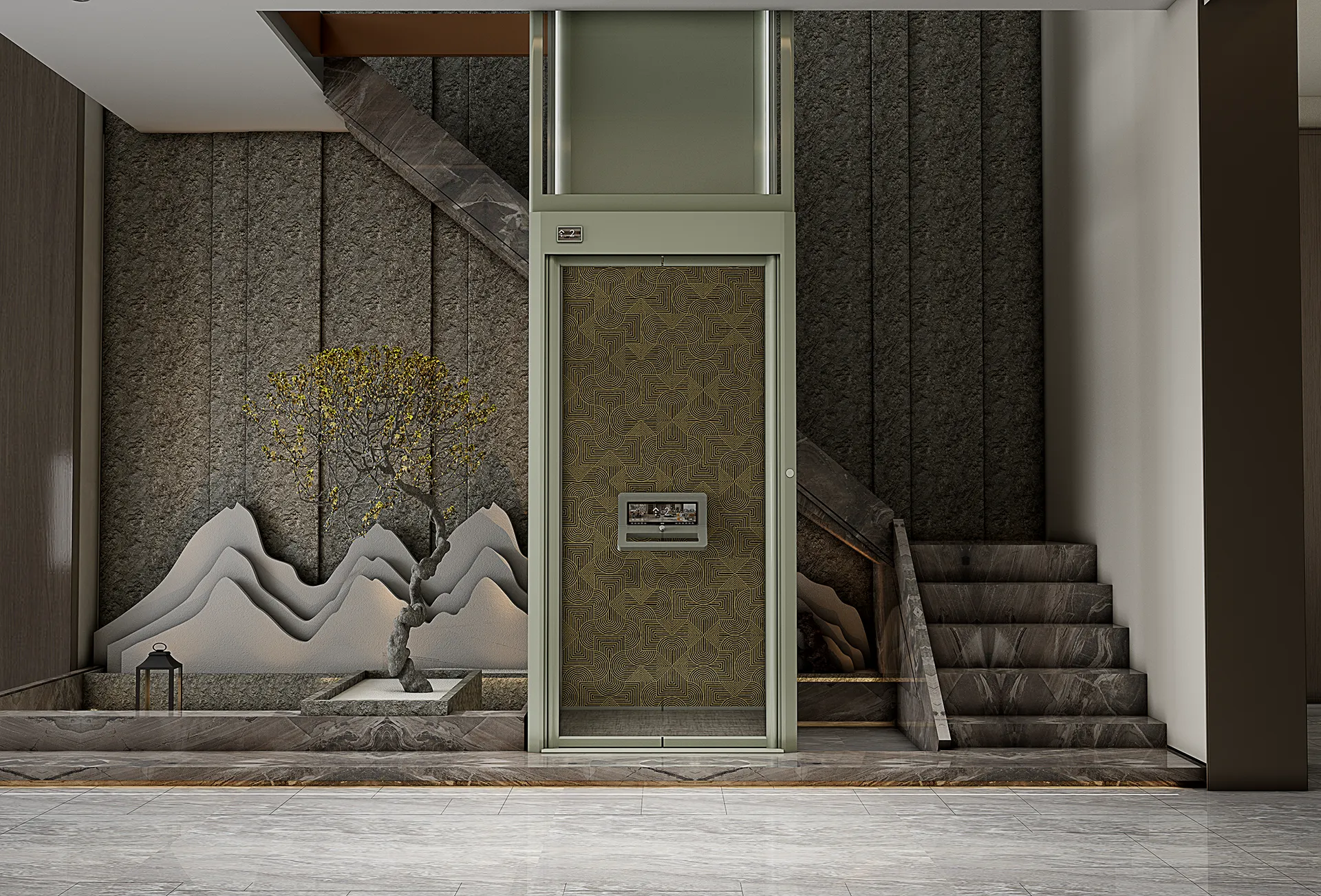
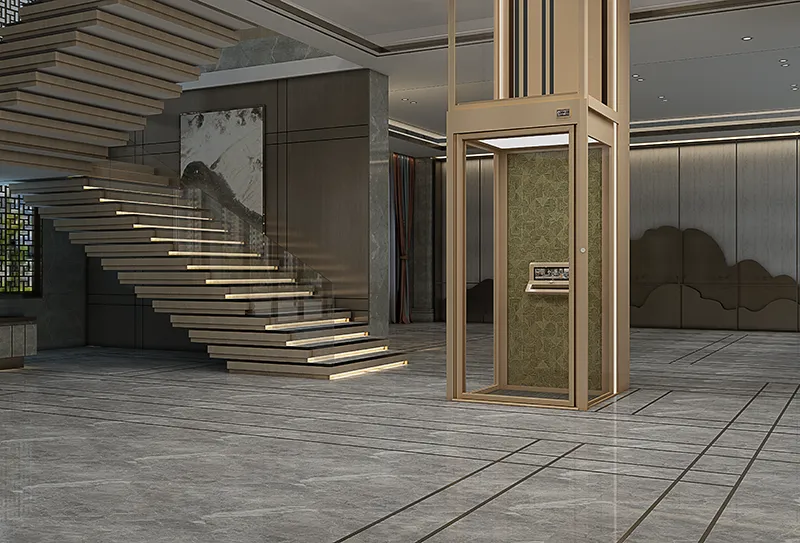
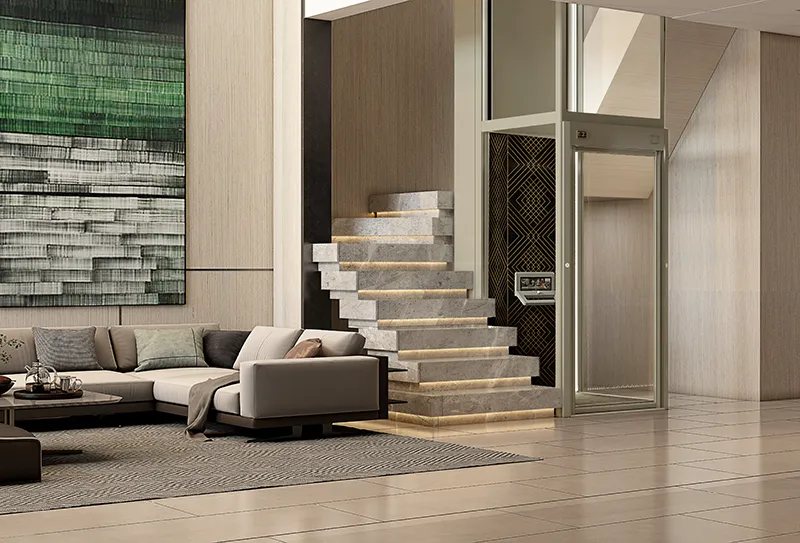
Choosing the right villa elevator should start with your building conditions, not only the elevator appearance. If your house has a reserved shaft and normal installation space, you can consider a standard hydraulic or traction home elevator. If your available space is narrow or located beside a staircase, a compact structure or backpack traction elevator may be more suitable. If the elevator is part of your villa interior design, a panoramic glass elevator is often the better direction.
For villas, duplex houses, self-built homes and private residential projects, the right elevator depends on your shaft size, pit depth, overhead height, number of floors, door direction, daily users and design expectations. A model that works well in a new villa may not fit an existing house retrofit. A beautiful glass elevator may not be practical if your building does not have enough structural support or installation clearance.
This article explains how to choose the right villa elevator by project condition, drive system, available space and daily use. If you are a homeowner, builder, architect, elevator dealer or contractor, this selection process can help you prepare clearer information before requesting a quotation.

Quick Selection Guide: Which Villa Elevator Should You Choose?
The table below gives you a fast selection direction before going into details. It should not replace project drawings or site evaluation, but it can help you avoid choosing the wrong elevator type at the beginning.
| Your Project Condition | Better Elevator Direction | Why It Fits |
|---|---|---|
| 2–3 floor low-rise villa | Hydraulic home elevator or compact traction elevator | Suitable for daily family use, moderate travel height and practical residential access. |
| New villa with reserved shaft | Standard traction or hydraulic villa elevator | Your shaft, pit, overhead and door openings can be planned before construction. |
| Existing house without reserved shaft | Compact home elevator or customized structure | Your elevator must be matched to the staircase, wall position and floor opening conditions. |
| Narrow stair-side installation | Traction backpack elevator | Useful when your project needs better shaft utilization and a side-mounted structure. |
| Luxury villa atrium | Panoramic glass elevator | Suitable when you want the elevator to become part of the architectural and interior design. |
| Home with elderly users | Stable residential elevator with comfortable cabin and clear controls | Daily usability, door access and cabin comfort are more important than decoration alone. |
If you are still checking your installation space, read this related article first: How Much Space Do You Need for a Home Elevator?. If you are planning your budget, you can also read: How Much Does a Home Elevator Cost?
Step 1: Confirm Your Building Type
The same elevator model cannot be applied to every residential project. A new villa, an existing duplex house, a self-built home and a luxury atrium project have different space conditions and design priorities.
| Your Building Type | Main Question to Confirm | Selection Direction |
|---|---|---|
| New villa construction | Can you plan the shaft, pit and overhead before construction? | Choose the elevator type before your final architectural drawings. |
| Existing villa retrofit | Where can the elevator be installed without major structural conflict? | Start with site photos, shaft dimensions and staircase layout. |
| Duplex house | Is the elevator mainly for daily family access or elderly users? | Focus on compact layout, smooth operation and easy entry. |
| Self-built home | Can your builder reserve a correct elevator shaft during construction? | Coordinate shaft design with the elevator supplier early. |
| Luxury villa | Do you want the elevator to be hidden or used as a design feature? | Compare standard cabin, glass cabin and panoramic shaft options. |
For a new project, you have more freedom to plan the shaft and elevator structure. For a retrofit project, your existing building usually decides the selection range.
Step 2: Choose the Elevator Structure by Site Conditions
After confirming your building type, the next step is choosing the elevator structure. For villa and home elevator projects, you may need to compare hydraulic home elevators, traction home elevators, backpack traction elevators and panoramic glass elevators.
Hydraulic Home Elevator
A hydraulic home elevator is often considered for low-rise villas, duplex houses and private residences. It can be suitable when your project requires smooth low-rise lifting, stable daily operation and a practical residential elevator structure.
You can consider a hydraulic elevator when your project has moderate travel height, clear shaft planning and a focus on comfortable family use. It is often discussed for 2–4 floor residential projects, but the final suitability still depends on your shaft space, pit condition, hydraulic system arrangement and local installation requirements.
Traction Home Elevator
A traction home elevator is often selected when your project requires efficient shaft use, stable operation and flexible layout. For villas and self-built homes, traction systems can be suitable when you need a clean residential elevator structure and good shaft utilization.
You can consider a traction elevator when your shaft width, shaft depth and overhead height can support the structure. It can be a good direction for multi-floor residential projects, compact villa layouts and buildings where long-term stable operation is important.
Traction Backpack Elevator
For narrow shafts, stair-side spaces or retrofit projects, a traction backpack elevator may be considered. Its structure is useful when your project needs side-mounted equipment arrangement and better shaft efficiency.
This type of elevator is especially relevant when your available space is not ideal for a conventional layout. However, your wall condition, guide rail arrangement, door direction and installation access should still be checked before confirming the model.
Panoramic Glass Elevator
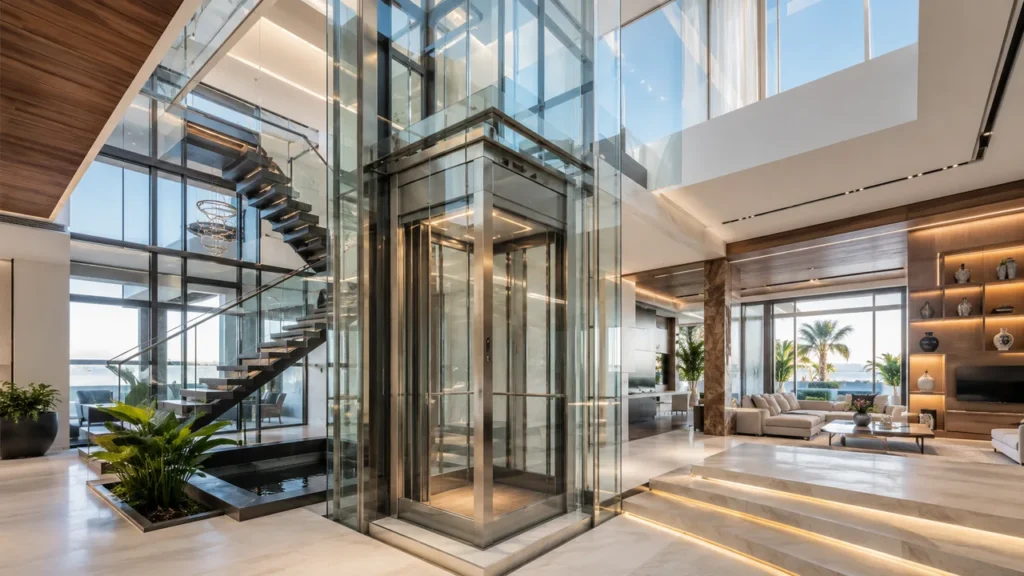
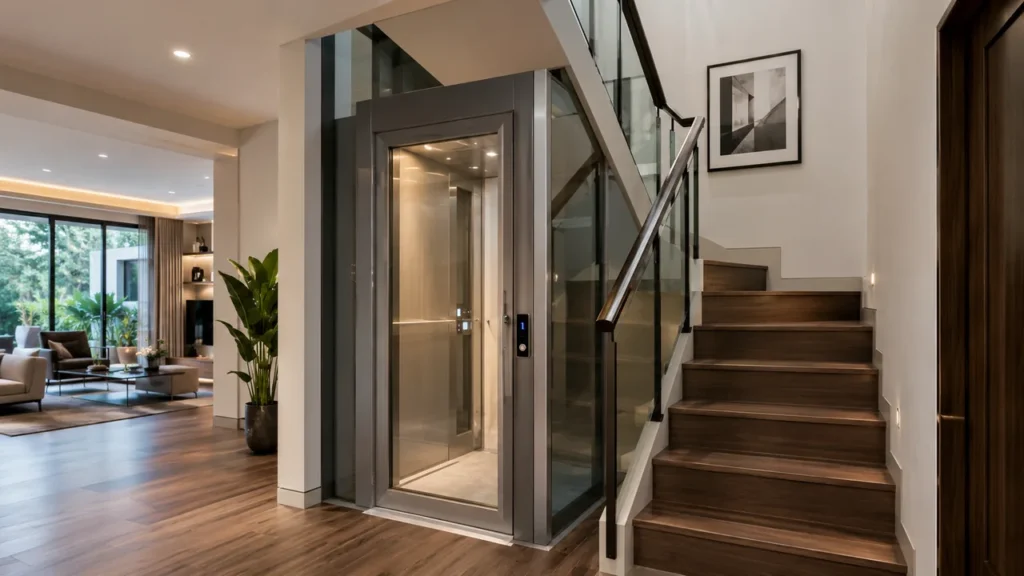
A panoramic elevator is often chosen for luxury villas, indoor atriums and modern private residences where the elevator is also part of your interior design. Instead of hiding the elevator, you can use glass, metal frames and lighting to make it an architectural feature.
Panoramic glass elevators require more careful coordination. You need to consider glass shaft frame, structural support, floor opening, installation clearance, lighting effect and interior style. This type is not only an elevator selection decision; it is also a design and structural planning decision.
Hydraulic vs. Traction vs. Panoramic: Project-Based Comparison
| Elevator Type | Best Fit | Main Advantage | Check Before Choosing |
|---|---|---|---|
| Hydraulic home elevator | Low-rise villas, duplex houses, private homes | Smooth low-rise lifting and practical residential use | Pit condition, travel height, shaft space and hydraulic system layout. |
| Traction home elevator | Residential shaft projects and compact villa layouts | Efficient shaft use and stable daily operation | Overhead height, shaft width, shaft depth and traction machine layout. |
| Traction backpack elevator | Narrow shaft, stair-side layout, retrofit project | Improved shaft utilization in limited residential spaces | Wall condition, shaft depth, guide rail arrangement and door direction. |
| Panoramic glass elevator | Luxury villa, atrium, open interior space | Strong visual effect and premium design value | Glass shaft frame, floor opening, structural support and installation clearance. |
There is no single best elevator for every villa. A good selection depends on your project condition first, then your budget, design preference and daily use.
Three Practical Villa Elevator Selection Scenarios
The following project scenarios show how you can apply this selection logic in real buying situations.
Scenario 1: 2-Floor Duplex House for Elderly Access
If you want to add a home elevator in a 2-floor duplex house mainly for elderly parents, your daily use requirement is clear: safe access, smooth movement, easy entry and simple operation. If your space is limited, you should not start with a luxury glass design.
Your first priority should be shaft position, door access, cabin comfort and control panel height. A compact hydraulic home elevator or compact traction home elevator can be evaluated depending on your shaft dimensions, pit condition and installation position.
Selection focus: practical cabin size, smooth start and stop, safe door access, limited-space installation and easy daily use.
Scenario 2: 3-Floor Existing Villa Beside a Staircase
If your existing 3-floor villa has no reserved elevator shaft and the only possible installation position is beside the staircase, you should not choose a standard model from product photos. Your available width, stair position, floor opening and door direction will strongly affect the selection.
In this situation, your supplier needs site photos, stair measurements, shaft width, shaft depth, pit possibility and top-floor height. A traction backpack elevator or customized compact villa lift may be more suitable because shaft utilization is a key issue.
Selection focus: stair-side space, wall condition, shaft efficiency, overhead height, door direction and retrofit feasibility.
Scenario 3: Luxury Villa with Open Atrium
If your new luxury villa has a large open atrium and you want the elevator to become part of the interior design, a panoramic glass elevator may be the right direction. This type can create a strong visual effect and match modern stone, wood, glass or metal finishes.
However, you should plan the elevator together with your architect and interior designer. The glass shaft frame, floor opening, structural support, cabin finish, lighting and installation access should be confirmed before production.
Selection focus: glass shaft design, structural support, visual effect, premium cabin finish and coordination with interior design.
Step 3: Choose the Cabin by Daily Use
After confirming the elevator structure, cabin selection becomes easier. Your villa elevator cabin should match daily use first, then interior style. For elderly users, comfort and safety are more important than decoration. For luxury villas, the cabin finish may need to match the architectural design.
| Your Use Requirement | Cabin Suggestion | Reason |
|---|---|---|
| Daily family access | Practical enclosed or stainless steel cabin | Easy to use, easy to maintain and suitable for regular family traffic. |
| Elderly users | Comfortable cabin size, clear control panel and safe entry | Improves daily usability and reduces inconvenience. |
| Wheelchair consideration | Larger cabin and wider door layout if shaft space allows | Requires early planning for cabin size and door width. |
| Luxury villa design | Glass cabin, custom ceiling, lighting and premium finishes | Matches high-end interior requirements. |
| Limited shaft space | Compact cabin with efficient door arrangement | Balances usable cabin space and structural constraints. |
Cabin design should not be decided from product photos alone. It should be confirmed together with your shaft size, door direction, passenger requirements and interior design.
Step 4: Do Not Choose Only by Price
Price is important, but choosing only by the lowest price can create problems later. A low-cost model may not fit your shaft, may require more local civil work, may not match your design style, or may not provide enough comfort for daily family use.
When comparing villa elevator quotations, check:
- Whether the quotation matches your actual shaft size.
- Whether the drive system fits your building conditions.
- Whether the cabin size is practical for daily use.
- Whether glass shaft or cabin customization is included.
- Whether landing doors, control system and safety components are clearly listed.
- Whether export packing, shipping term and technical support are included.
A suitable elevator can reduce later modification cost and installation risk. The cheapest model is not always the most economical solution for your whole project.
New Villa Projects: Confirm the Elevator Before Final Construction Drawings
For a new villa or self-built home, the best time to choose a villa elevator is before your architectural layout is finalized. Early planning allows you and your builder to reserve shaft space, pit depth, power supply, door openings and maintenance access correctly.
Early elevator planning helps you avoid:
- Insufficient shaft width or depth.
- Wrong door opening direction.
- Not enough top-floor clearance.
- Unnecessary floor slab modification.
- Cabin size that does not match daily use.
- Glass shaft design that conflicts with the interior layout.
For architects and builders, confirming the elevator structure early can make later quotation, production and installation coordination much easier.
Retrofit Projects: Start with Photos and Measurements
For an existing house, the first question is not which model looks best. The first question is where your elevator can be installed safely and practically. Common retrofit positions include beside the staircase, inside the stairwell, against an exterior wall, through an atrium or inside a newly built steel or glass shaft.
For a retrofit project, send:
- Full view photos of your staircase or planned installation area.
- Floor-to-floor height for each level.
- Available shaft width and shaft depth.
- Top-floor ceiling height.
- Whether a pit can be made.
- Door direction required on each floor.
- Photos of beams, windows, doors or obstacles near the shaft.
Clear photos and measurements help the supplier judge whether your project needs hydraulic, traction, backpack traction or panoramic structure evaluation.
Common Mistakes When Choosing a Villa Elevator
- Choosing by photo only: a model may look good but may not fit your shaft.
- Ignoring pit and overhead height: these dimensions can decide whether your elevator is feasible.
- Comparing only the lowest price: different quotations may include different systems, cabin finishes and export terms.
- Choosing cabin size too small: this can reduce comfort and long-term usability.
- Planning glass design too late: glass shaft elevators require structural and interior coordination.
- Not confirming door direction: different entrances may change the whole layout.
- Sending no drawings or photos: without project details, the supplier can only give a rough suggestion.
Villa Elevator Selection Checklist
Before requesting a quotation, prepare the following information:
- Your building type: villa, duplex house, self-built home or retrofit project.
- Number of floors and stops.
- Floor-to-floor height and total travel height.
- Shaft width and shaft depth.
- Pit depth or whether a pit can be made.
- Overhead height at the top floor.
- Door opening direction on each floor.
- Expected passenger number or load requirement.
- Preferred elevator type: hydraulic, traction, compact or panoramic.
- Cabin style: enclosed, stainless steel, glass or custom interior.
- Site photos, architectural drawings or simple sketches.
- Destination country and project schedule for export orders.
FAQ About Choosing a Villa Elevator
What is the best home elevator for a villa?
The best home elevator depends on your villa structure. A hydraulic elevator may suit some low-rise homes, a traction elevator may suit compact shaft projects, and a panoramic glass elevator may suit luxury villas where appearance is important.
Should you choose a hydraulic or traction home elevator?
You should choose based on shaft space, floor number, pit condition, overhead height and installation position. Hydraulic systems are often considered for low-rise residential projects, while traction systems can be suitable for efficient shaft use and compact residential layouts.
Is a panoramic glass elevator practical for a private house?
Yes, if your building has suitable space and structural support. A panoramic glass elevator is often selected for modern villas, atriums and luxury interiors, but it requires careful planning for the glass shaft, installation clearance and interior design.
Can you install a villa elevator in an existing house?
Yes, but your project needs careful site evaluation. The supplier should check staircase position, shaft space, floor opening, pit feasibility, overhead height and door direction before confirming the elevator type.
What should you prepare before asking for a villa elevator quote?
Prepare the number of floors, floor-to-floor height, shaft width, shaft depth, pit depth, overhead height, door direction, cabin preference and site photos. Drawings are helpful if your house is still in the design stage.
Should you choose the cheapest villa elevator?
Not necessarily. The cheapest option may not fit your building or may require more local modification. A suitable elevator should match your structure, space, daily use, safety requirements and design expectations.
Final Recommendation
The right villa elevator is not simply the most expensive model or the cheapest model. It is the elevator that fits your building structure, uses your available space efficiently, supports daily family use and matches your design expectations.
Songyada provides hydraulic home elevators, traction home elevators, compact villa lifts, traction backpack elevators and panoramic glass elevator solutions for residential projects. If you are choosing an elevator for your villa, duplex house, self-built home or retrofit project, send your drawings, shaft dimensions or site photos through the contact page for a project-based recommendation.